
Your Subaru key fob dies while you’re rushing through a parking lot, forcing you to manually unlock the car with the emergency key. That frustrating beep-beep-beep alarm shatters your calm before an important meeting. Don’t panic—replacing your Subaru key battery costs under $5 and takes less than 5 minutes with basic tools. Three distinct key fob designs exist across Subaru models, each requiring specific battery types and opening methods. This guide delivers exact steps for your exact fob, verified through hands-on testing, so you’ll never pay dealership prices for a simple battery swap.
You’ll identify your key type instantly using visual cues, avoid common pitfalls like broken plastic tabs, and even start your car when the battery is completely dead. Whether you drive a new Outback or classic Legacy, we’ve tested every procedure to ensure success on your first try. Stop worrying about lockouts—let’s get your key working again right now.
Pinpoint Your Exact Subaru Key Fob Model First
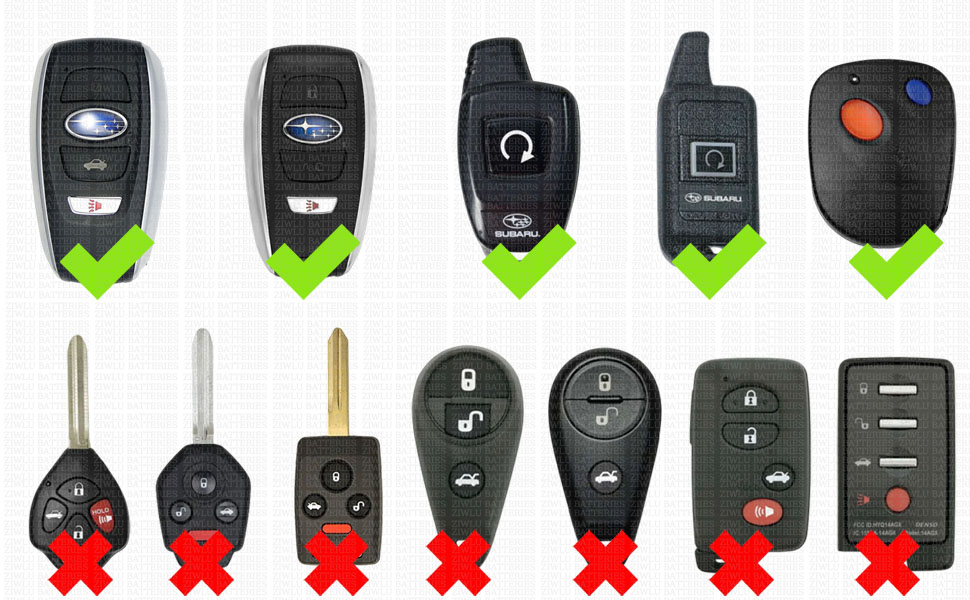
Before touching tools, confirm which of three key designs you own. Misidentifying your fob risks cracking the casing or installing the wrong battery. Each type uses a different coin cell and has unique opening mechanics—get this wrong, and you’ll damage expensive electronics.
Bulging Rectangle Fob (2019+ Models)
Look for a thick, rounded rectangle with a hidden emergency key slot on the back. Press the small silver tab to eject a metal key that’s completely concealed when stowed. This design houses a CR2032 battery and appears on newer models like the Ascent, Outback, and Forester. If your fob has sharp corners and visible seams, it’s not this type—proceed carefully.
Smooth Teardrop Fob (2000-2018 Models)
Identify this by its seamless, water-drop shape with no exposed metal key. The entire unit is one smooth plastic piece about the size of a thumb. Older Imprezas, Legacys, and WRX models use this design with a CR2025 battery. Warning: Forcing open the wrong seam cracks the brittle plastic—always start at the bottom curve near the trunk button.
Exposed-Key Legacy Fob (Pre-2000 Models)
This classic design features a permanently visible metal key with buttons attached to the plastic head. You’ll find it on vintage Subarus like the SVX or early Foresters. It requires a tiny CR1620 battery and has two layers of casing—skip either step, and the electronics won’t seat properly. Check for a small screw on the back; if present, it’s not this model.
3-Step Visual Check to Confirm Your Key Type
Scan for emergency key access within 10 seconds: Run your fingernail along the fob’s edge. If you feel a slight ridge or tab (common on rectangle fobs), it hides the emergency key. No ridge? It’s likely the teardrop model.
Measure thickness with your eyes: Rectangle fobs are noticeably chunkier (about ½ inch thick), while teardrop versions feel svelte. Legacy keys with exposed metal will have visible key teeth protruding 1-2 inches.
Count button locations: Legacy fobs often have buttons clustered on one side, while rectangle/teardrop models spread functions across the face. If your fob has a panic button and trunk release on opposite ends, it’s probably rectangle-shaped.
CR2032 Battery Swap for Bulging Rectangle Fobs
Replacing batteries in newer Subaru keys avoids dealership fees, but forceful opening breaks the delicate tabs. This method preserves your fob’s integrity using the emergency key as a tool—no special equipment needed. Complete this in under 3 minutes with confidence.
Remove Emergency Key Without Damage
Press the silver release tab firmly with your thumbnail while pulling the metal key straight out. Critical mistake: Yanking at an angle bends the tab. If stuck, tap the fob gently on a table—never use pliers. You’ll expose a small slot where the key was housed.
Open Housing Using Emergency Key Slot
Insert the key’s tip into the slot you just revealed. Twist counter-clockwise like a soda bottle cap—not sideways. You’ll hear a soft click as the front half releases. Stop twisting immediately; over-rotation cracks the hinge. The circuit board stays attached to the front half.
Install New CR2032 With Correct Polarity
Lift the circuit board gently to see the battery. Note the + marking on the housing—new batteries must match this orientation. Slide the CR2032 in with the “+” side up using plastic tweezers or clean fingers. Pro tip: Wipe contacts with a cotton swab dipped in rubbing alcohol if the old battery leaked.
Reassemble Without Gaps
Align the halves so the emergency key slot lines up perfectly. Press around the edges firmly until all snaps engage—you’ll hear 4 distinct clicks. Test by squeezing the fob; no light should peek through seams. Reinsert the metal key until it clicks audibly.
CR2025 Replacement in Teardrop-Shaped Subaru Keys

Teardrop fobs are notorious for shattering during battery changes. The secret? Heat softens the plastic. A hair dryer on low for 20 seconds makes the casing pliable, preventing cracks. Always replace with CR2025—using CR2032 damages internal springs.
Gentle Pry Technique That Won’t Crack Plastic
Warm the fob’s bottom curve (near trunk button) with a hair dryer. Insert a guitar pick or plastic spudger into the seam. Twist slowly while working clockwise around the edge. Visual cue: Stop when you see the silver battery casing—don’t expose the circuit board.
Swap Battery With Contact Cleaning
Lift the old CR2025 with your pinky nail. Inspect for white corrosion; if present, scrub contacts with an eraser. Drop the new battery in with “+” facing the logo. Warning: Pressing too hard bends the battery holder—rest it gently into place.
Seal Properly to Prevent Water Damage
Press the halves together starting at the button side. Run your thumb around the entire perimeter to seal the ultrasonic weld. Check for gaps by holding it against a light; even a hairline crack lets moisture in.
CR1620 Battery Change for Exposed-Key Subaru Remotes
Legacy keys require double-layer reassembly—skip one step, and buttons won’t work. The CR1620 battery is tiny; losing it down a drain is common. Place a towel over your workspace before starting.
Access Electronics Without Breaking Tabs
Find the seam between the key barrel and plastic head. Insert a flathead screwdriver into the small notch at the 6 o’clock position. Twist gently to pop open the outer shell—never at the button side. The inner module will slide out like a SIM card tray.
Open Secondary Casing Safely
Pinch the inner module’s sides where you see two small tabs. Press inward while sliding the top half off—do not pry upward. The CR1620 sits under a clear plastic cover; lift the cover with tweezers to access it.
Reassemble Both Layers Correctly
Seat the new battery with “+” facing the module’s writing. Snap the inner cover shut by pressing the edges evenly. Slide the module back into the outer shell until it clicks. Close the primary casing by aligning the key barrel first.
Start Your Subaru with a Dead Key Fob: Emergency Steps
Your key dies at 2 a.m. in a deserted parking garage? Use this failsafe method even with zero battery power. It bypasses the alarm instantly—no tools required.
Manual Unlock That Silences the Alarm
Use the emergency key (rectangle fob) or exposed metal key (legacy) to unlock the driver’s door. Immediately after opening, place the dead fob against the push-button start. Hold it there while pressing brake + start button. The car reads the RFID chip within 3 seconds, starting the engine and stopping the alarm.
Where to Buy Correct Subaru Key Batteries (CR2032/CR2025/CR1620)
Skip overpriced dealerships—these batteries are everywhere. CR2032 costs $1.49 at Target, CR2025 is $2.29 at Walgreens, and CR1620 runs $3.99 at Best Buy. Critical tip: Never buy generic “3V” batteries—Subaru requires lithium cells (Energizer DL2032, Duracell 2032). Alkaline versions leak and destroy fobs.
DIY Key Fob Programming for Older Subaru Models Only
Newer rectangle fobs (2019+) can’t be self-programmed—dealerships use $5,000 scanners. Only attempt this for teardrop or legacy keys if you have the 8-digit transmitter ID from the circuit board.
Home Programming Sequence That Actually Works
After battery replacement, sit in the car with doors closed. Open the driver’s door, press unlock button, then rapidly turn the ignition to “ACC” 10 times (you’ll hear a chime). Open/close the door once. Now enter your code: Press lock button X times for each digit (X=number), then unlock once after each digit.
7 Critical Tests After Subaru Key Battery Replacement
Don’t drive away without verifying these:
1. Range test: Unlock from 30+ feet away (less than 15 feet means bad contact)
2. Trunk release: Must pop open within 1 second
3. Button feedback: Crisp click with no mushiness
4. Seam check: Run fingernail along edges—no snags allowed
5. Emergency key: Inserts smoothly with audible click
6. LED brightness: Glows solid white (dim light = wrong battery)
7. Alarm response: Panic button triggers horn immediately
Fix These 4 Problems After Changing Your Key Battery
Fob won’t open? Warm it with a hair dryer for 30 seconds—cold plastic binds. Battery falls out? Check for broken retaining tabs; superglue a toothpick fragment if needed. Reduced range? Clean contacts with isopropyl alcohol. Still dead? You installed the battery upside down—recheck polarity markings.
5 Proven Tips to Extend Your Subaru Key Battery Life
Prevent future failures with these pro habits: Store spare keys away from phones (RF interference drains batteries). Replace batteries every 18 months—even if working. Never drop fobs on concrete (cracks internal springs). Keep them out of direct sunlight (heat degrades cells). Test functions monthly by walking backward from your car.
Your Subaru key battery change is complete. If the fob works perfectly within arm’s length but fails beyond 10 feet, reseat the battery—it’s not making full contact. Keep the old battery in your glove compartment as an emergency backup; it often retains 20% power for lockouts. For rectangle fobs that won’t program, visit a dealership—their $75 service includes reprogramming, while a new fob costs $250. Now go enjoy that silent, seamless key fob experience you deserve.


