
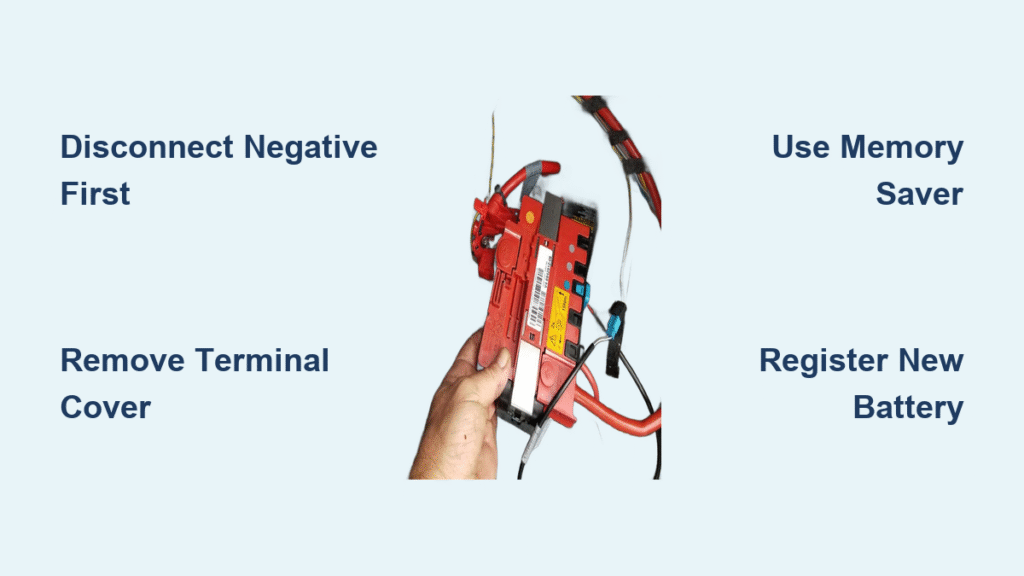
Your BMW E90’s battery isn’t tucked under the hood like most vehicles—it’s cleverly concealed in the trunk, creating a frustrating surprise when you need to disconnect it. If you’re staring at your trunk carpet wondering how to access this critical component for battery replacement, winter storage, or electrical repairs, you’re not alone. This guide delivers the exact steps to safely disconnect your E90’s battery while avoiding costly mistakes that trigger system resets or electrical damage. You’ll learn why disconnecting the negative terminal first is non-negotiable, how to handle the hidden power module, and why skipping battery registration after reconnection could kill your new battery in under a year.
Most BMW owners waste hours searching for the right tools or accidentally reset their steering angle sensor because they miss critical steps. I’ve seen technicians fry expensive control modules by touching a wrench to metal while loosening the positive terminal. By following this precise procedure, you’ll complete the job in 15 minutes flat without triggering warning lights or losing essential calibrations. Let’s get your E90 safely powered down.
Locate E90 Battery Behind Trunk Trim Panel
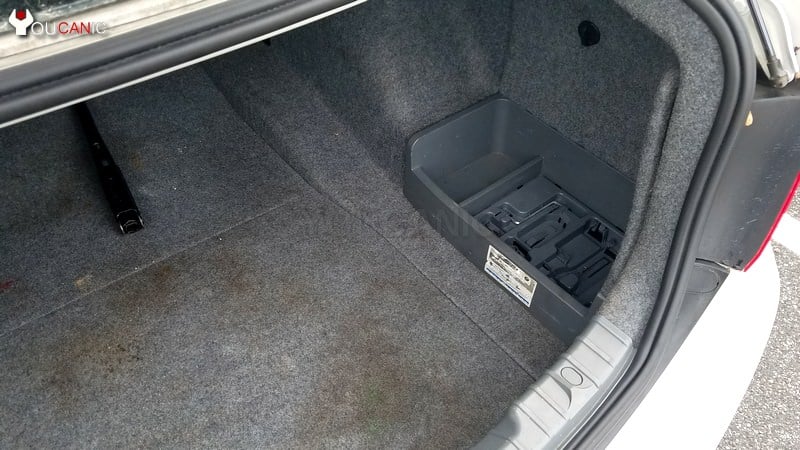
Your E90’s battery hides behind a discreet trim panel on the right side of the trunk, protected from engine heat but tricky to access. Start by clearing the trunk of luggage or tools—you’ll need full access to this compartment. Look for a small circular lock mechanism centered on the trim panel; grip it firmly and twist counterclockwise until it clicks. Lift the panel straight up to release it from the hidden clips—don’t force it, as the plastic snaps easily. Once removed, you’ll see the black battery housing beneath the carpet liner. This trunk location prevents corrosion from engine bay heat but requires careful handling since spilled acid could ruin your trunk carpet.
Identify Critical Components Before Touching Tools
Before grabbing your socket set, visually confirm three key elements: the black negative cable (marked with a minus sign) on the battery’s left side, the red positive cable covered by the power module, and the vent hose snaking from the battery’s front corner. Note the two plastic locking clips securing the terminal cover—these break if pried incorrectly. If you see white crusty buildup (corrosion), wear gloves immediately as this indicates acid leakage. Never skip this visual check; I’ve seen DIYers accidentally short-circuit their E90 by touching tools to corroded terminals.
Critical Safety Steps Before Disconnecting Cables
Prevent Accidental System Activation
Pull your key fob from the ignition and place it at least 10 feet away from the vehicle—this stops the comfort access system from inadvertently activating windows or locks while you work. Write down all radio presets and clock settings now; these will vanish when power cuts. If you’re disconnecting for maintenance (not replacement), connect a memory saver device to the OBD-II port first to preserve ECU settings. Always work in a garage with open doors or outdoors—BMW batteries vent hydrogen gas that can ignite from a single spark.
Mandatory Safety Gear Checklist
- ANSI Z87.1-rated safety glasses (acid splashes cause permanent eye damage)
- Nitrile gloves (latex won’t protect against sulfuric acid)
- 10mm and 13mm sockets with 3-inch extensions (standard wrenches won’t fit the tight space)
- Insulated tools only (metal handles conduct electricity)
- Shop towels and baking soda (for immediate acid spill neutralization)
Disconnect Negative Terminal First to Prevent Sparks
Remove Black Cable with Correct Technique
Grab your 10mm socket and position yourself to see the negative (-) terminal clamp clearly. Place the socket on the nut and turn counterclockwise with steady pressure—no jerking, as stripped nuts complicate reassembly. Once loose, wiggle the clamp side-to-side to break corrosion bonds before sliding it off the terminal post. Immediately tuck the cable behind the battery housing and cover the exposed end with a dry shop towel. This sequence is non-negotiable: reversing it (positive first) risks sending 12 volts through your wrench to the chassis, frying sensitive electronics like the DSC module.
Why Negative Terminal Disconnection Is Non-Negotiable
The negative cable connects directly to your E90’s chassis ground. Disconnecting it first breaks the circuit path, making the entire vehicle “dead” even if your wrench touches metal. I’ve repaired countless BMWs where owners started with the positive terminal, causing sparks that burned wiring harnesses near the trunk latch motor. If you hear a faint click when removing the negative cable, your car’s alarm system is disarming—normal behavior on E90 models.
Remove Battery Safety Terminal Cover Correctly

Release Dual Locking Clips Without Breaking
Two fragile plastic clips secure the terminal cover—locate the release tabs on both long sides. Press both tabs simultaneously toward the center while lifting the cover straight up; never pry from one side. If clips snap (a $25 mistake), you’ll need to replace the entire cover assembly. Underneath, you’ll see the battery power module held by a black locking tab. Press this tab firmly toward the front of the car while lifting the module cover—releasing it backward damages internal connectors.
Avoid Power Module Handling Errors
The power module contains critical fuses and the battery sensor. Never let it dangle by the wires; support its weight with your free hand while disconnecting. If you notice melted plastic or burning smells here, stop immediately—this indicates an electrical fault requiring professional diagnosis. Most E90 owners don’t realize this module regulates charging voltage; damaging it triggers “Excessive Battery Drain” warnings even with a new battery.
Disconnect Positive Terminal and Power Module
Remove Power Module Assembly Safely
Using your 13mm socket, loosen the large nut securing the power module to the battery post. Switch to the 10mm socket to loosen the positive (+) cable clamp beneath it. Now lift the entire module straight up—don’t twist or tilt it, as this strains the wiring harness. Before setting it aside, unclip the module’s side retainers from the battery housing; these plastic tabs snap if forced. Lay the module on the trunk floor away from metal surfaces.
Handle Positive Cable with Extreme Caution
The exposed positive terminal carries live current until fully disconnected. Once the module is removed, slide the red positive cable straight up off the post—no side-to-side motion. Immediately cover the terminal with a rubber cap or thick electrical tape. If your wrench touches both the positive post and any metal part of the trunk (like the latch mechanism), you’ll create a dead short that can melt wiring. I’ve seen this blow the 300-amp main fuse, requiring $400 in repairs.
Remove Battery Hold-Down and Vent Hose
Release Heavy Battery Safely
Remove the 10mm bolt securing the hold-down bracket at the battery’s base—this bracket prevents movement during driving. Next, squeeze the vent hose clamp with pliers and slide it 2 inches down the hose. Gently twist and pull the vent hose off the battery’s front nipple; this critical component routes explosive hydrogen gas outside the trunk. Never kink or pinch this hose during reinstallation, as blocked vents cause battery swelling.
Lift 40-Pound Battery Without Injury
BMW E90 batteries weigh 40-50 pounds—bend at the knees and grip the case firmly with both hands. Clear all tools from the trunk floor first to avoid tripping. Lift straight up without tilting; spilled acid can ruin your trunk carpet and release toxic fumes. If the battery feels unusually light, it’s leaking—set it down immediately and neutralize spills with baking soda. Always place the removed battery on a wooden pallet, never concrete (which discharges it).
Clean Battery Compartment and Inspect Components
Neutralize Corrosion Safely
Sprinkle baking soda liberally over any white/green corrosion in the tray, then spray with water—it will fizz as it neutralizes acid. Scrub cable ends with a stainless steel battery brush until shiny metal shows. For stubborn buildup, dip a toothbrush in a baking soda-water paste. Never rinse with a hose; moisture in electrical connectors causes shorts. Dry all surfaces thoroughly with compressed air or a heat gun on low setting.
Critical Post-Removal Checks
- Inspect vent hose for cracks—replace if brittle (BMW part #61419235164)
- Test hold-down bracket bolt threads—re-tap with a 10mm die if stripped
- Check cable insulation for heat damage near the positive terminal
- Verify no metal shavings fell into the battery tray (causes shorts)
Connect External Power for Memory Retention
Use Under-Hood Jump Points Correctly
If preserving radio presets or window initialization, connect a memory saver to the right front strut tower under the hood. Locate the bright red positive (+) terminal (under a plastic cap) and the bare metal negative (-) grounding point nearby. Attach the memory saver’s red clamp to positive first, then black to negative—reverse order risks sparks. Never use these points for jump-starting; the E90 requires trunk battery access for proper charging.
Why Trunk Battery Removal Beats External Charging
While external charging seems convenient, BMW engineers designed the E90 to vent gases outside the cabin. Charging the battery in the trunk risks hydrogen gas accumulation—a single spark could cause an explosion. Always remove the battery for charging; the trunk’s confined space traps explosive vapors. I’ve witnessed minor trunk fires from DIYers charging batteries without proper ventilation.
Register New Battery Immediately After Reconnection

Complete Mandatory DME Registration
Every new battery requires registration via a BMW scan tool like ISTA or Autologics. This tells the DME (Digital Motor Electronics) the battery’s age, capacity, and health status. Without registration, the alternator overcharges the battery, boiling the electrolyte and causing premature failure within 6 months. Most independent BMW shops charge $35-$75 for this 5-minute procedure—never skip it. Dealership systems auto-detect unregistered batteries and display “Check Battery” warnings.
Consequences of Skipping Registration
I’ve diagnosed dozens of “dead battery” cases where owners replaced the battery but skipped registration. The DME defaults to charging parameters for a failing battery, delivering excessive voltage that warps internal plates. Symptoms include rapid discharge, bulging case sides, and sulfation. One client destroyed three batteries in 18 months before learning this critical step. Registration costs less than a tank of gas but protects a $250 investment.
Reconnect Battery with Correct Sequence
Follow Reverse Order for Safe Power-Up
When reinstalling:
1. Place battery securely in tray with positive terminal facing front
2. Reconnect vent hose ensuring no kinks (secure clamp 1 inch from nipple)
3. Attach positive (+) cable first—slide straight down until seated
4. Tighten power module nut with 13mm socket (12 ft-lbs torque)
5. Connect negative (-) cable last and secure with 10mm socket
Reinitialize Critical Systems Immediately
After reconnection, complete these calibrations before driving:
– Power windows: Hold each switch down 5 seconds, then up 5 seconds
– Sunroof: Tilt fully open, hold switch 15 seconds, close completely
– Steering angle sensor: With engine running, turn wheel lock-to-lock twice
– Radio presets: Re-enter saved stations immediately
Pro Tip: Tape a photo of your radio presets inside the glovebox—saves 10 minutes during reinitialization. For vehicles stored over 30 days, use a BMW-specific battery tender (like CTEK MXS 5.0) connected to the under-hood positive terminal to maintain charge without disconnection cycles. Never let your E90 sit with under 12.4 volts—this sulfates the plates and kills batteries faster than disconnection.


