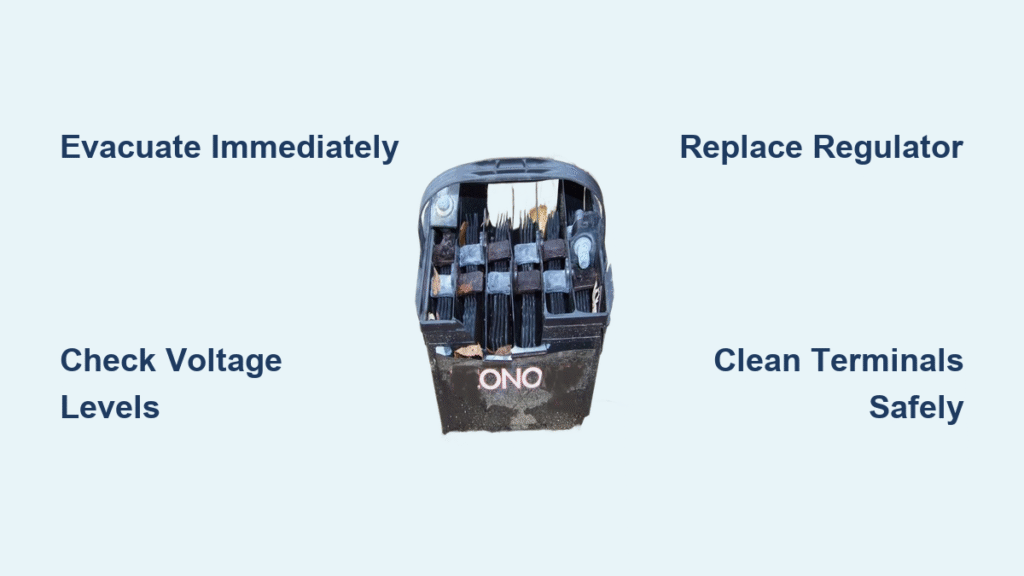
You’re driving home when thick white smoke suddenly billows from under your hood, accompanied by that pungent rotten egg smell. Your pulse races—this isn’t just a minor glitch. A smoking car battery poses immediate dangers: flammable hydrogen gas could ignite, toxic fumes might cause respiratory harm, and acid leaks could melt engine components. Ignoring this crisis risks catastrophic battery explosion or permanent electrical system damage.
Knowing exactly how to fix a smoking car battery separates a $200 repair from a totaled vehicle. Most smoking incidents stem from preventable causes like overcharging or terminal corrosion, not random battery failure. This guide delivers actionable steps to neutralize the threat, diagnose root causes, and implement permanent solutions—no guesswork, just proven safety protocols and repairs. You’ll learn to spot warning signs before smoke appears and prevent recurrence through smart maintenance.
Immediate Safety Steps for Smoking Battery Emergencies
Evacuate and isolate the vehicle within 10 seconds of noticing smoke. Battery fumes contain explosive hydrogen gas and hydrogen sulfide—a lethal toxin that causes dizziness or unconsciousness in minutes. Move at least 50 feet away, ensuring children and pets stay clear. Never attempt to open the hood while smoke persists; hydrogen gas can ignite from static electricity or nearby electronics.
Wait 30-45 minutes before approaching, even if smoke stops. A smoking battery reaches 150°F+ internally, with acid under pressure that can rupture the case. During this cooling period, call roadside assistance if stranded. If in a garage, exit the building entirely—fumes can seep into living spaces.
Essential Safety Gear Checklist
- Chemical-resistant gloves (nitrile, not latex) to block sulfuric acid burns
- Full-face shield (goggles alone won’t protect against acid splash arcs)
- Acid-neutralizing kit (baking soda + water mixture stored in trunk)
- Non-sparking tools (brass or plastic) for terminal work
Diagnose Why Your Car Battery Is Smoking
Overcharging vs. Internal Failure: Critical Clues
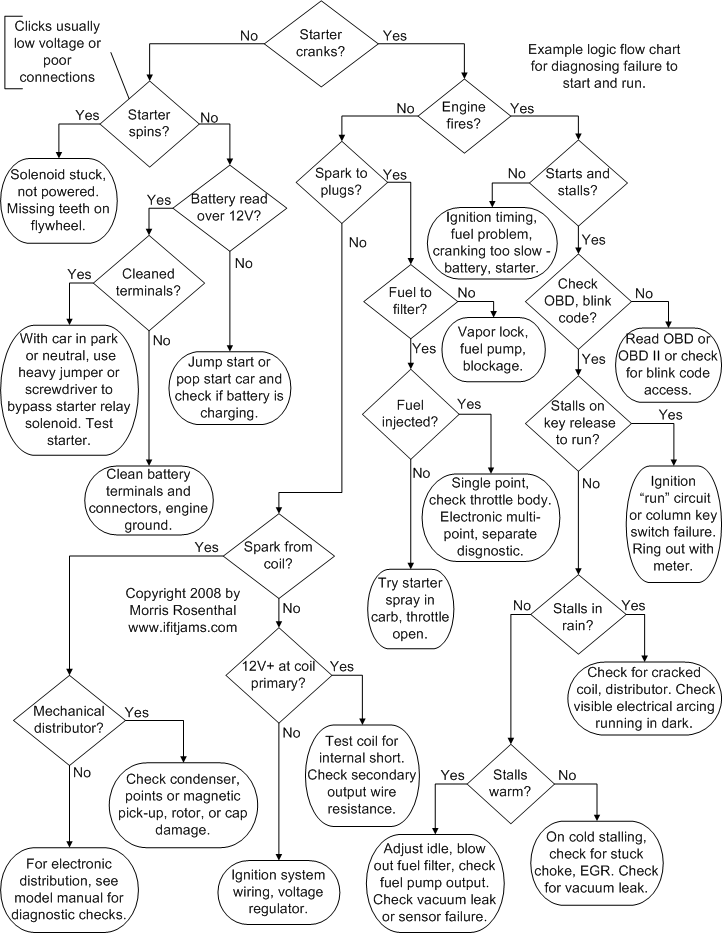
Check these three indicators immediately after cooling:
– Voltage test: Engine off for 30 minutes? Below 12.4V signals sulfation. Engine running? Above 14.7V confirms alternator overcharging.
– Case inspection: Bulging sides or melted plastic means internal short circuits—replace immediately.
– Terminal condition: Blue-green corrosion indicates acid leakage from overcharging; white crust suggests terminal arcing.
Never assume age is the cause. While batteries over 3 years old fail more often, a 6-month-old battery can smoke due to a faulty voltage regulator. Test your charging system before blaming the battery.
How to Fix a Smoking Car Battery Due to Overcharging
Alternator Voltage Regulator Repair
Overcharging (voltage >14.7V) boils electrolytes into flammable gas within minutes. Here’s how to address it:
1. Test regulator function: With engine idling, measure voltage at battery terminals. Consistent readings above 15V mean regulator failure.
2. Replace the regulator: On pre-2000 vehicles, this $40 part bolts onto the alternator (30-minute DIY job). Newer cars require full alternator replacement ($300+).
3. Verify diode health: Use multimeter in AC mode; over 0.5V AC ripple indicates failing diodes causing erratic charging.
Critical mistake to avoid: Using “dumb” chargers without auto-shutoff. Always choose microprocessor-controlled units like NOCO Genius that adjust output based on battery temperature.
Smart Charging Protocols After Smoking
If your battery smoked during charging:
– Stop immediately if battery feels warm—safe charging keeps it near ambient temperature.
– Use 10% charge rate: For a standard 50Ah battery, max 5A input. Higher rates (e.g., 15A) overheat cells.
– Charge outdoors only: Hydrogen gas needs open air to dissipate; enclosed spaces risk explosion.
When to Replace Your Smoking Car Battery

Replace immediately if you observe:
– Case cracks or bulging (internal pressure exceeds 15 PSI)
– Voltage drops below 10V under load (headlights + radio on)
– Repeated smoking after terminal cleaning
– Age over 3 years with sulfation (hard white crystals on plates)
Don’t waste time on repairs for modern AGM or gel batteries—they’re sealed units where internal shorts can’t be fixed. Opt for upgraded replacements: OPTIMA RedTop resists vibration damage, while DieHard Platinum handles extreme cold. Most batteries have 2-5 year warranties; check your receipt before buying new.
Terminal Cleaning Procedures to Prevent Smoking

Corrosion Removal That Won’t Cause Sparks
Loose or corroded terminals create resistance, generating enough heat to melt plastic and ignite hydrogen gas. Fix this safely:
1. Disconnect negative terminal FIRST (prevents accidental short-circuiting).
2. Neutralize acid: Pour baking soda solution (1 tbsp per cup water) over terminals until fizzing stops.
3. Scrub with wire brush until metal shines—never use metal tools on battery posts.
4. Reconnect positive terminal BEFORE negative to avoid sparks near hydrogen gas.
Pro tip: Apply dielectric grease after cleaning. This non-conductive coating blocks moisture and corrosion for 6+ months.
Prevent Future Smoking with Proven Maintenance
Monthly Checks That Stop 90% of Incidents
- Voltage test: Ensure static voltage stays 12.4-12.6V (below 12.4V accelerates sulfation).
- Heat shield inspection: If battery sits near exhaust manifolds, verify insulation is intact.
- Hold-down tightness: A shifting battery cracks internally—secure with 8mm wrench (snug but not overtightened).
Critical summer protocol: Park in shade when temps exceed 90°F. Heat above 125°F triggers thermal runaway—where rising temperature causes more heat generation until smoking begins.
Emergency Response Kit Essentials
Keep these in your trunk:
– Digital multimeter ($20) to instantly diagnose overcharging
– Class C fire extinguisher (for electrical fires only—water spreads acid fires)
– Baking soda pouch (neutralizes acid leaks in seconds)
– Battery terminal protector spray (forms corrosion-resistant barrier)
If smoke reappears while driving, pull over immediately and disconnect the negative terminal. Do NOT attempt to drive—continued operation can melt wiring harnesses ($1,200+ repair).
When to Call Professionals Immediately
Seek expert help if:
– Voltage exceeds 15V with engine running (alternator replacement needed)
– Battery case is deformed or leaking (acid exposure risk)
– Smoking occurs during highway driving (charging system failure)
– You lack tools for safe voltage testing
Most auto parts stores offer free charging system tests. Alternator replacement costs $300-$800, but ignoring overcharging can destroy your entire electrical system—making how to fix a smoking car battery a costly lesson in prevention.
A smoking car battery demands urgent action, but most causes are fixable with immediate safety steps and precise diagnosis. Remember: overcharging accounts for 70% of incidents, often from neglected voltage regulators or improper chargers. Replace batteries showing physical damage—never risk explosion. With monthly voltage checks and terminal maintenance, you’ll prevent 95% of smoking emergencies. Stay vigilant, keep your emergency kit stocked, and never ignore that rotten egg smell—it’s your battery’s final warning before disaster strikes.


