
You’re stranded with a dead BMW battery, staring at your locked trunk where the battery’s hidden. This frustrating scenario happens daily to BMW owners of all models—from 328i sedans to X5 SUVs. The good news? You don’t need to break into your trunk or call a tow truck. Most BMWs with trunk-mounted batteries provide a clever workaround using remote terminals under the hood specifically designed for jump-starting emergencies.
This guide reveals the exact steps to jump start your BMW safely, whether you have another vehicle available or just a portable jump starter. You’ll learn the preferred method using under-hood terminals that most owners never knew existed, plus critical backup strategies when those fail. Knowing how to jump start a BMW with battery in trunk could save you hundreds in unnecessary service calls.
Locate BMW Under-Hood Jump Terminals Instantly
Most BMW models hide remote jump terminals under the hood that connect directly to your starter system, eliminating the need to access your trunk battery. These terminals exist precisely for situations where your trunk won’t open due to a dead battery.
Finding your positive terminal: Open the hood and look for a red plastic cap marked with a “+” symbol, typically on the passenger side near the firewall. This cap pulls straight up to expose the metal terminal—no tools required. On 2006 X5 models, it’s often near the coolant reservoir, while newer 2020 X3 models position it closer to the headlight assembly.
Identifying the negative terminal: Your ground connection appears as a large bolt or special nut on the passenger side of the engine bay. Check the strut tower or inner fender area where BMW engineers typically mount this grounding point. Never mistake this for a regular bolt—it’s specifically designed as your safe jump-start ground location.
What if you can’t find the hood terminals?
Some BMW owners panic when they can’t locate these hidden terminals. Don’t worry—most F30 chassis models (like 2012 328i) position them consistently near the fuse box. If you still can’t find them, consult your owner’s manual’s emergency procedures section, which BMW conveniently includes for exactly this scenario.
Prepare Both Vehicles for Safe Jump-Starting
Before connecting any cables, proper setup prevents costly damage to your BMW’s sensitive electronics. Park the donor vehicle close enough for cables to reach, but ensure metal parts don’t touch—this creates dangerous short circuits.
Critical preparation checklist:
– Turn off both vehicles completely
– Switch off headlights, radios, and climate control in both cars
– Verify the donor battery matches your BMW’s voltage (12V)
– Confirm donor battery has similar or greater capacity (Ah rating)
Pro tip: If using a portable jump starter like the NOCO GB40, ensure it’s fully charged. These compact units eliminate the need for another vehicle and include built-in safety features that prevent reverse polarity damage—crucial for BMW’s complex electrical systems.
Connect Jumper Cables in Correct BMW Sequence
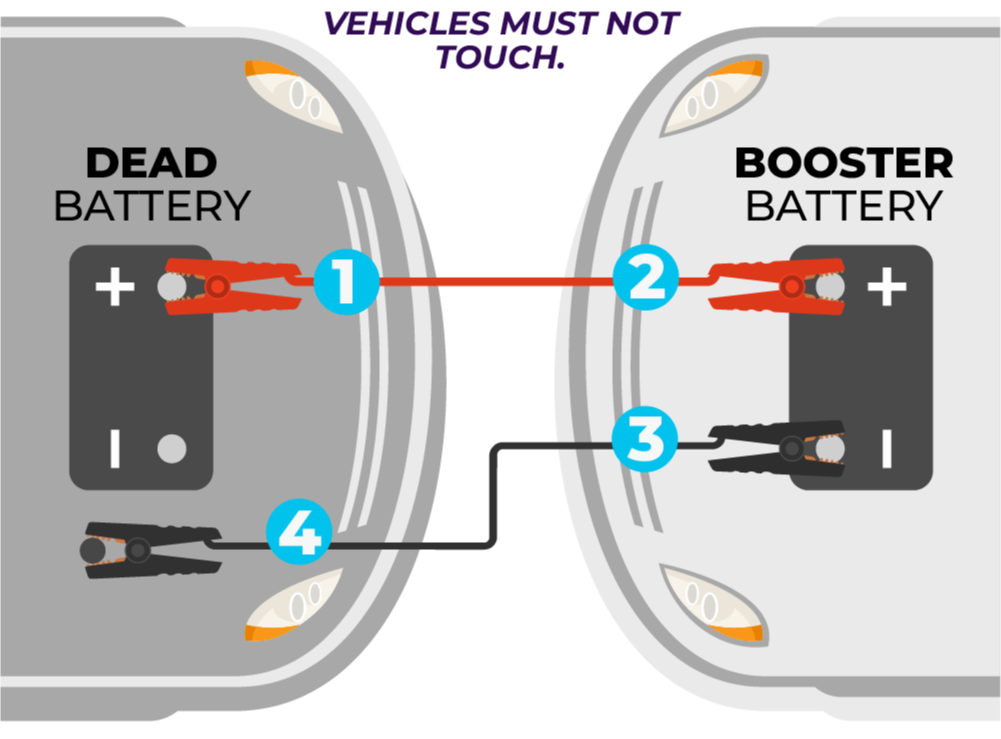
Following the precise connection sequence prevents electrical spikes that could fry your BMW’s expensive electronics. Never deviate from this order—BMW’s systems are particularly sensitive to improper jump-starting procedures.
Step 1: Connect the red positive clamp to your BMW’s under-hood positive terminal (after removing the cap)
Step 2: Connect the other red clamp to the donor vehicle’s positive terminal
Step 3: Connect the black negative clamp to the donor vehicle’s negative terminal
Step 4: Connect the final black clamp to your BMW’s designated ground point under the hood
Critical warning: Never let the clamp ends touch each other during connection. This creates dangerous sparks that can damage both vehicles’ electrical systems. Always maintain firm pressure on the clamps—they must make solid metal-to-metal contact.
Start Your BMW Engine Successfully
With cables properly connected, you’re ready to transfer power. Start the donor vehicle and let it idle at 1500 RPM for 2-3 minutes to begin charging your BMW’s electrical system.
Starting sequence:
1. Have the donor vehicle maintain slightly elevated idle (around 1500 RPM)
2. Attempt to start your BMW—never crank for more than 10 seconds
3. If unsuccessful, wait 3-4 minutes before retrying (prevents starter motor damage)
4. Once started, let both engines run for at least 5 minutes before disconnecting
What to expect: Your BMW’s dashboard may display multiple warning lights initially. These typically clear after driving for 10-15 minutes as systems recalibrate—don’t panic if you see “Check Engine” or “ABS” lights during the first drive.
Troubleshoot Failed Hood Terminal Jump Attempts
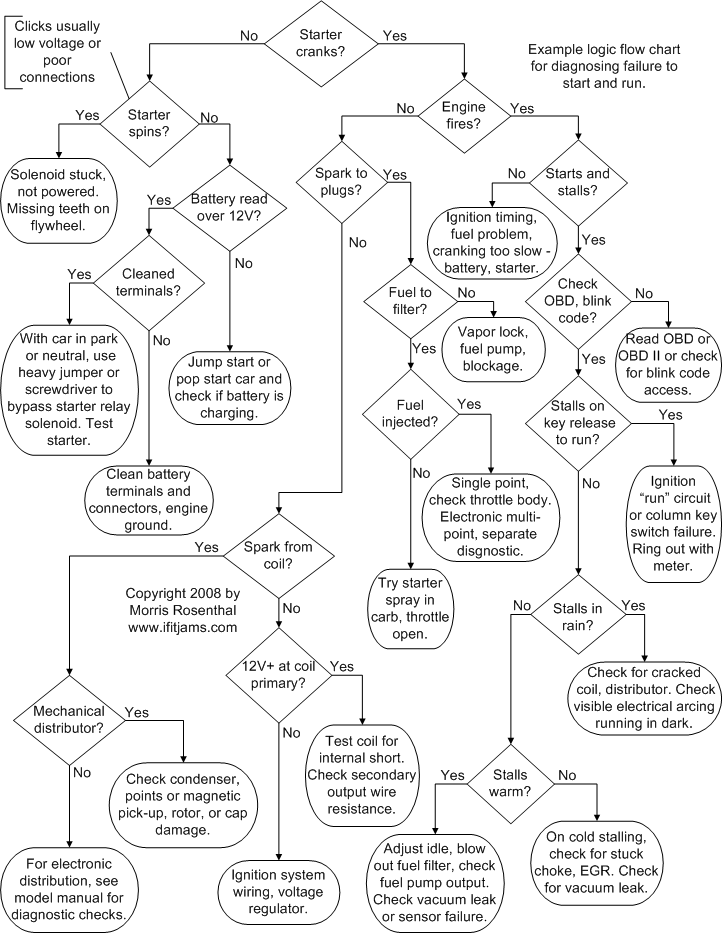
When under-hood terminals don’t work, several common issues could be blocking your jump-start success. Diagnose these problems systematically before attempting risky direct battery connections.
Corroded terminal symptoms: White or green buildup on metal surfaces, loose connections, or visible damage. Clean with a wire brush and baking soda solution, then reattempt the jump start.
Cable integrity check: Inspect the thick cable running from your trunk battery to the hood terminals. Look for:
– Fraying or breaks near connections
– Melting or heat damage from previous electrical issues
– Loose connections at either end (common on aging 2006 X5 models)
Quick diagnostic test: Use a multimeter to check your trunk battery voltage. A healthy battery reads 12.6V when off and stays above 10V during cranking attempts. If it reads below 10V, your battery may need replacement rather than just a jump.
Access Emergency Trunk Release with Dead Battery

When your battery dies completely, the electronic trunk release stops working—this is where BMW’s emergency access features save the day. Never force the trunk open—you’ll cause expensive damage to the latch mechanism.
Folding rear seats method: Check for black plastic levers near headrests in your back seat. Press and fold down the center section to access the emergency trunk release handle inside. This works on most models except those without the cold weather package.
External power trick: Connect a spare 12V battery to under-hood terminals just long enough to energize the trunk release. Critical caution: Ensure the positive lead doesn’t touch metal to prevent short circuits—this provides temporary power without full jump-starting.
Use Portable Jump Starter for Independent Rescue
Compact jump starters give you complete independence from donor vehicles. Models like the NOCO GB40 ($100) or Nexpow Battery Jumper ($42) work exceptionally well for BMWs and fit in your glove compartment.
Optimal connection method: Always connect portable jump starters to under-hood terminals, not the trunk battery. This provides the most direct power path to your starter motor. The under-hood connection bypasses potential voltage drops through trunk wiring.
Operating procedure:
1. Ensure jump starter is fully charged (check indicator lights)
2. Connect clamps to under-hood terminals in proper sequence
3. Power on the jump starter
4. Attempt to start your BMW within 30 seconds
5. If unsuccessful, wait 2-3 minutes before retrying
Prevent Future BMW Jump-Start Emergencies
Regular maintenance significantly reduces jump-start situations. BMW batteries typically last 4-6 years, but extreme temperatures and frequent short trips accelerate degradation—especially problematic for trunk-mounted batteries exposed to temperature extremes.
Proactive maintenance schedule:
– Test battery voltage every 6 months (should read 12.6V when off)
– Clean terminal connections annually with baking soda solution
– Use a smart battery maintainer during extended storage
– Replace battery proactively at 5 years rather than waiting for failure
Storage survival tip: If storing your BMW for more than 2 weeks, connect a Battery Tender to maintain optimal charge levels. This prevents deep discharge that permanently damages modern AGM batteries found in most newer BMWs.
Successfully jump starting your BMW with battery in trunk proves you don’t need special tools or technical expertise—just knowledge of BMW’s clever emergency systems. The trunk-mounted battery design actually protects your battery from engine heat and extends its lifespan. Master these techniques, and you’ll never be stranded by a dead BMW battery again. Remember to test your system annually by simulating a low-battery scenario—your future self will thank you when you’re stranded in a parking lot at midnight.


