
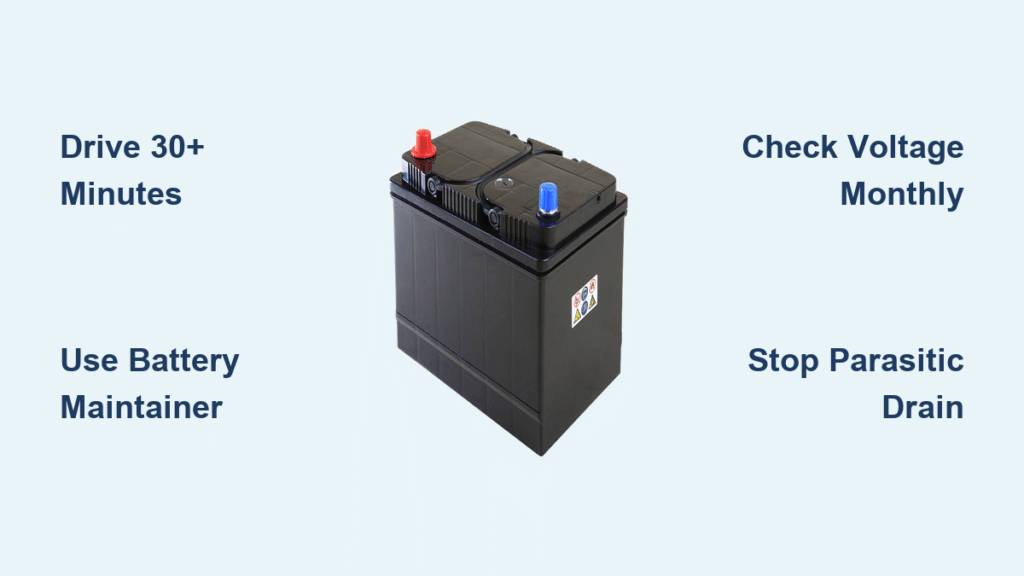
Your car won’t start. It’s 6 AM, you’re already late, and the engine just clicks. Sound familiar? A dead battery strikes at the worst moments, but it’s entirely preventable. Whether you drive daily, store your car seasonally, or battle harsh winters, this guide delivers proven strategies to keep your battery alive and your mornings stress-free.
Most battery failures aren’t sudden—they’re the result of gradual drain that builds over weeks. The good news? Simple preventive steps can extend your battery’s life from 2-3 years to 5-7 years, saving you hundreds in replacements and tow-truck fees. Follow these expert-tested methods to ensure your car starts reliably every time you turn the key.
Stop Hidden Power Drains Before They Kill Your Battery
Your car sips power even while parked, running essential systems like alarms, computers, and memory functions. This parasitic drain seems harmless day-to-day, but kills batteries during extended parking. Modern vehicles lose 20-50 milliamps daily just to maintain basic functions—enough to drain a healthy battery in 2-8 weeks.
Spot Trouble Before Your Battery Dies
Daily Drain Sources You Can’t Ignore:
– Alarm systems continuously draw 20-50 milliamps
– Clock and radio presets consume 5-10 milliamps
– Keyless entry systems pull 15-30 milliamps
– Computer memory functions require 10-25 milliamps
Problem Accessories That Drain Overnight:
– Phone chargers left plugged in drain 100-500 milliamps
– Aftermarket stereos can pull 1-3 amps when “off”
– LED underglow lights may consume 200-1000 milliamps
– Dash cams in parking mode use 200-800 milliamps
Quick Test Method (2 Minutes):
1. Turn off all accessories and close doors
2. Wait 10 minutes for systems to enter sleep mode
3. Feel your battery—warmth indicates excessive drain
4. Check for glowing LEDs or illuminated displays
Prevent Overnight Discharge With Smart Habits
Pre-Park Power Check (Do This Every Time):
– Unplug all chargers and USB devices before exiting
– Verify dome lights shut off when doors close
– Check trunk and glove box lights aren’t stuck on
– Turn off headlights manually if auto-shutoff fails
– Remove aftermarket accessories with separate switches
Smart Accessory Management:
– Install battery switches for high-drain devices like stereos
– Use timers for dash cams (limit to 2-6 hours)
– Choose “hardwire kits” with automatic low-voltage cutoffs
– Position LED accent lights on separate circuits with manual switches
Drive to Actually Charge Your Battery (Not Just Start It)

Short trips kill batteries faster than long storage. Your alternator needs sustained driving to replace what starting consumes—typically 30-60 seconds of charging per start. Most drivers don’t realize their daily commute may be slowly draining their battery.
Minimum Drive Requirements for Full Recharge
Battery Charging Math You Need to Know:
– Engine start: Uses 2-5% of battery capacity
– Alternator output: Replaces 2-5% every 15-30 minutes
– Net gain: Requires 20+ minutes of driving to offset one start
– Winter multiplier: Cold weather doubles charging needs
Optimal Weekly Schedule:
– 30-minute highway drive once weekly (minimum for healthy charging)
– Two 20-minute drives during winter months (to compensate for cold)
– Avoid multiple short trips—combine errands into single longer trips
– Idle charging is weak—driving at 2000+ RPM charges fastest
Cold Weather Driving Protocols for Battery Survival
Winter Battery Challenges:
– Cold reduces capacity 20-50% (at 0°F)
– Thickened oil requires 2x starting power
– Accessories (heat, defrost) increase electrical load
– Short winter drives often result in net-charge loss
Winter Driving Strategy:
– Drive 45-60 minutes twice weekly below 32°F
– Use block heaters to reduce starting load (saves battery strain)
– Park in garage (even unheated) for 10-20°F temperature buffer
– Take longer routes to ensure full recharge after cold starts
Long-Term Storage Solutions That Prevent Battery Death
Planning a month-long trip or storing your classic car for winter? These proven methods prevent the 2-8 week death sentence that kills stored batteries. Don’t return from vacation to a dead battery—prepare properly.
Battery Maintainer Method (Recommended for Most Situations)
Smart Charger Benefits:
– Automatically stops at full charge to prevent overcharging
– Monitors voltage, topping off as needed
– Works continuously for years without supervision
– Preserves battery health during extended storage
Setup Process (5 Minutes):
1. Choose maintainer rated for your battery type (lead-acid/AGM)
2. Connect red clamp to positive (+) terminal
3. Connect black clamp to negative (-) terminal or chassis ground
4. Plug into stable power source
5. Verify indicator lights show proper operation
Top Maintainers:
– Battery Tender Plus (1.25 amp) – Best for motorcycles and small cars
– NOCO Genius G3500 (3.5 amp) – Ideal for standard passenger vehicles
– CTEK Multi US 7002 (7 amp) – Perfect for trucks and SUVs
Disconnection vs Removal: Which Method Wins?
Negative Cable Disconnection:
– Pros: Simple, no tools needed, preserves most presets
– Cons: Loses clock/radio settings, computer requires relearning
– Best for: 1-3 month storage with weekly access
Complete Battery Removal:
– Pros: Prevents any drain, optimal for extreme storage
– Cons: Requires tools, loses all settings
– Best for: Overwinter storage, exotic cars, extreme climates
Removal Safety Steps (10 Minutes):
1. Disconnect negative (-) cable first (prevents short circuits)
2. Disconnect positive (+) cable second
3. Remove hold-down bracket securing battery
4. Lift battery straight up using handles (wear gloves)
5. Store on wood surface in 40-60°F location
Cold Weather Battery Survival Tactics

Winter is battery killer #1. A battery that starts your car in October might fail completely by January without proper cold-weather care. Don’t wait for failure—prepare now.
Pre-Winter Battery Testing Checklist
October Critical Checks:
– Voltage test: Should read 12.6+ volts at rest (after 12 hours off)
– Load test: Professional tester simulates cold start conditions
– CCA check: Compare actual vs rated cold cranking amps
– Reserve capacity: Verify meets manufacturer specifications
– Age assessment: Replace batteries 4+ years old before winter
Upgrade Considerations for Cold Climates:
– AGM batteries outperform traditional in cold weather
– Higher CCA rating than minimum required (20% buffer)
– Group size must fit battery tray exactly
– Terminal type must match cable ends precisely
Winter Parking Strategies That Save Batteries
Temperature Management:
– Heated garage: Optimal but expensive solution
– Attached garage: Provides 20-30°F warmer environment
– Unheated garage: Still offers 10-20°F temperature buffer
– Battery blankets: Electric wrap for extreme cold (20°F improvement)
– Insulation kits: Foam wrap for battery and cables
Morning Start Protocol:
– Turn off all accessories before starting
– Depress clutch (manual) to reduce starting load
– Crank for maximum 10 seconds, then wait 30 seconds
– Use jump starter if weak—don’t strain battery
– Drive immediately for 15+ minutes to recharge
Monthly Battery Health Checks That Prevent Failures
Catching problems early prevents roadside failures. These monthly checks take 5 minutes but save hours of frustration and potential tow truck fees.
Visual Inspection Routine (2 Minutes)
Monthly Battery Check:
– Case condition: Look for cracks, bulging, or leaks
– Terminal corrosion: White/green buildup indicates problems
– Cable tightness: Wiggle test should show no movement
– Hold-down security: Battery shouldn’t shift at all
– Cleanliness: Keep top free of dirt and moisture
Corrosion Cleaning Method (5 Minutes):
1. Mix 3 tablespoons baking soda with 1 cup water
2. Disconnect negative cable first, then positive
3. Scrub terminals and cable ends with wire brush
4. Rinse with clean water, dry completely
5. Apply petroleum jelly or terminal protection spray
6. Reconnect positive first, then negative
Voltage Testing Made Simple
Digital Multimeter Steps:
1. Set meter to DC volts (20V range)
2. Touch red probe to positive (+) terminal
3. Touch black probe to negative (-) terminal
4. Readings to know:
– 12.6V+: Fully charged (good condition)
– 12.4V: 75% charged (monitor closely)
– 12.2V: 50% charged (recharge needed immediately)
– 12.0V or less: Discharged (potential permanent damage)
When to Test:
– Monthly during normal use
– Weekly during extreme weather
– Before and after long trips
– After any charging system work
Emergency Preparedness for Battery Failures

Even perfect maintenance can’t prevent every failure. Be ready when your battery inevitably dies—because it will happen eventually.
Emergency Kit Essentials
For Every Vehicle:
– Portable jump starter (lithium-ion, 1000+ peak amps)
– Quality jumper cables (4-gauge minimum, 20-foot length)
– Digital multimeter for voltage testing
– Terminal cleaning brush for roadside repairs
– Emergency contact card with roadside assistance
When Your Battery Dies:
1. Safety first: Park brake on, transmission in park
2. Quick check: Look for obvious causes (lights on?)
3. Connect cables: Red to positive, black to negative (or ground)
4. Start sequence: Start donor car, wait 2 minutes, then try yours
5. Post-jump drive: Minimum 30 minutes to recharge
6. Professional test: Within 24 hours if repeated issues
Key Takeaway: Battery failure is predictable and preventable. Drive 30 minutes weekly, maintain proper charge during storage, and perform monthly inspections. These simple habits can double your battery’s lifespan and eliminate those dreaded morning surprises. Start implementing these strategies today—your future self will thank you when that first cold snap hits and your car starts like summer. Don’t wait for failure; take control of your battery health now to keep your car starting reliably all year long.


