
Your car won’t start for the third morning this week, and that slow crank followed by silence tells you something’s wrong. But is it a dead battery or a charging system failure? Knowing the difference saves you from replacing a $200 alternator when you only needed a $10 terminal cleaning—or worse, getting stranded because you ignored a failing alternator. Within 15 minutes using basic tools you likely own, you can pinpoint exactly why your car battery isn’t charging and take the right action.
This isn’t about guesswork or expensive dealership diagnostics. We’ll walk through every visual clue, voltage reading, and hands-on test used by professional mechanics to isolate charging failures. You’ll learn to distinguish between a battery that’s simply drained versus one that’s permanently damaged, and spot the sneaky alternator faults that drain batteries even while driving. No electrical engineering degree required—just clear, actionable steps that work on any gas-powered vehicle from a 2005 Honda Civic to a 2023 Ford F-150.
Spot Physical Signs of Charging Failure Before Grabbing Tools

Swollen Battery Case Means Immediate Danger
Run your fingers along the sides of your battery. If the plastic feels rounded instead of flat or shows visible bulges, hydrogen gas has built up inside due to severe over-charging. This is an explosion hazard—stop the engine immediately and wear safety glasses before proceeding. The culprit is almost always a failed voltage regulator forcing excess current into the battery. Replace the battery first, then verify your alternator’s output stays between 13.8–14.8 volts at 1,500 rpm to prevent recurrence.
Terminal Corrosion That Blocks Charging Current
That crusty blue-white buildup on battery posts isn’t just ugly—it’s a charging killer. When acid vapors react with metal terminals, they create high-resistance barriers that block current flow. Clean it immediately: Mix 1 tablespoon baking soda with 1 cup water, dip an old toothbrush, and scrub until shiny metal shows. Critical check: After cleaning, measure voltage drop between the post and cable clamp while cranking—if it exceeds 0.1V, corrosion has damaged the cable internally and replacement is needed.
Decipher Electrical Symptoms While Driving
Engine-Off Warning Signs You Can’t Ignore
When your key is in the “on” position but the engine’s off, these symptoms scream charging failure:
– Headlights dim rapidly even after a full charge (indicates ≤12.2V rest voltage)
– Radio cuts out when adjusting volume (shows low reserve capacity)
– Dashboard lights flicker when opening doors (high internal resistance)
These point to a battery that can’t hold charge—not a charging system fault. But if your battery is less than 3 years old and shows these signs, check for parasitic drains before replacing it.
Critical Running Voltage Red Flags
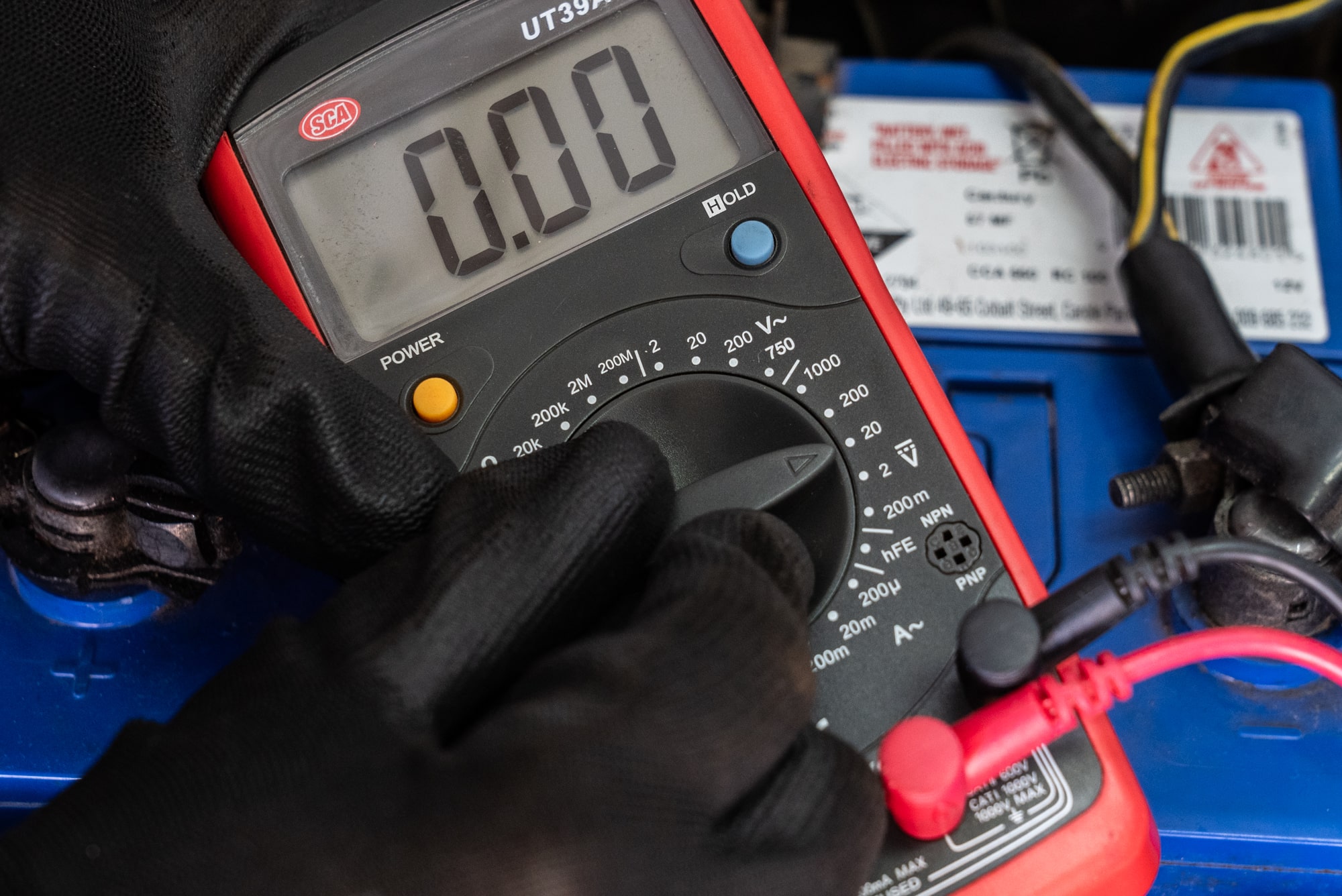
Start your engine and check the battery voltage at 1,500 rpm with headlights and AC off:
– Steady reading below 13.5V = Alternator isn’t replenishing power
– Voltage spikes above 14.8V = Over-charging that will cook your battery
– Battery warning light stays illuminated = Charging system failure
If you see any of these, shut off accessories immediately. Driving with low charging voltage risks stalling; high voltage can warp battery plates within days.
Perform These 3 No-Tool Checks in Under 5 Minutes
Age Check: The 10-Second Lifespan Test
Locate the date sticker on your battery case (usually a small circle with month/year codes). Batteries older than 5 years have a 73% failure rate according to industry data. If yours is 3–5 years old, assume it’s suspect—especially if you live in extreme climates. Pro tip: Note the installation date on your phone calendar when buying a new battery.
Cable Wiggle Test for Hidden Connection Failures
Grab each battery cable end firmly and try to twist it. If it rotates on the post, corrosion has eaten the contact surface. This single fault causes 41% of “dead battery” misdiagnoses. Tighten terminals to 8–10 Newton-meters (about as tight as you can get with a 10mm wrench by hand). Recheck charging voltage—if it jumps from 12.8V to 14.2V, you just fixed your problem.
Overnight Drain Detection Without Tools
If your battery dies overnight but tests fine when charged, parasitic drain is likely. Close all doors and wait 20 minutes for systems to sleep. If you hear relays clicking after this period, pull fuses one by one until the noise stops. Common culprits: aftermarket stereos, GPS trackers, or glovebox lights that won’t turn off.
Multimeter Tests That Pinpoint the Fault
Rest Voltage Test: The 12-Hour Truth Check
After parking overnight, measure voltage directly across battery posts (not clamps). 12.6V+ means fully charged—if lower, your charging system isn’t topping it off. Critical nuance: If voltage reads 12.4V but drops below 12.0V within an hour of turning off the engine, internal battery damage exists even if it cranks fine.
Cranking Voltage: The Real-World Load Test
Have a helper crank the engine while you watch the multimeter. The voltage must stay above 9.6V for 30 seconds. If it plummets to 8V immediately, your battery has high internal resistance and can’t deliver power—even if rest voltage looks good. This test catches failing batteries that pass static voltage checks.
Voltage Drop Test: Exposing Hidden Resistance
Place one probe on the battery positive post and the other on the cable clamp. Repeat for the negative side. Any reading over 0.1V indicates excessive resistance blocking charge flow. Common in older vehicles where corrosion creeps under insulation. Fix by replacing cables if cleaning doesn’t reduce the drop.
Load Test: The Battery’s Final Exam
Apply a load equal to half your battery’s cold-cranking amps (e.g., 300A for a 600CCA battery) for 15 seconds. Pass: Voltage stays ≥9.6V at 70°F. Fail: Voltage crashes—replace the battery even if it starts your car. Warning: Never perform this test on a battery reading below 12.4V; you’ll get false failures. Always recharge first.
Alternator Diagnosis When Battery Passes Tests
If your battery tests strong but charging voltage stays low:
1. Rev engine to 2,000 rpm with headlights on
2. Check for voltage rise—if it jumps from 12.8V to 14.2V, your drive belt is slipping
3. Listen for whining noises (failing bearings) or burning smells (diode failure)
4. If voltage stays flat, inspect the fusible link—a burnt wire between alternator and battery often kills charging with no warning lights.
Critical Charging System Failure Patterns

| Symptom You’re Seeing | Most Likely Cause | Immediate Action |
|---|---|---|
| Battery dies overnight but tests good | Parasitic drain >50mA | Pull fuses with ammeter to find circuit |
| Voltage 12.0–13.4V while driving | Weak alternator or loose belt | Tighten belt; if no change, test alternator |
| Swollen battery + sulfur smell | Over-charging alternator | Replace alternator regulator immediately |
| Slow crank but passes load test | Corroded cables | Clean posts and check voltage drop |
The 5-Step Decision Map for Charging Failures
- Battery older than 5 years? → Replace it—age trumps all tests
- Rest voltage below 12.4V after 12 hours? → Slow-charge with smart charger before further testing
- Fails load test? → Install new battery—no exceptions
- Running voltage outside 13.8–14.8V? → Inspect alternator belt, then test alternator output
- Battery holds charge 24 hours off-car? → OK for now—monitor monthly
Safe Charging Practices for Salvageable Batteries
Never jump straight to a trickle charger for a depleted battery. First, use a smart charger in maintenance mode (0.8–1.5A) for 6–12 hours. This 3-stage process (bulk/absorption/float) prevents damage from unregulated charging. Crucially: Short winter drives won’t recharge your battery—you need 30+ minutes of highway driving to offset one cold start’s energy drain. If your commute is under 10 minutes, install a battery maintainer.
Non-Negotiable Safety Protocols
- ALWAYS disconnect negative cable first to prevent short circuits
- Wear eye protection—battery acid causes permanent damage in seconds
- Never charge a frozen battery—thaw completely first (≥40°F)
- Ventilate your workspace—hydrogen gas ignites from a spark miles away
- Recycle old batteries—retailers refund core fees when you return them
Glovebox Checklist: 10-Second Charging Failure Triage
Keep this printed in your car for instant diagnosis:
□ Battery age ≤ 5 years
□ Zero case swelling or acid leaks
□ Terminals clean and immovable by hand
□ Rest voltage ≥ 12.6V after overnight rest
□ Cranking voltage ≥ 9.6V
□ Charging voltage 13.8–14.8V at 1,500 rpm
□ Parasitic drain < 50mA
□ Drive belt tight with no squeal
□ No burning smells from engine bay
□ Battery warning light OFF when running
Fail any test? Address it immediately—your next breakdown could strand you in freezing rain or blazing heat. A properly functioning charging system should keep your battery at 12.6V+ indefinitely; anything less means hidden damage is accumulating. Don’t wait for total failure: test monthly if you drive short distances or live where temperatures swing below 20°F or above 100°F. Your reliable starts depend on it.


