
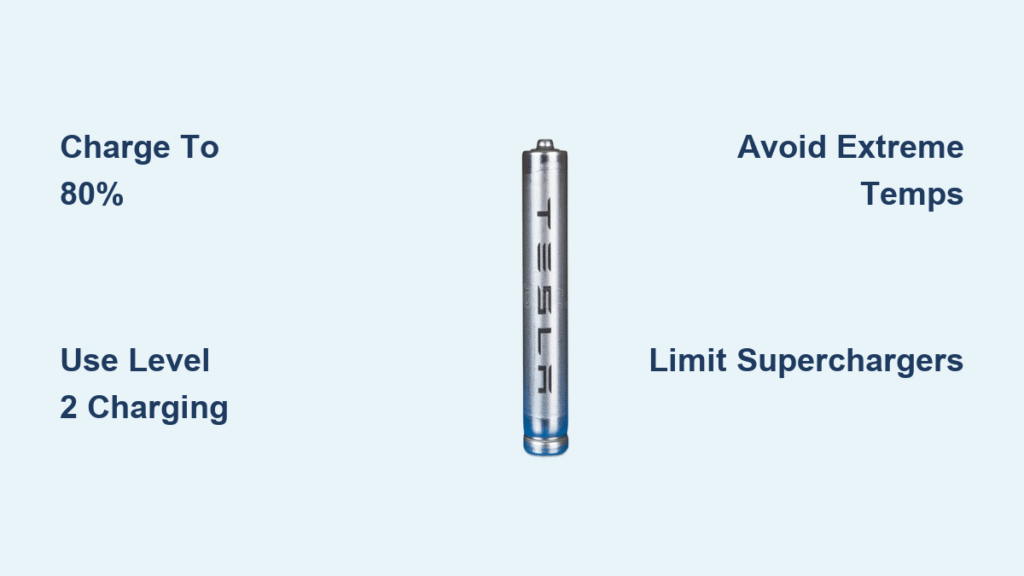
Your Tesla’s battery pack represents one of the most expensive components in your vehicle, yet most owners unknowingly accelerate degradation through everyday charging habits. Understanding how to maximize Tesla battery life isn’t just about preserving range—it’s about protecting a $15,000+ investment that should outlast your ownership. With proper care, Tesla batteries regularly exceed 200,000 miles while maintaining sufficient capacity for daily driving needs.
This guide transforms complex battery chemistry into practical, actionable steps you can implement immediately. Unlike generic advice, these strategies are drawn directly from Tesla’s engineering specifications and real-world owner data tracking battery performance over hundreds of thousands of miles. You’ll discover exactly how to balance daily convenience with long-term battery preservation.
Set Your Daily Charge Limit to 80% (Not 100%)
Maintaining your Tesla between 20-80% charge is the single most effective way to maximize battery longevity. Lithium-ion cells experience minimal stress in this range, significantly slowing capacity degradation compared to maintaining higher charge levels. Every percentage point above 80% increases electrolyte breakdown and electrode wear.
Why 80% Is Your Battery’s Sweet Spot
- Daily driving range: 80% charge provides 240-280 miles for most models—more than enough for 99% of commutes
- Chemical stability: Above 80%, lithium plating accelerates, permanently reducing capacity
- Real-world data: Owners who consistently charge to 80% show 5-8% degradation after 50,000 miles versus 10-15% for those regularly charging to 100%
Configure Charging Limits in Under 60 Seconds
Open your Tesla app, select your vehicle, then navigate to Controls > Charging > Set Charge Limit. Drag the slider to 80% for daily use and set a schedule to maintain this limit automatically. For those with variable weekly patterns, create two profiles: 80% for weekdays and 90% for weekends when extra range is needed for longer trips.
Pro tip: If your daily commute uses less than 3-4% of your battery, consider setting your limit to 50-60%—this ultra-conservative approach yields the slowest possible degradation rates for minimal usage patterns.
Optimize Home Charging for Battery Longevity

Your home charging setup determines 70% of your battery’s long-term health. Level 2 charging (240V) delivers the gentlest energy transfer, minimizing thermal stress that accelerates degradation. The difference between proper home charging and relying on Superchargers becomes dramatic after 50,000 miles.
Wall Connector Configuration Guide
- Amp settings: Set your Wall Connector to 32-40 amps for optimal balance between speed and battery health
- Timing strategy: Use Scheduled Departure to finish charging 30 minutes before your drive time
- Temperature advantage: Home charging in your garage provides natural temperature moderation
When 120V Charging Makes Sense
Contrary to popular belief, Level 1 (110V) charging isn’t obsolete. For drivers covering less than 40 miles daily, the slower energy transfer actually benefits battery chemistry. A Model 3 owner driving 25 miles daily can maintain optimal health charging exclusively via 120V, gaining 4 miles of range per hour while generating minimal heat.
Real-world example: One owner tracking battery health for 100,000 miles found their Level 2 home charging-only vehicle maintained 94% capacity versus 89% for a colleague relying on frequent Supercharging.
Defend Against Temperature Damage Immediately
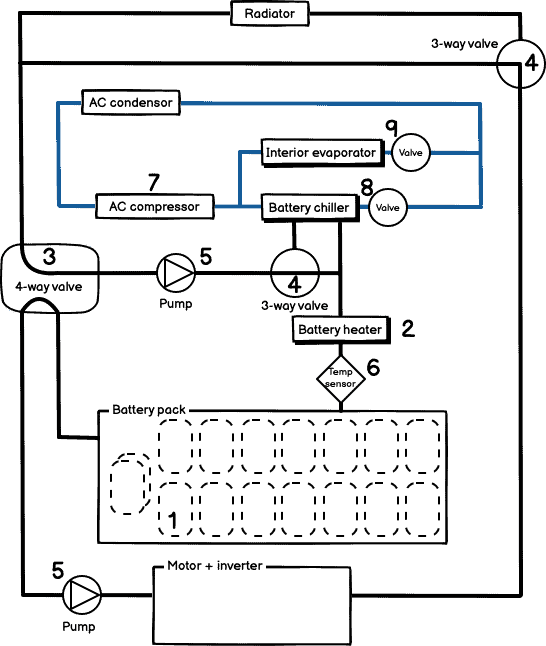
Extreme heat causes more battery degradation than any other environmental factor. Tesla’s thermal management system works overtime in hot climates, constantly cycling coolant to protect cells. Smart parking and preconditioning strategies reduce this stress without requiring any hardware modifications.
Hot Weather Protection Protocol
- Park smart: Always choose shaded spots or garages when temperatures exceed 85°F
- Cabin Overheat Protection: Enable at 90°F setting to reduce interior heat soak without excessive drain
- Pre-cooling: Use the app to cool your car while plugged in, drawing power from the grid instead of your battery
Winter Battery Preservation Tactics
Cold weather equally threatens battery health, slowing chemical reactions and reducing available power. Below freezing, precondition your battery 30 minutes before driving using the Tesla app—this warms cells to optimal operating temperature (37-43°F) while still connected to power.
Critical warning: Never charge in temperatures below -22°F or above 140°F for more than 24 hours. If caught in extreme conditions, precondition your battery to safe operating range before initiating charge.
Slash Vampire Drain by 70% With These Settings
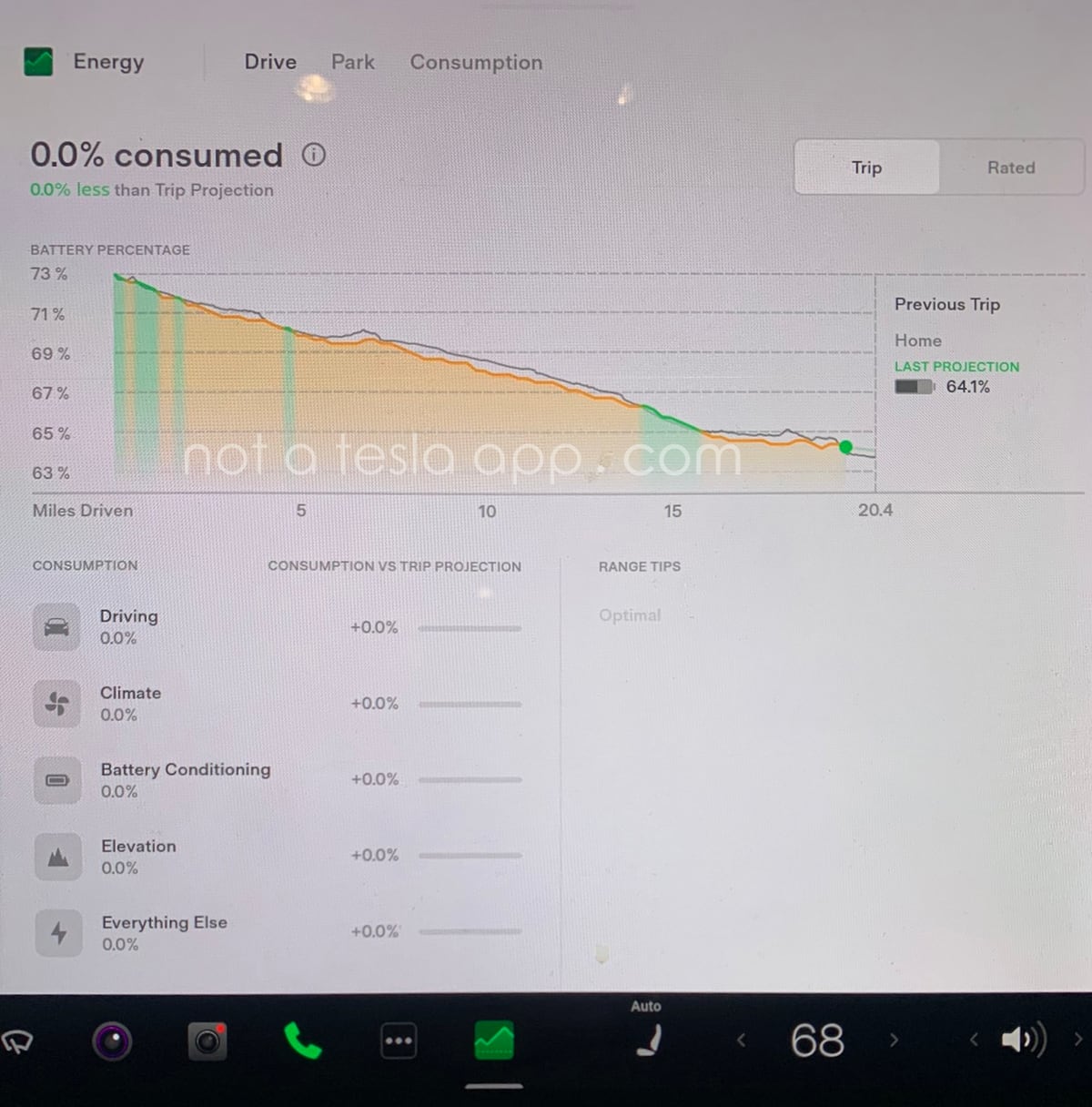
Your parked Tesla consumes approximately 1% battery daily—a small amount that compounds during extended storage. Understanding what drives this phantom drain helps you minimize unnecessary battery cycling that contributes to long-term degradation.
Energy-Saving Configuration Checklist
- Sentry Mode: Disable at familiar locations (home/work) where security risks are minimal
- Energy Saving mode: Enable when parked for multiple days to reduce background processes
- Scheduled charging: Set to complete just before departure to minimize time at high charge levels
Storage Best Practices for Extended Absences
Planning a two-week vacation? Charge to exactly 65% before leaving. At 1% daily drain, this provides a 45% buffer after 20 days—well above the 20% minimum recommended for storage. For month-long absences, set calendar reminders to check charge levels weekly via the app.
Pro tip: Monitor your vehicle’s energy usage through the Tesla app’s “Energy” tab to identify abnormal drain patterns that might indicate system issues needing service attention.
Drive Like a Battery Preservation Expert (Not a Speed Demon)
Your driving style directly impacts battery longevity more than most realize. Aggressive acceleration creates heat and deep discharge cycles that accelerate degradation far more than daily charging habits. Adopting smoother techniques preserves both range and long-term health.
Range-Preserving Driving Techniques
- Speed management: Every 10 mph over 65 mph reduces range by 10-15% and increases battery stress
- Regenerative braking: Maximize “Standard” setting to recover 70% of deceleration energy
- Route planning: Use navigation to avoid deep discharges below 20%—the most damaging range
Charging Frequency Optimization
Contrary to popular belief, daily charging isn’t harmful—it’s maintaining high charge levels that causes issues. For low usage (under 30 miles daily), charging twice weekly from 50-70% is gentler than daily top-offs from 80-90%.
Example scenario: A retiree driving 15 miles weekly benefits from charging to 60% every other week, maintaining optimal battery chemistry while meeting range needs.
Monitor Battery Health Like a Tesla Technician
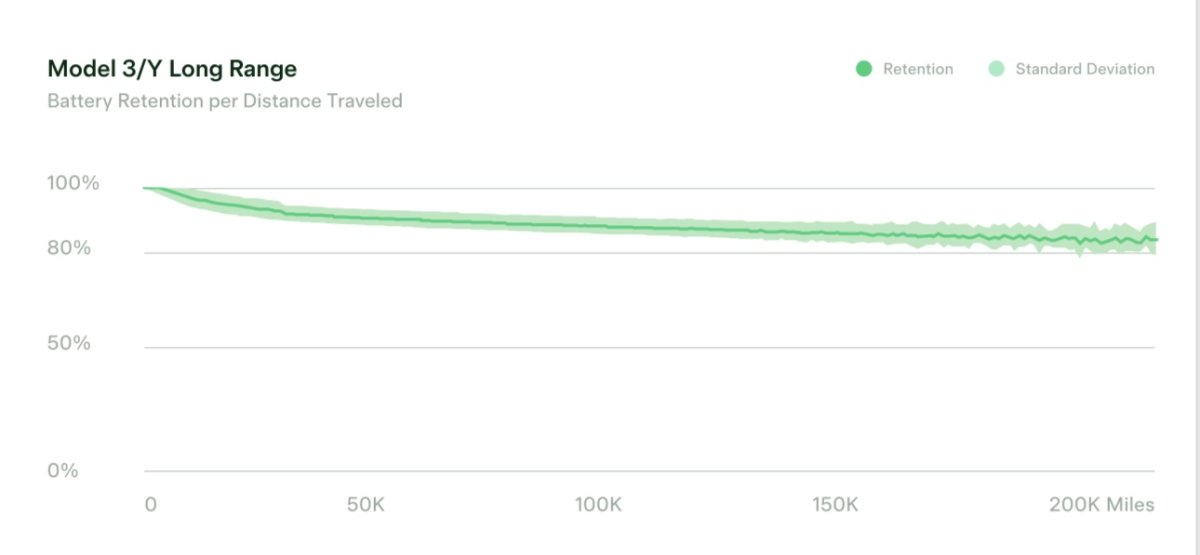
Early detection of issues prevents costly surprises down the road. Tesla provides multiple ways to track your battery’s condition, but knowing what to watch makes the difference between normal degradation and preventable damage.
Health Tracking Methods That Work
- Range comparison: Track your 100% range estimate monthly—gradual decline is normal, sudden drops indicate problems
- App monitoring: Check for unusual charging patterns or extended charge times
- Software updates: Install promptly as they often include battery optimization improvements
Degradation Benchmarks to Watch
After 50,000 miles, expect 5-8% capacity loss—this is normal. By 200,000 miles, 15-20% degradation still leaves sufficient range for most owners. The key is ensuring degradation follows a gradual curve, not sudden drops indicating potential issues.
Critical warning: If your range drops more than 10% in a single month without explanation, contact Tesla Service immediately—this often indicates a thermal management issue requiring attention.
Avoid These 4 Battery-Killing Mistakes Immediately
These common errors silently destroy capacity while feeling convenient. Most owners commit at least one regularly, accelerating degradation unnecessarily without realizing the long-term consequences.
Never Do These Battery-Damaging Actions
- 100% daily charging: Even for long commutes, 90% provides sufficient buffer while reducing stress
- Deep discharges: Regularly dropping below 10% stresses cells significantly
- Supercharging dependency: Use as backup, not primary charging method
- Extreme temperature charging: Avoid charging in direct 100°F+ sunlight
Emergency Protocols When Battery Hits Zero
If your Tesla reaches 0% displayed charge, immediate action is critical. The vehicle enters low-power consumption mode to protect systems. Contact Tesla Support through the app immediately—never attempt to jump-start or tow without guidance.
Plan Your Charging Strategy for 200,000+ Miles
High-mileage drivers can achieve exceptional battery longevity with strategic planning. Whether you’re a daily commuter or road trip enthusiast, these protocols ensure your battery remains healthy for the long haul.
High-Mileage Success Strategy
- Charge range: Strict 20-80% for daily use, 90% only for 200+ mile legs
- Charging method: Level 2 home charging exclusively (6-11 kW rates)
- Trip planning: Map Supercharger stops to maintain 20-80% window during long trips
- Monitoring: Track efficiency monthly, watching for sudden range drops
Bottom line: Your Tesla’s battery will likely outlast your ownership period with these practices. The 15 minutes spent optimizing settings this week pays dividends for years through sustained range, performance, and resale value. Open your Tesla app now, adjust your charge limit to 80%, and schedule your next charging session—you future self (and your wallet) will thank you.


