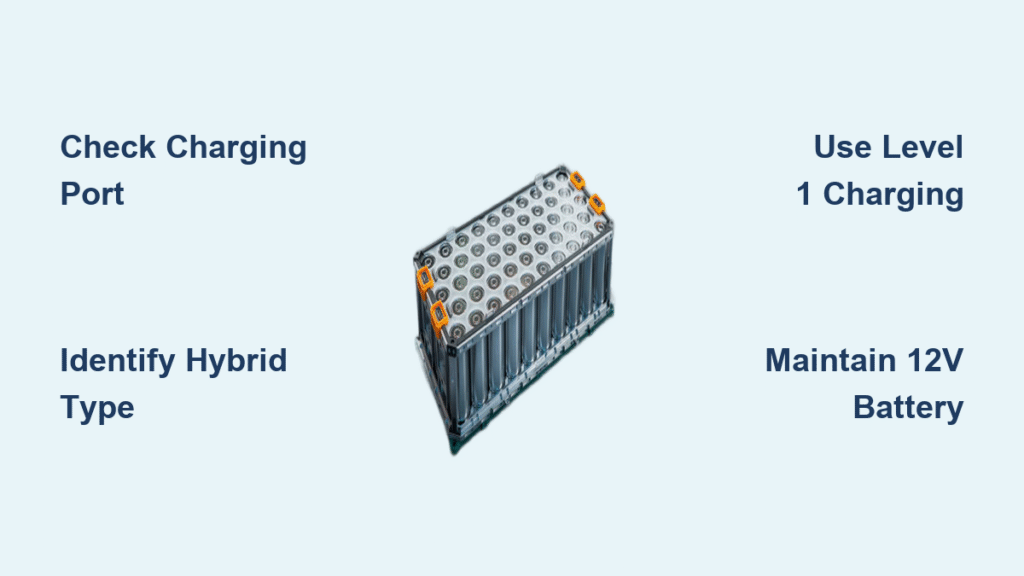
That “low battery” warning just flashed on your dashboard, and you’re suddenly wondering if you need to hunt for a charging station immediately. The truth is, you might not need to plug in at all—depending on what type of hybrid you drive. Standard hybrids like the Toyota Prius recharge themselves while you drive, while plug-in hybrids require plugging in, and fully electric vehicles depend entirely on external charging. This guide cuts through the confusion with precise steps for your specific vehicle type, so you never waste time searching for charging stations you don’t need or neglecting charging when it’s essential.
Your hybrid’s charging needs depend entirely on whether it’s a standard hybrid, plug-in hybrid, or full electric vehicle. Trying to plug in a standard hybrid won’t work—it lacks the necessary hardware—while ignoring charging requirements for a plug-in hybrid will leave you stranded when the electric range depletes. Understanding this critical distinction saves you time, money, and unnecessary stress each time you drive.
Identify Your Hybrid Type Before Attempting to Charge
Stop what you’re doing and check for a charging port before reaching for any cables. This single inspection determines your entire charging strategy and prevents wasted effort trying to plug in a vehicle that can’t accept external power.
Standard hybrids like the Toyota Prius (non-plug-in models), Honda Insight, and Hyundai Ioniq Hybrid have no charging port whatsoever. These vehicles recharge their small electric batteries exclusively through regenerative braking and engine operation while driving—you’ll never need to plug one in.
Plug-in hybrids such as the Toyota Prius Prime, Hyundai Ioniq Plug-in, and Ford Escape PHEV feature identical exteriors to standard hybrids but include a charging port typically located on the front fender or rear quarter panel. These vehicles require regular plugging in to maintain their 20-50 mile electric-only range.
Battery electric vehicles like Teslas or the Nissan Leaf contain no gasoline engine and rely completely on external charging for all driving needs. If you’re unsure which type you own, consult your owner’s manual or look for that critical charging port.
Effective Charging Methods for Plug-In Hybrids

Level 1 Home Charging Using Standard Outlets
Your plug-in hybrid came with a portable charging cord that plugs into any standard household outlet, delivering 3-5 miles of electric range per hour. This method works anywhere you find a grounded 120V outlet, making it perfect for overnight top-ups, emergency charging, or travel when faster options aren’t available.
Critical safety note: Always plug into a dedicated 15-amp circuit to prevent tripped breakers—never use extension cords or power strips. Connect the vehicle first, then the outlet, and verify charging begins through dashboard indicators or port illumination. While slow, this method reliably maintains your electric range with minimal setup.
Level 2 Home Charging Stations for Faster Replenishment
Installing a 240V Level 2 charger at home transforms your charging experience, delivering 10-30 miles of range per hour depending on your vehicle’s onboard charger capacity. These wall-mounted stations require professional installation by a licensed electrician, typically costing $500-$1,500 including hardware and labor.
Smart charging advantage: Program your vehicle’s charging schedule through its companion app to automatically charge during off-peak electricity hours, potentially cutting your charging costs in half. Hard-wired installations provide the cleanest setup, but NEMA 14-50 outlets offer flexibility if you ever move.
Step-by-Step Guide to Properly Plug In Your Hybrid

- Park and power down – Shift to PARK and turn the vehicle completely off before connecting any cables
- Access the charging port – Press the charge-port button on your key fob or inside the vehicle dashboard
- Connect firmly – Insert the connector until you hear a distinct click, then verify connection through dashboard indicators
- Monitor progress – Check your instrument cluster or mobile app for estimated completion time
- Disconnect safely – Unlock the vehicle first, then press the connector release button before removal
Common mistake: Attempting to charge while the vehicle is still in READY mode—this prevents proper charging initiation. Always power down completely first.
Maximize Battery Longevity With These Charging Habits
Daily Shallow Charging Cycles
Plug in every night regardless of remaining range. Frequent shallow charging between 20-80% significantly extends your battery’s lifespan compared to allowing deep discharges. This routine maintains optimal battery chemistry while ensuring maximum electric range for your next drive.
Temperature-Specific Charging Strategies
Cold weather: Pre-condition your vehicle while plugged in to warm the battery before driving—this improves efficiency by up to 40% in freezing conditions. Never attempt to charge a frozen battery; allow it to warm to at least -20°C first.
Hot weather: Park in shade whenever possible and avoid charging to 100% in extreme heat. Temperatures above 35°C accelerate battery degradation more severely than cold conditions, so schedule charging for cooler evening hours during summer.
Certified Charging Equipment Only
Only use charging equipment certified to UL 2594 standards and specifically recommended by your vehicle manufacturer. Cheap aftermarket chargers create serious fire hazards and can permanently damage your battery management system. Check for the manufacturer’s logo and certification labels before purchasing any charging equipment.
Long-Term Parking Without Draining Your Hybrid
High-Voltage Battery Protection
Your main traction battery maintains safe charge levels automatically for months when parked—the Battery Management System prevents critical discharge. No special action is needed for the high-voltage system during storage.
12V Auxiliary Battery Maintenance
This smaller battery powers your locks, computers, and radio and will drain completely after 2-4 weeks of inactivity, preventing your vehicle from starting. Solution: Connect a dedicated 12V battery maintainer like the Battery Tender Plus or CTEK MXS 5.0, or disconnect the negative battery cable for extended storage.
Winter storage myth: Wind-chill has no effect on batteries—only ambient temperature matters. At -25°C or below, ensure your 12V battery is fully charged or connected to a maintainer to prevent freeze damage.
Why Standard Hybrids Can’t Accept External Charging
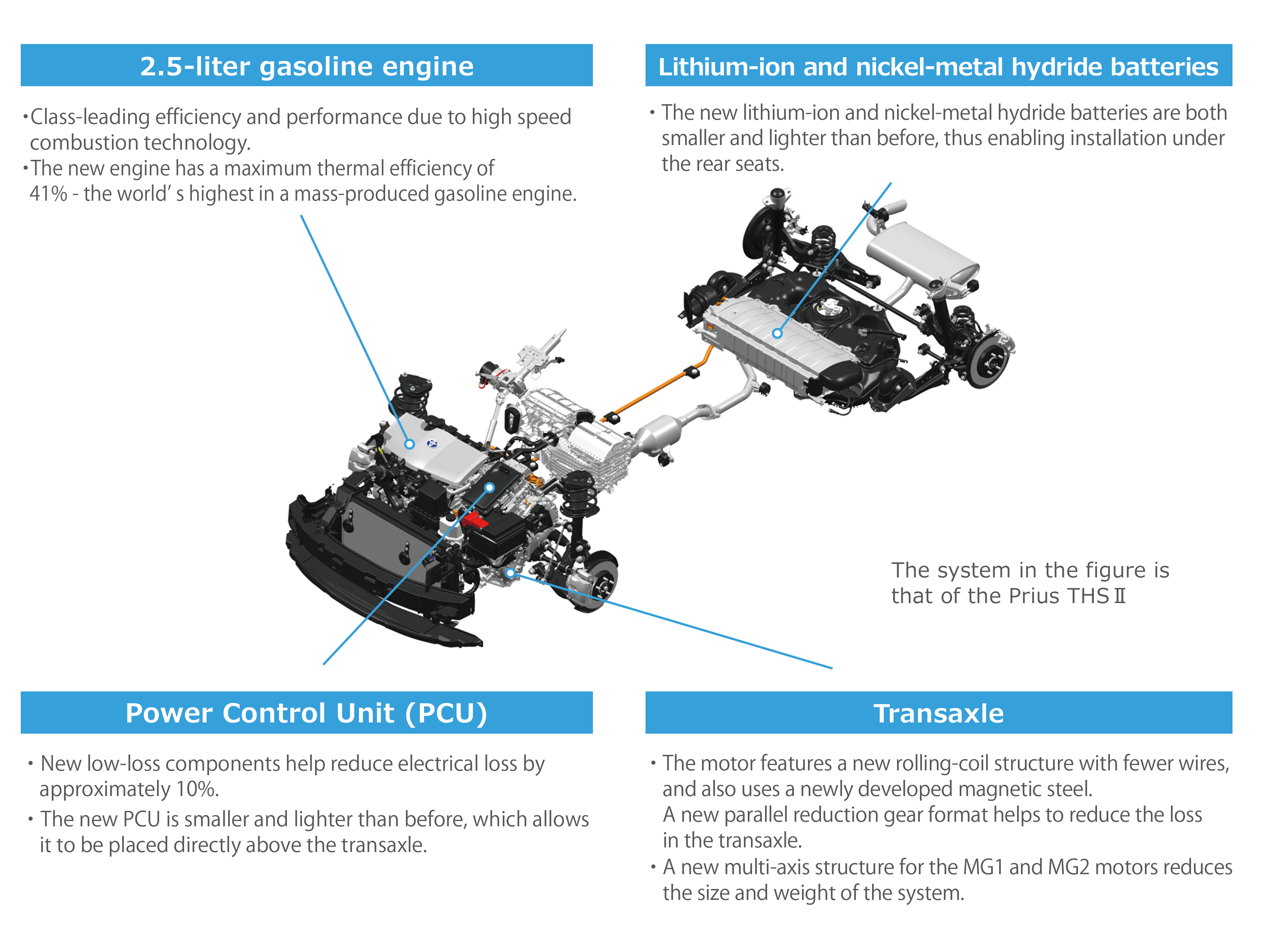
Your Toyota Prius Hybrid lacks the necessary hardware for external charging—no charging port, onboard AC charger, or Battery Management System provisions exist from the factory. Any attempt to modify it requires extensive, expensive, and dangerous alterations including:
- Installing J1772 charge port and wiring
- Retrofitting 3.3-7.2 kW onboard charger
- Reprogramming inverter/BMS for external power
- Upgrading high-voltage cabling and cooling
Reality check: These modifications cost $5,000-$10,000 while voiding all powertrain warranties and creating significant fire risks. The complexity and danger make this modification completely impractical—simply purchase a factory plug-in hybrid instead.
Troubleshooting Common Hybrid Charging Concerns
“READY” Mode Charging Myth
Leaving a standard hybrid idling in READY mode won’t meaningfully charge the high-voltage battery. Significant charging only occurs when driving under load—coasting or idling provides minimal regeneration.
Normal Dashboard Indicators
Three green bars on Toyota hybrid dashboards indicate approximately 40% state-of-charge—this is perfectly normal for short drives. The vehicle’s computer actively maintains the battery between 40-80% for optimal longevity, so don’t worry if it never shows “full.”
No Charging Port? No Problem
If you can’t locate a charging port on your vehicle, you own a standard hybrid that recharges itself while driving—no external charging is ever required or possible.
Hybrid Charging Quick Reference Guide
| Vehicle Type | External Charging Required | Charging Port Location | Primary Charging Method |
|---|---|---|---|
| Standard Hybrid | Never | None exists | Regenerative braking + engine |
| Plug-In Hybrid | Yes – to restore electric range | Front fender or rear quarter panel | Home Level 1/2, public stations |
| Electric Vehicle | Always – entire energy supply | Front fender or rear quarter panel | Home Level 1/2, DC fast chargers |
Final Reality Check: Check for a charging port on your vehicle. If you have one, plug it in overnight to maximize your electric driving range and minimize fuel costs. If you don’t see a port, your hybrid recharges itself automatically while driving—simply enjoy the improved fuel economy without any charging hassles. Never waste time searching for charging stations you don’t need, and never neglect charging when your vehicle requires it—knowing your specific hybrid type is the key to stress-free ownership.


