
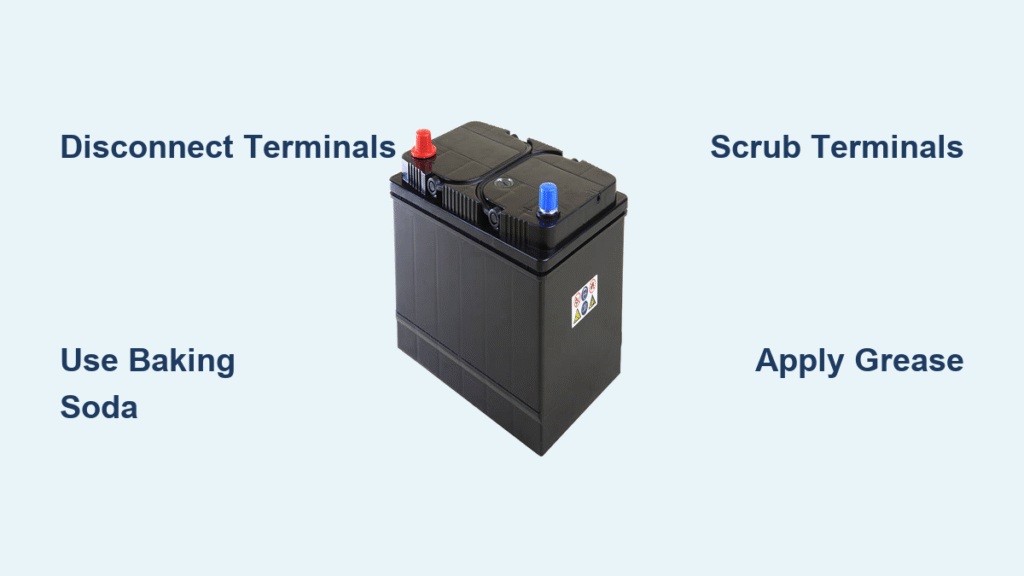
That familiar clicking sound when you turn the key sends a jolt of panic through you—it’s not the starter, it’s the white, crusty monster eating your battery terminals. Left unchecked, this corrosion blocks electrical current like a dam across a river, starving your engine of power. The good news? You can eliminate this problem in under 30 minutes with supplies from your kitchen cabinet. This guide reveals exactly how to remove corrosion from car battery terminals safely and prevent it from returning, restoring full power to your electrical system.
Spot Corrosion Before It Kills Your Engine
Instant Visual Recognition Guide
Look for these unmistakable signs the next time you pop your hood:
– Chalky white crust exploding from terminal tops like volcanic ash
– Blue-green fuzz clinging to copper cables (a dead giveaway)
– Flaky crystalline deposits crawling down battery sides
– Rust bleeding from cable clamps onto metal brackets
Critical Performance Warnings
Your car screams for help before total failure:
– Engine cranks slower than a sleepy sloth every morning
– Headlights dim like a flickering candle when AC kicks on
– Radio resets or power windows move like molasses
– That dreaded click-click-click with zero engine turnover
60-Second Inspection Protocol
Park on level ground, shut off the engine, and wait 30 minutes. Grab a flashlight and inspect where cables meet battery posts—any powdery residue means corrosion is actively strangling your electrical system. Don’t wait for symptoms; check every oil change.
Safety Gear That Prevents Acid Burns

Non-Negotiable Protection Checklist
- Chemical-resistant gloves (nitrile, not latex) shielding hands from acid burns
- Safety goggles with side shields blocking corrosive splashes
- Long-sleeve cotton shirt and pants protecting skin from drips
- N95 respirator filtering toxic fumes during heavy cleaning
Critical Pre-Cleaning Safety Steps
- Confirm engine is OFF and keys removed from ignition
- Engage parking brake and shift to PARK to prevent movement
- Wait 30+ minutes for engine heat to dissipate
- Scan for danger signs: Cracks in battery case, wet acid puddles, or swollen sides
When to Slam the Brakes and Call a Pro
STOP IMMEDIATELY if you see:
– Cracked battery casing with visible acid trails
– Bulging sides like an overinflated balloon
– Active acid leaks pooling in the battery tray
– Melted cable insulation exposing bare wires
Baking Soda Method: Neutralize Corrosion in 4 Steps
Create Your Acid-Neutralizing Solution
Mix 1 tablespoon baking soda with 1 cup cool water in a plastic cup only (metal reacts dangerously). For severe buildup, double the baking soda to form a thick paste that clings to vertical surfaces.
Step-by-Step Corrosion Elimination
Step 1: Disconnect Terminals Safely
Remove the black negative terminal FIRST with a wrench—this prevents short circuits. Slide the cable away from the battery. Then disconnect the red positive terminal. Never let tools touch both terminals simultaneously.
Step 2: Drown the Corrosion
Pour baking soda solution directly onto corroded areas. Watch for vigorous bubbling—this is the chemical reaction neutralizing sulfuric acid. Let it sit 2 minutes for the crust to soften. Reapply paste to stubborn blue-green deposits.
Step 3: Scrub Like Your Car Depends on It (It Does)
– Wire brush: Attack terminal posts and cable clamps
– Old toothbrush: Reach into bolt holes and cable crevices
– Steel wool: Gently remove residue from plastic battery casing
Scrub until all metal surfaces gleam like new silverware.
Step 4: Rinse and Dry Thoroughly
Douse with clean water to flush away residue. Wipe dry with microfiber cloths, then blow compressed air into terminal holes. Moisture left behind guarantees faster corrosion return.
Emergency Coca-Cola Trick (Use Sparingly)
In a pinch, pour flat cola over terminals—the phosphoric acid dissolves corrosion. BUT: You must rinse 3x longer than with baking soda and dry completely before reconnecting. This is a roadside hack, not a proper solution.
Reconnect Terminals Without Sparking Danger

Correct Reassembly Sequence
- Apply terminal grease to all metal surfaces (see prevention section)
- Connect red positive terminal FIRST and tighten until snug (don’t strip bolts)
- Connect black negative terminal LAST—you’ll hear a small click as it seats
- Jiggle cables firmly—they shouldn’t budge more than 1/8 inch
Connection Tightness Test
Grab each cable end and try to rotate it on the post. If it turns, it’s too loose. Proper tension lets you tighten with one hand but requires two hands to loosen. Replace cracked cable clamps immediately—they cause dangerous arcing.
Stop Corrosion Before It Starts

Apply Military-Grade Terminal Protection
- Silicone dielectric grease: Smear a dime-sized amount on terminals (never petroleum-based—it melts in heat)
- Pre-treated felt washers: Slide these acid-absorbing pads under cable clamps (replace yearly)
- Battery terminal spray: Creates invisible shield against acid vapors in humid climates
3-Minute Monthly Maintenance Routine
- Wipe terminals with dry cloth while engine is cold
- Check for new white powder forming at terminal bases
- Reapply grease if original coating looks thin
In coastal or snowy regions, do this weekly—salt accelerates corrosion 300%.
Troubleshoot After Cleaning
Immediate Success Verification
Start your engine—cranking should be instant and smooth. Test with a multimeter:
– 12.6+ volts with engine off = healthy battery
– 13.8-14.4 volts while running = working alternator
If lights flicker or radio resets, corrosion remains in hidden spots.
Persistent Problems Demand These Checks
- Corrosion under cable insulation: Peel back rubber boot to inspect
- Ground strap corrosion: Check where battery cable meets chassis
- Alternator overcharging: Output over 14.7 volts cooks batteries
If slow cranking returns within a week, replace the battery—it’s likely failing internally.
When Replacement Beats Repair
Battery Retirement Red Flags
- Corrosion returns within 2 weeks despite proper cleaning
- Battery older than 4 years (most last 3-5 years)
- Case feels warm after driving (indicates internal failure)
- Voltage drops below 12.4V after sitting overnight
Pro Tip: When buying a new battery, choose one with side terminals—they reduce corrosion by 70% compared to top posts. Always clean the tray before installing the replacement.
Clean terminals mean reliable starts in any weather. By spending 30 minutes now, you’ve saved yourself a $100 jump-start call and prevented a stranded weekend. Make terminal inspection part of your monthly routine—just pop the hood while fueling up. For extreme climates, keep a baking soda solution in your trunk. Remember: that white crust isn’t just ugly; it’s your car’s silent killer. Stop corrosion early, and your battery will deliver full power for years to come. Next time you hear that smooth engine roar, you’ll know exactly why.


