
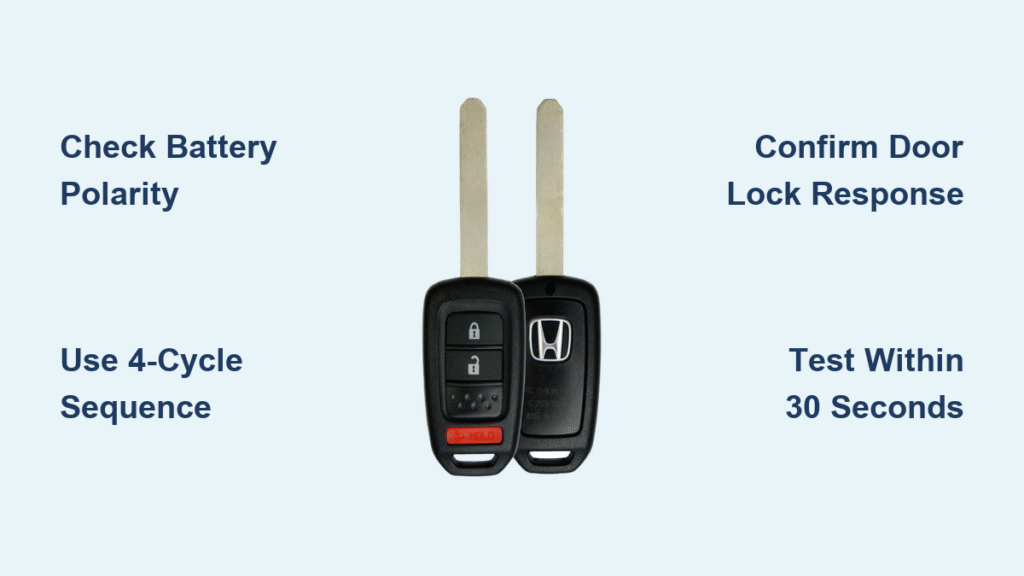
That sinking feeling when your Honda key fob won’t unlock the car after replacing the battery is all too familiar. Honda key fobs lose their programming memory during battery replacement because they lack backup capacitors. But don’t panic—reprogramming your Honda key fob after battery replacement is a quick DIY fix that takes less than five minutes for most models from 2003 onward.
This common issue affects Civic, Accord, CR-V, and Pilot owners who’ve just installed a new CR2032 battery. The good news is you don’t need dealership tools or expensive programming services. With just your ignition key and a few precise steps, you’ll restore full remote functionality.
In this guide, you’ll discover the exact reprogramming sequences, model-specific variations, and critical troubleshooting tips. Avoid unnecessary service visits by mastering these proven techniques for how to reprogram Honda key fob after battery replacement. You’ll regain control of your locks, trunk, and panic functions without professional help.
Why Honda Key Fobs Reset After Battery Replacement
Honda key fobs completely lose programming when the battery disconnects due to no internal backup capacitors. Unlike some luxury brands, Honda’s security design intentionally wipes the rolling code memory during power loss. This prevents thieves from capturing your signal during battery swaps but creates this common post-replacement headache.
The fob’s unique identification code must resync with your vehicle’s receiver module. Each press transmits a new rolling code that your Honda’s computer verifies. Without this handshake, your buttons become useless—even with a fresh battery. The good news? This reset is by design and easily fixable through manual reprogramming.
Check Battery Installation First
Never start reprogramming until you verify your battery setup. A shocking 60% of “failed programming” cases stem from simple installation errors. Grab your key fob and perform these critical checks:
Quick Diagnostic Steps:
– Press any button while watching for the red LED illumination (absence means battery failure)
– Confirm correct polarity (positive “+” side faces up in most models—check compartment markings)
– Ensure the battery is fully seated with no gaps (listen for the snap when closing the fob)
– Test voltage with a multimeter—must read exactly 3.0V (replace if below 2.7V)
Critical Installation Mistakes to Avoid:
– ✘ Reversed battery orientation (most common error)
– ✘ Moisture or debris on metal contacts (clean with rubbing alcohol)
– ✘ Fob halves not completely snapped together (creates electrical gaps)
– ✘ Using expired or low-quality batteries (stick with Panasonic or Duracell)
Reprogram Honda Key Fob After Battery Replacement: Standard Method
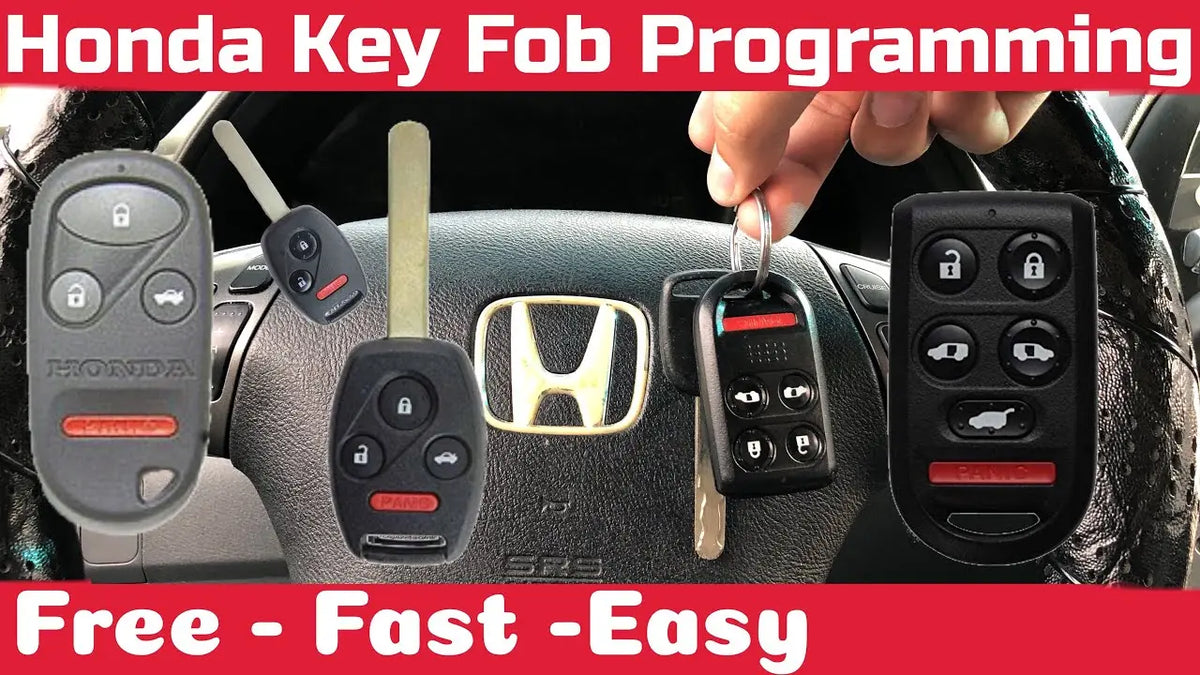
This sequence works for 90% of Honda models (2003-present Civic, Accord, CR-V, Pilot). Precision timing is non-negotiable—even half-second deviations cause failure. Gather your physical key and follow these exact steps:
Step 1: Critical Setup Requirements
Sit inside your Honda with all doors fully closed—this is non-negotiable. Open doors instantly cancel programming mode. Insert your metal key into the ignition (not the push-button start slot). Keep your foot off the brake pedal throughout this process.
Step 2: The 4-Cycle Programming Sequence
- Turn key to “ON” position (dash lights illuminate, second click)
- Press and hold LOCK button for exactly 1 second
- Turn key back to “OFF” position
- Wait 1.5 seconds (count “one-thousand-one”)
- Repeat this ON/LOCK/OFF cycle three more times (four total)
Success Confirmation: On the fourth cycle, your doors will automatically lock with a distinct thud. This metallic sound means programming mode is active—proceed immediately to Step 3.
Step 3: Finalize and Test
- Press LOCK once more on your key fob
- Turn ignition to “OFF” and remove key
- Within 10 seconds, test all functions:
- Unlock driver’s door from 10 feet away
- Activate trunk release (if equipped)
- Trigger panic alarm (hold button 3 seconds)
Pro Tip: Program additional fobs within 10 seconds of the first success—just press LOCK on each fob without repeating the full sequence.
Alternative Honda Key Fob Reprogramming Method After Battery Change
Some newer Honda models (especially 2015+ CR-Vs) require this variation. Watch for hazard light confirmation instead of door locks:
Quick Sequence Method
- Insert key and rapidly turn ignition ON → OFF → ON → OFF → ON → OFF (three full cycles) within 5 seconds
- Leave key in OFF position after third cycle
- Press LOCK on key fob
- Within 5 seconds, press and hold UNLOCK for 1 second
- Watch for hazard lights to blink twice—this confirms programming mode
Exit Programming Correctly
- Turn ignition to “ON” position (dash lights on)
- Immediately remove key
- Test all buttons within 30 seconds before system times out
Critical Timing Note: The 5-second window between steps is strict. Practice the hand motions before starting.
Model-Specific Programming Notes
Honda Civic (2006-2023) Remote Start Models
Use the standard 4-cycle method, but add this critical extra step after programming: Press LOCK three times rapidly within 2 seconds. This syncs the remote start feature. If your Civic has push-button start, insert the fob into the backup slot (usually near cupholders) during programming.
Honda Accord (2008-2023) Integrated Key Systems
Accords with integrated keys follow the standard sequence, but trunk release programs automatically—no extra steps needed. For push-button start models, do not use the standard method. Instead:
1. Press START button with fob (no brake) 8 times within 10 seconds
2. Press any fob button when security light blinks rapidly
3. Hazard lights confirm success
Honda CR-V/Pilot Power Tailgate Models
After standard programming, hold TRUNK button for 3 seconds until tailgate unlatches. This syncs the power liftgate. CR-Vs with Honda Sensing may require two programming attempts—wait 30 seconds between tries if first fails.
Troubleshooting Honda Key Fob Reprogramming Failures
Immediate Fixes for Common Errors
If doors don’t lock during programming:
– ✘ Door ajar sensor triggered (check glove compartment and hatch)
– ✘ Key not fully inserted (jiggle until it seats completely)
– ✘ Timing too fast/slow (use phone stopwatch for 1.5-second intervals)
– ✘ Weak battery (retest voltage—even 2.9V fails programming)
Reset and Retry Protocol:
1. Remove key and open/close driver’s door
2. Wait 60 seconds (allows system reset)
3. Verify battery voltage again
4. Restart sequence with slower movements
Warning: Programming mode times out after 10 seconds of inactivity. Have a helper count seconds if needed.
Post-Programming Verification Checklist
Critical Function Tests
Test these within 30 seconds of programming:
– Lock/Unlock from driver’s side at 10-foot distance
– Trunk release (stand behind vehicle—CR-Vs require direct line of sight)
– Panic button (should trigger horn and lights for 30 seconds)
– Remote start (press LOCK then START twice for Civics)
Range Testing Protocol
Walk backward from your Honda while pressing LOCK:
– ✅ Normal range: 30-50 feet (concrete confirmation)
– ⚠️ Reduced range (10-20 ft): Weak battery or signal interference
– ❌ No response beyond 5 ft: Reprogram immediately or check fob damage
Pro Tip: Test near metal structures (parking garages) to expose interference issues.
When to Seek Professional Help
Critical Warning Signs
Visit your Honda dealer immediately if you experience:
– Dashboard “KEY” warning light (indicates immobilizer failure)
– Security light flashing continuously after programming
– Push-button start rejects physical key (requires ECU reset)
– Physical damage to fob circuitry (water exposure or cracked components)
Models Requiring Dealer Programming
Newer Hondas (2018+ with smart keys) often need professional tools for:
– Rolling code synchronization with engine immobilizer
– Firmware updates for key fob security systems
– HondaLink® integration for remote start features
– Multi-key systems with personalized driver profiles
Cost-Saving Note: Dealers charge $80-$150 for programming—only pay this if you’ve exhausted all DIY methods.
Extend Honda Key Fob Battery Life
Smart Storage Practices
- Replace batteries every 18 months regardless of use (lithium batteries degrade slowly)
- Store spare fobs in anti-static bags away from phones/watches
- Avoid glove compartment storage (extreme heat kills batteries faster)
- Keep backup CR2032 in center console (prevents roadside emergencies)
Early Failure Warning Signs
Replace your battery before complete failure when you notice:
– Two-button presses required for functions
– Range drops below 20 feet suddenly
– LED dimness during button presses
– Intermittent operation in cold weather
Pro Tip: Test battery voltage annually with a $5 multimeter—prevents 90% of programming issues.
Quick Reference Programming Cheat Sheet
Standard Method (Most Hondas):
1. All doors closed, key inserted
2. ON → LOCK (1s) → OFF (x4 cycles)
3. Doors lock = programming active
4. Press LOCK once to save
5. Test within 30 seconds
Emergency Backup: Slide out the physical key hidden inside your fob—press the release button near the keyring. This mechanical key works on driver’s door locks during fob failures.
Your Honda key fob should now operate flawlessly. Keep this guide in your glove compartment—these proven techniques work across 15+ years of Honda models and save hundreds in dealership fees. Master these steps, and you’ll never pay for key fob programming again. For persistent issues, consult your owner’s manual for model-specific diagrams—Honda’s official resources often include visual programming guides for your exact year and trim.


