
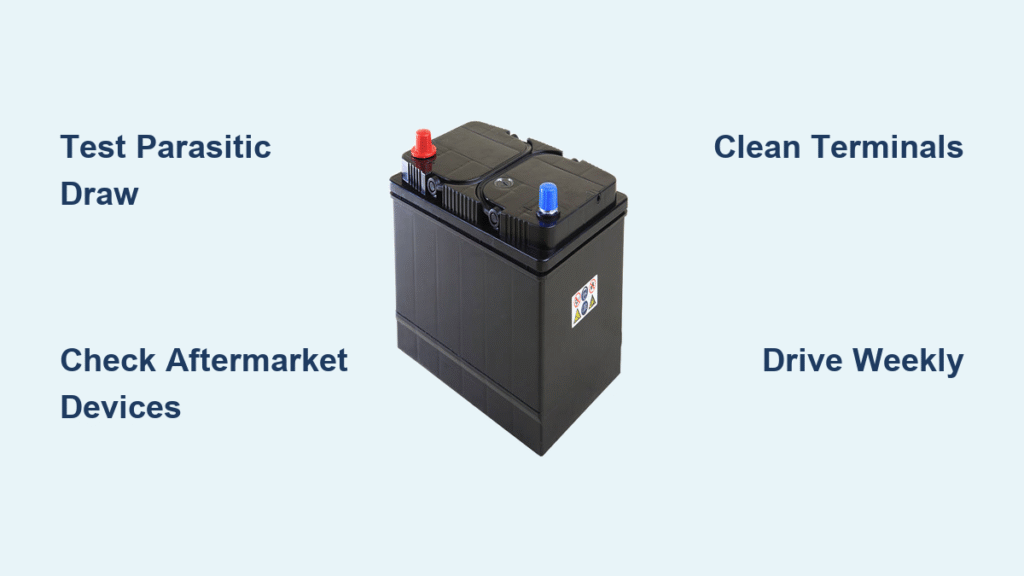
Your car won’t start again. The battery’s dead—again. You just replaced it six months ago, but here you are with jumper cables in hand, wondering what’s killing your battery. The culprit isn’t always obvious, and the frustration is real. Whether you’re dealing with a battery that dies overnight or one that slowly loses charge over weeks, this guide gives you everything needed to stop the drain and keep your car ready to go.
Why Your Car Battery Dies Overnight: Parasitic Draw Explained
Your car’s electrical system doesn’t completely shut off when you turn the key. Instead, certain components continue drawing power to maintain essential functions—this is parasitic draw. Clocks, alarm systems, and engine control modules all require minimal power to preserve settings and memory. A healthy parasitic draw should measure between 50-85 milliamps, which won’t noticeably drain a fully charged battery for weeks.
When parasitic draw exceeds 100 milliamps, trouble begins. That seemingly minor increase can drain a battery in days rather than weeks. The key to solving how to stop a car battery from draining is understanding that something specific is causing excessive current flow beyond normal operational requirements. This isn’t random battery failure—it’s a diagnosable electrical issue that needs targeted attention.
Hidden Battery Killers You’ve Probably Overlooked
Aftermarket Accessories Draining Your Battery
That dash cam recording 24/7, the subwoofer installed last summer, or even your phone charger left plugged in—all create parasitic draw even when the car is off. Aftermarket electronics often connect to “always-on” circuits, continuing to pull power when you think everything’s off. A single dash cam can draw 50-100mA by itself, doubling your vehicle’s normal parasitic load.
Interior lights are equally sneaky culprits. A glove box light that stays illuminated because the latch is faulty, a trunk light stuck on due to a misaligned switch, or vanity mirror lights left activated can drain your battery overnight. These lights typically draw 5-10 watts each—seemingly small but devastating when left on for hours.
Temperature Extremes Accelerating Battery Drain
Cold weather doesn’t increase electrical consumption but makes batteries less efficient at delivering power. A battery that functions perfectly at 70°F might struggle at 20°F, turning manageable parasitic draw into a starting problem. Winter is when most drivers discover their battery issues, but summer heat is equally damaging.
High temperatures increase chemical activity inside your battery, accelerating self-discharge rates. Summer heat can double your battery’s natural drain rate, turning borderline parasitic draw into a serious problem. Combined with corrosion on terminals—which creates electrical resistance—these environmental factors compound the challenge of keeping your battery charged.
How to Test for Battery Drain in 5 Minutes

Recognizing Early Warning Signs
Don’t wait for a dead battery to investigate. Watch for these early indicators of excessive drain:
– Slower engine cranking than usual
– Interior lights dimming when doors open
– Radio memory resetting between drives
– Needing jump-starts more frequently
A battery that dies overnight indicates severe drain (200+ milliamps), while gradual failure over 3-7 days suggests moderate parasitic draw (100-150 milliamps). These patterns help you gauge the severity before complete failure occurs.
Step-by-Step Parasitic Draw Test
What you’ll need: Digital multimeter with milliamp capability
- Fully charge your battery before testing—weak batteries give false readings
- Turn off all electrical components and close all doors
- Wait 10-60 minutes for vehicle computers to enter “sleep mode”
- Disconnect the negative battery cable
- Set multimeter to DC milliamps and connect between cable and terminal
- Wait for reading to stabilize (30-60 seconds)
Interpret your results:
– 50-85 mA: Normal draw, no action needed
– 85-100 mA: Borderline—monitor closely
– 100+ mA: Excessive drain requiring investigation
Guaranteed Prevention Strategies That Actually Work
The 30-Minute Weekly Driving Rule
Drive your car for 30 continuous minutes at highway speeds weekly. This isn’t arbitrary—highway driving provides optimal alternator output, allowing your battery to reach full charge. Short trips around town actually harm batteries: starting your car uses 3-5% of battery capacity, while a 5-minute drive only replaces 1-2%. Over time, this creates chronic undercharging that accelerates battery degradation.
Storage Solutions Based on Duration
Under 1 month: Connect a smart battery maintainer that automatically stops charging when full. Avoid traditional trickle chargers without automatic shutoff—they can overcharge and damage batteries.
1-6 months: Disconnect the negative battery cable entirely. This eliminates all parasitic draw but resets radio presets and may trigger check engine lights. Always disconnect negative first, then positive.
Over 6 months: Remove the battery completely and store in a climate-controlled space at 40-60°F. Charge every 2-3 months or use a maintainer for seasonal storage.
Daily Power Management Habits
Develop these simple habits to prevent unnecessary drain:
– Unplug everything before leaving your car—phone chargers, dash cams, GPS units
– Double-check lights—interior, trunk, glove box, and vanity mirrors
– Verify door closure—listen for the final click and check dome light response
– Limit accessory use when parked—avoid using radio or charging devices with engine off
These checks take 30 seconds but prevent 90% of preventable battery drain situations.
Fix Corroded Connections That Accelerate Drain

Monthly Terminal Maintenance
Battery terminal corrosion appears as white, blue, or green crusty deposits. This buildup creates resistance that forces your electrical system to work harder, increasing parasitic draw and reducing charging efficiency. Perform this cleaning monthly:
- Disconnect negative cable first, then positive
- Mix baking soda and water (1:3 ratio)
- Scrub terminals with wire brush until shiny
- Rinse with clean water and dry thoroughly
- Apply dielectric grease before reconnecting
Connection Security Check
Loose battery cables cause intermittent connections that mimic parasitic drain symptoms. Perform this quick check monthly:
– Wiggle test each cable—zero movement should be present
– Tighten connections using proper battery terminal tools
– Inspect cable condition—replace if cracked or corroded
Damaged cables create resistance and potential short circuits that increase parasitic draw over time.
Emergency Preparedness for Battery Failures
Must-Have Roadside Equipment
Keep these items in your vehicle:
– Heavy-duty jumper cables (4-gauge or thicker)
– Portable lithium-ion jump starter (works without second vehicle)
– Basic multimeter for roadside diagnosis
– Terminal cleaning kit (wire brush and protector spray)
Quick Diagnostic Reference
| Symptom | Likely Cause | Immediate Action |
|---|---|---|
| Dead overnight | Stuck relay or major component | Check interior lights, test parasitic draw |
| Dies over 3-7 days | Accessory drain or aging battery | Remove aftermarket devices, test battery |
| Slow cranking | Weak battery or poor connections | Clean terminals, load test battery |
Extend Battery Life Through Climate-Specific Care
Seasonal Protection Strategies
Winter protection:
– Park in garage when possible
– Use battery maintainer during cold snaps
– Test batteries over 3 years old before winter
– Limit short trips that don’t allow full charging
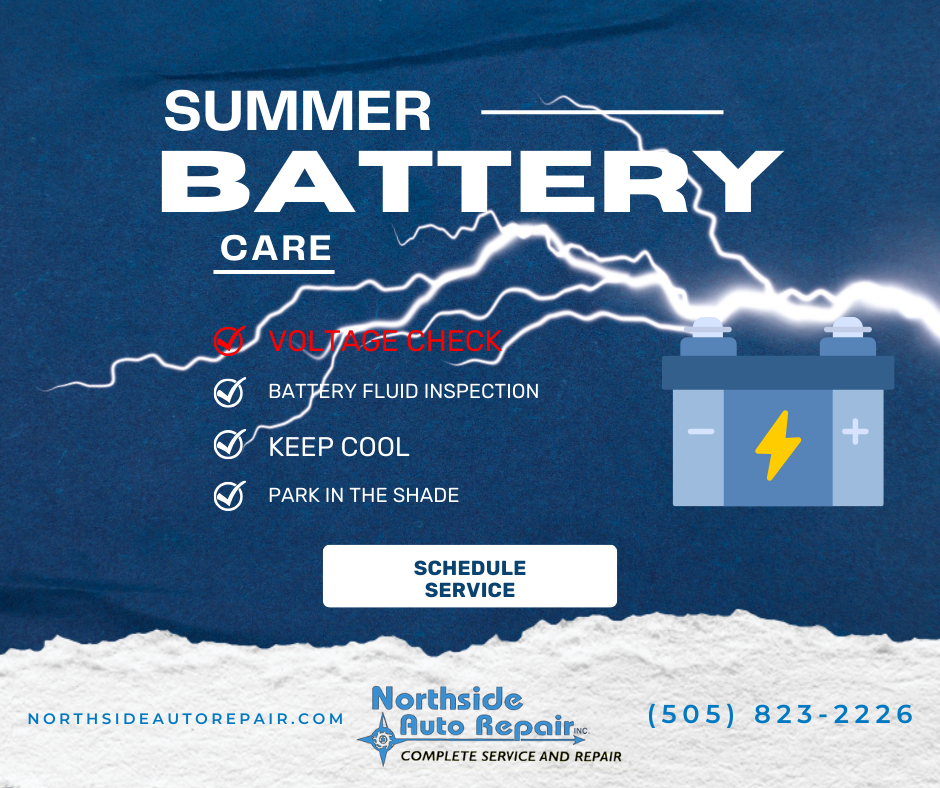
Summer protection:
– Park in shade or covered areas
– Ensure proper battery ventilation
– Check fluid levels in non-sealed batteries
– Use battery insulator wraps in extreme heat
Maintenance Schedule for Longevity
Follow this simple schedule:
– Monthly: Visual inspection and terminal cleaning
– Quarterly: Parasitic draw test if experiencing issues
– Annually: Professional battery and charging system test
– Every 3-5 years: Battery replacement regardless of condition
Stop battery drain by combining systematic diagnosis with consistent prevention habits. Test parasitic draw when problems appear, address environmental factors proactively, and maintain connections monthly. Most importantly, drive your car regularly—30 minutes weekly prevents the majority of battery issues. When drain persists despite these measures, professional testing identifies underlying electrical problems before they leave you stranded. Your battery will thank you with years of reliable service.


