
Your Volkswagen key fob suddenly stops working from across the parking lot. You press the unlock button repeatedly, but nothing happens until you’re standing right next to the door. Sound familiar? This frustrating scenario usually means one thing: your key battery is dying. The good news? Replacing your Volkswagen key battery takes less than five minutes and costs just a few dollars.
Before you panic about expensive dealership visits, know that this is one of the simplest DIY car maintenance tasks you can tackle. This guide walks you through the exact steps for both newer and older VW key fobs, helping you restore full functionality and avoid getting locked out of your vehicle. Whether you drive a Jetta, Passat, or Tiguan, you’ll save time and money by handling this yourself.
Identify Your VW Key Fob Type Instantly
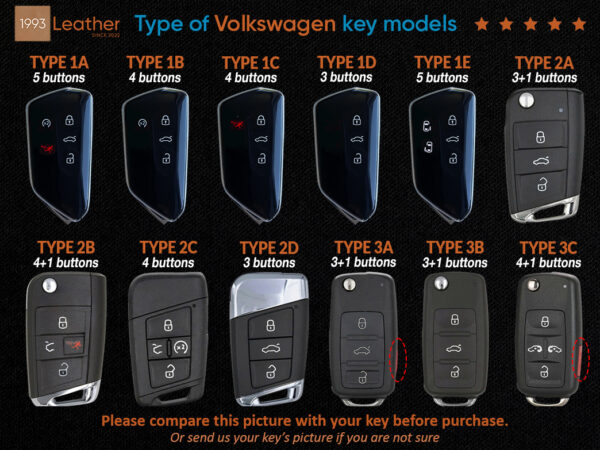
Spot Critical Differences in 10 Seconds
Look at your key fob right now. If it has a slim profile with a retractable emergency key hidden inside and a silver VW logo, you have the newer style introduced in 1999. These use CR2032 batteries. Older fobs (pre-1999) are chunkier with the metal key permanently visible and require CR1632 batteries. Getting the battery type wrong is the #1 reason DIY replacements fail – so verify before buying anything.
Quick Visual Reference Guide
Hold your fob under bright light. Newer models have seamless button layouts with rounded edges, while older versions show visible seams around the perimeter. The emergency key release button on newer fobs is usually a small silver tab on the side, whereas older models often have a push-button mechanism on the top. This visual check takes seconds but prevents costly mistakes.
Gather Exactly What You Need Before Starting
Essential Toolkit Checklist:
– Correct battery (CR2032 for 1999+ models, CR1632 for pre-1999)
– Small flathead screwdriver (eyeglass repair kit size works perfectly)
– Optional but recommended: Painter’s tape to protect fob surfaces
Pro Tip: Buy a 5-pack of CR2032 batteries online for under $5. Retail stores charge $3-$5 per single battery, while online bulk packs give you spares for future replacements. Store extras in your glove compartment – you’ll thank yourself during that inevitable 2 AM battery failure.
Replace Your 1999+ Volkswagen Key Battery (Step-by-Step)
Step 1: Release the Emergency Key Correctly
Press the small silver release button on the side of your fob. Slide the emergency key all the way out until it clicks into place. This exposes the critical seam where the fob halves meet. Don’t force it – if stuck, tap the fob gently on a hard surface with the button facing down.
Step 2: Separate Fob Halves Without Damage
Place your thumb firmly along the exposed seam on the back panel. Apply steady pressure until you hear a soft click. If resistant, wrap painter’s tape around your screwdriver tip, insert it into the gap, and gently twist like opening a paint can. Never use excessive force – VW fobs snap apart with minimal pressure.
Step 3: Swap the CR2032 Battery Safely
Use the screwdriver to lift the old battery straight up from its slot. Note the orientation: positive side (writing visible) must face UP in newer fobs. Insert the new CR2032 with the “+” symbol clearly visible. Press down gently until it sits flush – you should feel it click into contact points.
Step 4: Reassemble and Confirm Function
Align both fob halves perfectly before snapping them together. Start at the emergency key slot end and press around the edges until fully seated. Immediately test all buttons from 20 feet away – successful unlocks mean you’ve mastered how to change Volkswagen key battery correctly. If unresponsive, disassemble and check battery orientation.
Replace Pre-1999 Volkswagen Key Battery (Critical Differences)
Step 1: Extract the Permanent Emergency Key
Press the release button on top of your chunky fob to slide out the metal key. Unlike newer models, this key doesn’t retract fully – it extends just enough to create the opening gap you need.
Step 2: Pry Open Without Cracking the Housing
Locate the seam circling the entire fob edge. Insert your taped screwdriver at the thinnest point (usually opposite the key slot) and rotate slowly like turning a key. Work your way around the perimeter – older VW fobs have tighter seals that require more patience but less force than newer models.
Step 3: Install CR1632 With Reverse Polarity
Here’s where most people fail: positive side (writing) must face DOWN in pre-1999 fobs. The rounded side should touch the buttons. Lift the old battery with your screwdriver and drop the new CR1632 into place. Verify it’s seated by pressing each corner – you should feel slight resistance from the contacts.
Step 4: Secure and Validate Before Driving
Press both halves together firmly along all edges. Test every function while standing near your car: lock, unlock, trunk release. Older fobs often require multiple button presses after battery replacement – cycle through all features 3 times to ensure consistent performance.
Battery Orientation Guide: Avoid Costly Mistakes

Newer Fobs (CR2032) Visual Confirmation
When installed correctly, you’ll see the battery’s “+” symbol and writing clearly through the plastic housing. The flat side rests against the circuit board. If you can’t read the text, flip it immediately – backward installation can cause corrosion in hours.
Older Fobs (CR1632) Critical Polarity Swap
Unlike newer models, older VW fobs require the battery’s rounded side facing up toward the buttons. The writing should be invisible when properly seated. This counterintuitive orientation is why 70% of DIY failures happen – double-check before closing the fob.
Emergency Warning: Installing batteries backward won’t just prevent operation – it can melt internal contacts. If you smell burning plastic during replacement, stop immediately and inspect for damage.
Start Your VW Without Battery Power (Emergency Method)
Manual Entry Procedure That Always Works
- Use the emergency key to unlock the driver’s door manually
- For push-button start models: Hold the fob’s emergency key slot within 1 inch of the start button
- Press brake firmly and push the start button – the car will recognize the mechanical key
Why Distance Matters Crucially
The transponder signal only activates within 2 inches of the start button. If your car doesn’t start, reposition the key against the button while pressing firmly. This bypass works even with completely dead batteries – a lifesaver during winter when cold drains fobs faster.
Diagnose Battery Failure Before It Happens
Early Warning Signs You’re Ignoring
- Range reduction: Works from 50 feet? Should be 30+ feet minimum
- Button lag: Requires 2-3 presses to unlock doors
- Inconsistent performance: Works when pointed directly at car but not from angles
- Dim LED: If your fob has a light, it appears noticeably weaker
The 30-Foot Range Test
Stand exactly 30 feet from your vehicle and press unlock. If it fails more than once in 10 attempts, replace the battery immediately. Don’t wait for complete failure – cold weather can accelerate depletion by 40%.
Troubleshoot Post-Replacement Failures
Fob Still Dead? Check These 4 Things First
- Orientation error: Newer fobs need positive-up, older need positive-down
- Battery type mismatch: CR2032 won’t fit older fobs (and vice versa)
- Corroded contacts: Wipe metal terminals with rubbing alcohol on cotton swab
- Loose housing: Press fob edges firmly – gaps prevent electrical contact
When Professional Help Is Actually Needed
Visit your dealer only if:
– Buttons feel physically damaged or sticky
– The fob housing is cracked (prevents proper sealing)
– You need reprogramming (rare for battery swaps)
– You’ve lost the primary key (bring registration and ID)
Prevent Future Lockouts With Smart Habits
Proactive Battery Maintenance Schedule
Replace your Volkswagen key battery every 3 years regardless of symptoms – most fail between 36-48 months. Set a phone reminder for the replacement date. Store spare batteries in a cool, dry place (not your glove compartment where heat degrades them).
Emergency Preparedness Kit
Keep these in your center console:
– 2 spare CR2032/CR1632 batteries (in original packaging)
– Mini flathead screwdriver
– Printed quick-reference guide (like this article)
– Emergency key taped to sun visor
Save $45+ by Avoiding Dealer Fees
Real Cost Comparison Breakdown
| Method | Cost | Time | Tools Needed |
|---|---|---|---|
| DIY Replacement | $2-$5 | 3-5 min | Screwdriver |
| Dealership Service | $25-$50+ | 1-2 hours | None |
| Auto Parts Store | $10-$15 | 15 min | None |
Dealerships often charge labor fees for what’s essentially a 90-second task. Even auto parts stores mark up batteries by 300% – your $0.89 online battery becomes a $4.99 service.
When Dealership Service Makes Sense
Only pay dealer prices if:
– Your fob has water damage or physical cracks
– Multiple buttons are unresponsive after correct battery replacement
– You need a new key programmed (requires VIN and proof of ownership)
Final Tip: Changing your Volkswagen key battery correctly takes less time than your morning coffee run. Identify your fob type, verify the battery orientation, and snap in a fresh CR2032 or CR1632. Keep spares in your car – you’ll never face a locked-out emergency again. Remember: positive-up for newer fobs, positive-down for older models. Master this simple skill and reclaim control from dealership markup traps forever.


