

Your Jeep’s auxiliary battery powers winches, lights, and camping gear without draining the main starting battery. But when that second battery dies mid-adventure, you’re stranded with useless accessories while your engine still starts. Knowing exactly how to charge auxiliary battery in Jeep models—whether you drive a factory-equipped Wrangler JL or a modified JK with an aftermarket dual-battery system—is critical for off-road reliability. This guide delivers actionable solutions you can implement today, eliminating guesswork and preventing expensive electrical repairs. Stop wondering why your accessories fail and start charging correctly with these field-tested methods.
Identify Your Jeep’s Dual Battery Configuration Before Charging

Charging methods vary drastically depending on whether you have a factory eTorque system or aftermarket setup. Misidentifying your configuration leads to failed charging attempts and potential electrical damage.
Factory System Recognition Guide
Jeep Wrangler JL (2018+) and Gladiator JT models use a 48V eTorque system with a small auxiliary battery near the passenger firewall. Grand Cherokee WK2 Trailhawks feature a 70Ah AGM battery under the rear seat. These systems automatically manage charging through the vehicle’s computer—no driver intervention needed beyond regular driving. Look for dedicated wiring harnesses and absence of manual switches.
Aftermarket Kit Identification
Most Wrangler JK/TJ owners add dual-battery trays from Genesis Offroad or Nemesis Industries. These setups use standard Group 34/78 batteries with either voltage-sensitive relays (VSRs) or manual isolator switches. Check for thick red cables running between batteries, fuse blocks on the firewall, and second battery boxes on the driver’s side. If you see a switch labeled “BATT” or “ISO,” you have an aftermarket system requiring specific charging protocols.
Critical Mistake to Avoid
Never attempt to jump-start or charge a factory eTorque auxiliary battery directly—it contains sensitive electronics that can be destroyed by improper voltage. Aftermarket systems require isolator disconnection during external charging to prevent primary battery drain.
Engine Running Charging Method for Immediate Recovery
This is the simplest charging method when your auxiliary battery is moderately discharged but your Jeep starts normally. It works for both factory and aftermarket systems with functioning isolators.
Step-by-Step Engine Charging Protocol
Start your Jeep and let it idle for 2-3 minutes to stabilize the electrical system. With a multimeter, verify primary battery voltage reads 13.8-14.4V. Within 5-10 minutes, auxiliary battery voltage should climb to 13.8V. Activate accessories like lights or a fridge to test charging under load—voltage should remain above 13.2V. Drive continuously for 30-45 minutes for full recovery; stop-and-go traffic significantly extends charging time.
When This Method Fails
If auxiliary voltage stays below 12.6V with the engine running, your charging system has failed. Immediately check the 60-100A auxiliary fuse in the main fuse box and listen for the isolator relay click when starting. No click indicates a dead relay or wiring fault requiring professional diagnosis.
External Charger Connection for Deeply Discharged Batteries
Use this method when your auxiliary battery won’t hold a charge or after prolonged accessory use with the engine off. Never skip the safety steps—improper connections can melt cables or cause battery explosions.
Essential Safety Sequence
1. Disconnect the primary battery’s negative terminal FIRST using a 10mm wrench
2. Connect charger positive lead directly to auxiliary battery positive terminal
3. Attach charger negative lead to clean engine block metal (NOT battery negative)
4. Set charger to match battery chemistry: AGM (14.6V bulk), Flooded (14.4V), Gel (14.1V)
5. Monitor hourly until charging current drops below 2 amps for a 100Ah battery
Critical Warning
Never charge a frozen battery (below 32°F/0°C) or one showing cracks/swelling. If electrolyte is visible, wear acid-resistant gloves and eye protection—baking soda solution neutralizes spills. Stop charging immediately if battery temperature exceeds 125°F (52°C).
Solar Charging Setup for Off-Grid Adventures
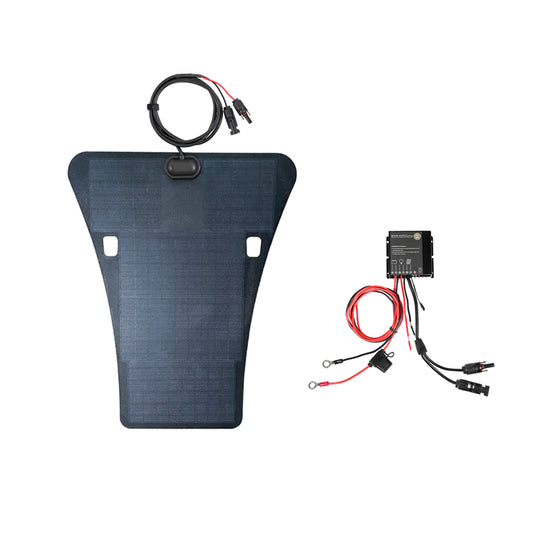
For overlanders who need continuous charging without engine runtime, solar is the ultimate solution. A properly configured 100W system maintains your auxiliary battery indefinitely during daylight.
30-Minute Installation Checklist
Mount panels securely to roof racks using stainless steel hardware—vibration is the #1 cause of solar failure. Run 10 AWG positive wire through existing firewall grommets to avoid drilling new holes. Install an MPPT charge controller within 18 inches of the battery with an inline 30A fuse. Add a blocking diode to prevent overnight discharge. Verify connections show 5-7 amps per 100W panel in full sun using a multimeter.
Real-World Performance Tip
Tilt panels 30 degrees toward the equator for 20% more winter output. Clean dust with a microfiber cloth—dirty panels lose 30% efficiency. In overcast conditions, reduce expectations to 2-3 amps per 100W panel.
Troubleshoot Failed Charging in Under 5 Minutes
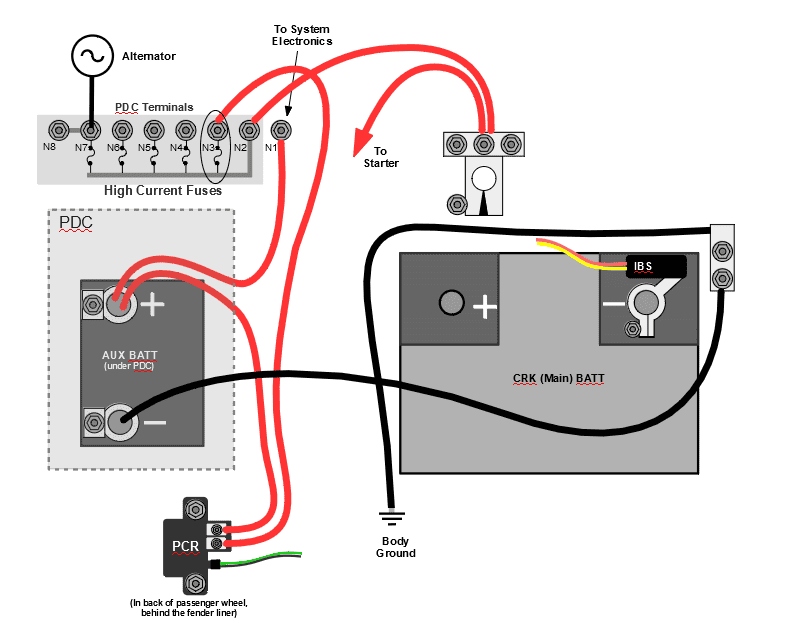
When your auxiliary battery won’t charge, these diagnostic steps identify the culprit faster than a dealership visit.
No Charge With Engine Running
Check fuse #57 (60A) in the engine bay fuse box first—this single point of failure causes 70% of charging issues. Test isolator function by measuring voltage at the auxiliary battery positive terminal while someone starts the Jeep; you should see a 1.5V jump within 3 seconds of cranking. If not, the isolator is dead. Clean corrosion from the chassis ground near the battery mount—a penny-thick layer can block 50% of charging current.
Overcharging Emergency Fix
Voltage above 15V with engine running means your alternator’s voltage regulator has failed. Immediately disconnect the auxiliary battery to prevent thermal runaway. Drive directly to a repair shop—continued operation will boil electrolyte and warp battery plates within 20 minutes. Most Jeep alternators fail around 120,000 miles due to heat stress.
Battery Maintenance Schedule for 3x Longer Life
Preventive care extends auxiliary battery life from 18 months to 4+ years. This monthly routine takes less than 5 minutes.
Critical Monthly Checks
Clean terminals with a baking soda-water paste and wire brush—corrosion increases resistance by 300%. Verify secure mounting; loose batteries crack casings from engine vibration. Measure resting voltage after 4 hours of inactivity; 12.6V+ indicates full charge, while 12.4V means 75% discharged. For flooded batteries, top electrolyte levels with distilled water only—never tap water.
Seasonal Upgrades
Winter: Apply petroleum-based terminal protector before temperatures drop below 40°F (4°C) to prevent freeze-related discharge. Summer: Install a battery heat shield if voltage consistently exceeds 12.8V at rest—extreme heat accelerates sulfation. Always store batteries at 80%+ charge during long idle periods.
Emergency Field Charging When Stranded
When your auxiliary battery dies miles from help, these improvised methods get you moving.
Immediate Survival Protocol
Disconnect the auxiliary battery negative terminal to prevent primary drain. Remove non-essential loads like interior lights. Use a portable lithium jump starter (like NOCO Boost) on the primary battery only—never connect directly to a dead auxiliary battery. For field charging, run jumper cables from another vehicle’s battery for 15-30 minutes with both engines off to minimize alternator strain.
Temporary Isolator Bypass
If your VSR fails mid-trip, manually connect batteries with jumper cables: Attach red to primary positive, then to auxiliary positive. Drive immediately to a repair location and disconnect cables upon arrival—leaving connected risks primary battery drain. This is a 50-mile emergency fix only.
Safety Protocols That Prevent Catastrophic Failures
Ignoring these electrical safety rules causes 90% of Jeep battery fires. Always:
- Disconnect negative terminal FIRST when working on batteries
- Wear ANSI-approved safety glasses—batteries can explode from sparks
- Use only insulated tools near live terminals
- Work in ventilated areas—hydrogen gas ignites from static electricity
- Lift batteries with legs (50-70 lbs)—dropped AGMs crack and leak acid
Recall Critical
Never charge a battery inside the cabin—hydrogen buildup can cause explosions. Recycle old batteries immediately at AutoZone or O’Reilly; storing them in garages risks acid leaks on concrete floors.
Mastering how to charge auxiliary battery in Jeep systems prevents adventure-killing failures and costly repairs. Whether you’re using the engine charging method for quick recovery or installing solar for extended trips, consistent voltage checks and proper maintenance are non-negotiable. Implement the monthly terminal cleaning and voltage testing routine today—your next off-road trip depends on it. For persistent charging issues, consult a Jeep specialist before attempting complex repairs; that isolator relay click you’re not hearing could indicate deeper electrical faults. Stay powered, stay safe, and keep exploring.


