
Your Fiat 500 won’t start, or you’re prepping for a battery replacement. One wrong move during disconnection could fry sensitive electronics or cause dangerous sparks. If you’re searching for how to disconnect Fiat 500 battery safely, you’ve come to the right place—this guide cuts through the guesswork with model-specific steps for every year.
Improper disconnection risks expensive ECU damage, radio code lockouts, or even acid burns. But with the right sequence and tools, you’ll avoid these pitfalls completely. You’ll learn exactly how to disconnect Fiat 500 battery without triggering error lights, losing settings, or compromising safety—whether you’re working on a rear-mounted 2010 model or a 2018 engine-bay setup.
Critical Safety Gear for Fiat 500 Battery Work
Skipping proper protection turns a simple task into an emergency. Your non-negotiable safety kit must include:
- Chemical-resistant goggles to block acid splashes during terminal removal
- Insulated rubber gloves rated for 12V systems (standard work gloves won’t stop shocks)
- Long-sleeve cotton shirt and pants as acid-eating synthetic fabrics
- Baking soda/water mix (50/50 ratio) in a spray bottle for instant acid neutralization
Park on level ground with parking brake engaged and transmission in Park (automatic) or 1st gear (manual). Kill all electrical loads—headlights, radio, even interior lights—then remove your key and stash it 10+ feet from the car. This prevents accidental airbag deployment or electrical surges while you work.
Why Negative Terminal First Is Non-Negotiable
Pulling the positive cable first creates a live circuit through your wrench if it touches metal. Always disconnect negative first—it breaks the electrical loop safely. The black cable with “–” marking is your target. If you see crusty white or blue-green corrosion here, handle with extreme care: that’s sulfuric acid residue that eats through skin.
Locating Your Fiat 500 Battery by Model Year
Engine Bay vs. Rear Cargo Models
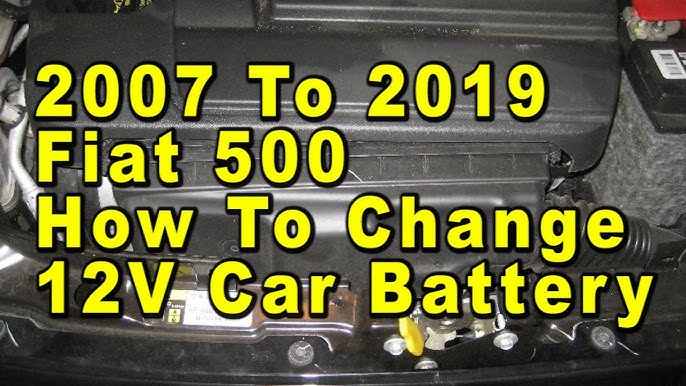
2012-2019 Fiats hide the battery behind the driver’s-side air filter housing. Pop the hood, release the secondary latch, then unclip the airbox cover—no tools needed. For 2007-2011 models, lift the rear cargo floor panel to access the battery nestled beside the spare tire well. Never attempt this on 500e electric models—their floor-mounted high-voltage packs require dealer-level training.
Clearing Workspace Obstacles
On newer models, remove the entire air filter assembly for elbow room. You’ll spot two critical components: the plastic battery cover (press tabs to release) and the 13mm hold-down bracket. If your hands can’t fit comfortably around the terminals, detach the air intake tube—it snaps off with gentle pressure.
Essential Tools Checklist for Fiat 500

Must-Have Disconnection Kit
A 10mm wrench fits 95% of terminal bolts, but keep 8mm and 12mm sockets handy—some European imports use odd sizes. Battery pliers provide leverage on corroded clamps without damaging posts. Never use regular pliers; they can short the terminals. Pack a wire brush for corrosion and electrical tape to insulate disconnected cables.
Pro Upgrade: Memory Saver Device
Spend $15 on an OBD-II memory saver to avoid radio code nightmares and ECU resets. Plug it into your diagnostic port before disconnecting the battery, then connect to a 9V battery. This maintains power to critical systems—verified by checking if your dome light stays on during disconnection.
Step-by-Step: Disconnecting Negative Terminal
Removing Stubborn Negative Cables
Loosen the 10mm terminal bolt with counterclockwise turns—3 full rotations usually suffices. Never force it; if stuck, spray penetrating oil and wait 10 minutes. Grip the clamp (not the cable) and wiggle upward while applying steady pressure. If corrosion binds it, apply baking soda paste directly to the joint—it fizzes as it neutralizes acid.
Once free, immediately wrap the terminal end in electrical tape and tuck it behind the fuse box. Critical check: Ensure the cable can’t swing back and touch the battery post. A single accidental contact could melt wiring.
Positive Terminal Disconnection Without Sparks
Avoiding Costly Short Circuits
The red cable with “+” marking is live—treat it like exposed wiring. Confirm the rubber terminal cover is intact before loosening the bolt; if missing, fashion a temporary insulator from a plastic bottle. Lift straight up with firm, smooth motion—never rock side-to-side as this cracks battery posts.
The moment it’s free, slide a terminal protector cap over the post or wrap liberally with tape. Secure the cable to the strut tower with zip ties. If you smell ozone or see sparks, stop immediately—recheck for stray metal contact points.
Removing Battery Hold-Down Hardware
Lifting Safely Without Injury
Fiat 500 batteries weigh 25-35 lbs—use proper form: knees bent, back straight, lifting with legs. Remove the 13mm hold-down bracket bolts completely; some models have a secondary anti-vibration pad underneath. If the battery sticks, twist gently side-to-side to break the seal.
Never lift by the cables—this strains terminal welds. Use a battery carrier strap or slide hands under the base. Set it on wood (not concrete, which drains charge) in a shaded, dry spot away from children or pets.
Fixing Severe Corrosion on Terminals
Emergency Corrosion Protocol
White powder = sulfuric acid crystals; green gunk = copper corrosion. Spray terminal cleaner liberally, wait 5 minutes, then scrub with a wire brush until metal shines. For terminals fused to posts, tap a flathead screwdriver gently between clamp and post while wiggling—never hammer.
After removal, neutralize residue with baking soda solution, then rinse with water. Reinstall only after posts and clamps are 100% dry to prevent future corrosion.
Preserving Electronics During Disconnection
Avoiding Radio Code Lockouts
Write down your radio security code now—it’s buried in your glovebox manual or Fiat ID portal. Note current time for clock reset and write favorite radio stations on paper. Newer models (2016+) require window reinitialization: turn ignition to “ON,” hold window switch up for 10 seconds after full closure.
Expect rough idling for 10-15 minutes as the ECU recalibrates fuel trims. If stability control lights flash, drive at 30+ mph for 2 minutes to reset sensors.
Memory Saver Device Setup Guide
Foolproof Connection Sequence
- Plug memory saver into OBD-II port (below steering column)
- Connect to 12V source (or 9V battery)
- Verify power: Check if radio display illuminates
- Only then disconnect battery terminals
Reconnect the battery before removing the memory saver. This preserves trip data, seat presets, and adaptive headlights—saving 30+ minutes of recalibration.
Troubleshooting Stuck Terminals
When Bolts Refuse to Budge
If the 10mm socket slips, try a 6-point wrench for better grip. For rounded bolts, clamp vice-grips tightly and turn slowly—do not snap them off. If all fails, drill a small hole into the bolt head and use an extractor. Replacement bolts cost $2 at auto stores; specify “Fiat 500 battery terminal.”
On tight rear-mounted models, disconnect the vent tube (if present) and move the fuse box sideways. Never force wires—trace harnesses to find slack points.
Post-Disconnection Safety Steps
Preventing Accidental Reconnection
Insulate both cable ends with terminal caps—exposed metal can arc on chassis parts. Store the battery upright on wood in a garage (not basement; hydrogen gas buildup risks explosion). Manually lock doors since central locking fails without power.
Document the disconnection date on the battery case. If storing long-term, charge monthly to prevent sulfation damage.
Quick Reconnection Reference
Critical Reverse-Order Steps
- Clean terminals with wire brush until shiny
- Apply dielectric grease to posts to prevent future corrosion
- Connect POSITIVE terminal first—tighten until wrench clicks once
- Connect NEGATIVE terminal last—ensure no rotation when tugged
- Test immediately: Headlights (bright/steady), radio (no code prompt), engine start (smooth idle)
Never skip voltage check: A healthy battery reads 12.4-12.6V. Below 12.2V indicates charging issues.
When to Call a Professional
High-Risk Scenarios Requiring Experts
Stop immediately if you own a 500e electric model—high-voltage systems carry lethal 380V current. Also seek help if:
– Your Fiat has advanced driver aids (lane-keep, adaptive cruise)
– Battery dies repeatedly within 24 hours of replacement
– You triggered airbag warning lights during disconnection
Dealers use factory tools to reset steering angle sensors and register new batteries to the ECU—critical for models 2015+. A $75 diagnostic scan beats $800 in error-light repairs.
Final Note: Always disconnect negative first and reconnect it last—this single sequence prevents 90% of electrical disasters. For 2012+ models, photograph cable positions before starting; it eliminates reconnection errors. Keep this guide in your glovebox for emergencies—your Fiat 500’s electronics will stay happy for years when you master how to disconnect Fiat 500 battery safely. If corrosion returns within months, replace the battery hold-down bracket; vibration accelerates terminal wear.


