
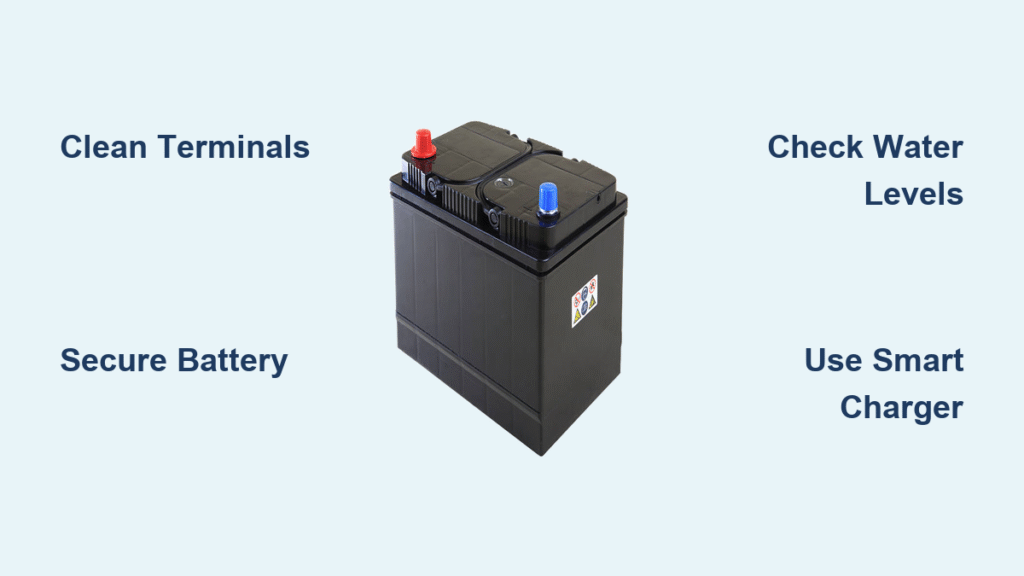
Your car battery delivers 400+ amps silently every morning—until it doesn’t. When you turn the key and hear only clicking or silence, you’re facing a preventable $150+ replacement and roadside rescue fee. Most drivers replace batteries every 3–4 years, but proper maintenance extends life to 5–7 years. This guide reveals exactly how to clean, test, and protect your battery using pro techniques that mechanics use daily. You’ll learn to spot corrosion before it cripples cranking power, choose the right charger for short trips, and store batteries safely during vacations.
Stop Corrosion Before It Kills Your Start

White or blue crust on terminals isn’t just ugly—it steals 50% of your cranking power by blocking electrical flow. Left unchecked, it causes slow starts and complete failures.
Clean Terminals in 6 Minutes Flat
- Disconnect safely: Always remove the black negative cable first (prevents sparks if wrench touches metal). Then disconnect red positive. Use 8–10mm wrench.
- Neutralize acid: Mix 3 tbsp baking soda with 1 cup warm water. Dip wire brush and scrub posts/clamps until bright metal shows.
- Rinse and protect: Wipe residue with damp cloth. Apply dielectric grease inside clamps to repel future corrosion.
- Reconnect correctly: Attach red positive first, then black negative. Tighten to 8–10 N·m—snug but not stripped.
Pro tip: Install $2 felt anti-corrosion washers under clamps. They absorb acid vapors and last 2+ years.
Secure Your Battery Against Vibration Damage

A loose battery shakes itself to death. Internal plates crack from road bumps, shedding active material and cutting capacity by 30%.
Pass the Shake Test in 3 Steps
- Loosen hold-down bolts and try to move the battery. Zero movement should occur.
- Inspect J-bolts and brackets for rust or stripped threads. Replace corroded parts immediately.
- Check cables for green corrosion under insulation or swollen sections. Replace cables exceeding 1 mΩ resistance per foot.
Critical: Route cables away from exhaust manifolds. Heat melts insulation, causing shorts.
Manage Water Levels (Flooded Batteries Only)
Sealed AGM batteries need no watering, but flooded types lose electrolyte through evaporation. Exposed plates cause permanent damage.
Refill Correctly Every 3 Months
- Charge first: Drive 30+ minutes or use smart charger.
- Peek under caps: Electrolyte must cover plates by 3–5mm (like covering rice in a pot).
- Add distilled water only: Fill to bottom of vent well—never to the top. Overfilling causes acid spills during charging.
- Seal gently: Finger-tighten caps. Overtightening cracks plastic.
Warning: Tap water minerals kill batteries. Always use distilled.
Defend Against Temperature Extremes
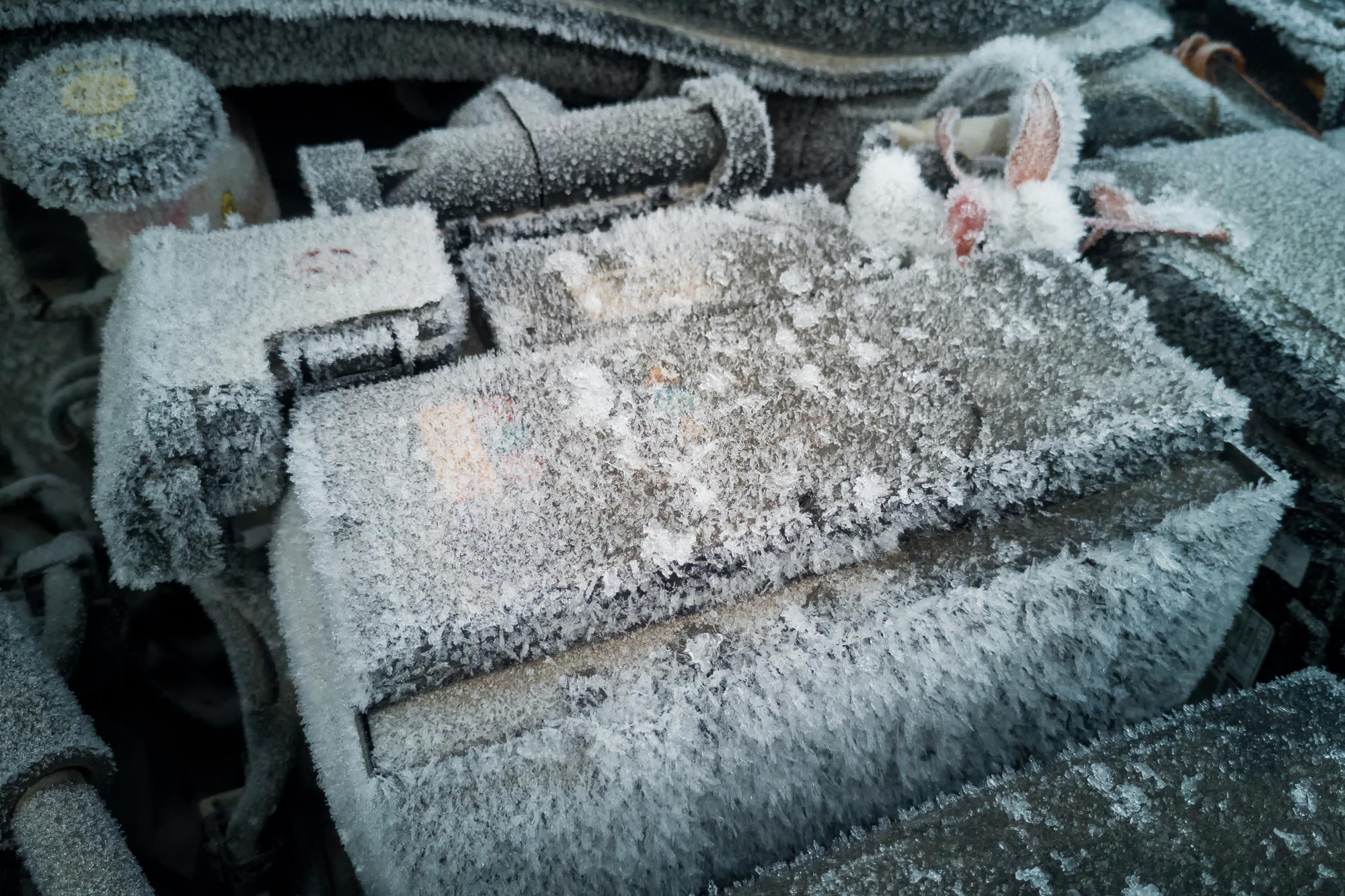
Heat ages batteries twice as fast above 77°F (25°C). Cold reduces cranking power 50% at 0°F (-18°C).
Winter Survival Tactics
- Use a 50W battery blanket: Plug in 4 hours before driving. Keeps case at 40°F even in -20°F weather.
- Park in a garage: Adds 20°F warmth versus street parking.
- Run highway miles weekly: 45+ minutes recharges batteries better than short trips.
Beat Summer Heat Damage
- Park in shade: Cuts under-hood temps by 30°F. Reflective windshield shades help.
- Install a heat shield: $15 aluminum barrier between battery and engine.
- Upgrade to AGM: Tolerates 140°F better than flooded batteries.
Charge Smart for Short-Trip Drivers
Alternators recharge batteries during drives—but 10-minute commutes drain more than they replenish.
Fix Chronic Undercharging
- Take one weekly highway drive: 20+ minutes at 55+ mph fully recharges batteries.
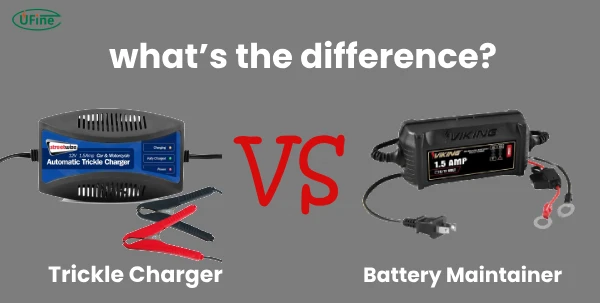
- Use a smart maintainer: Plug in overnight after short trips. Unlike trickle chargers, these auto-adjust to prevent overcharging.
Smart Charger vs. Trickle Charger
| Issue | Trickle Charger | Smart Maintainer |
|---|---|---|
| Overcharge risk | High (boils electrolyte) | Zero (auto-float mode) |
| Sulfation prevention | None | Pulse technology |
| Safe for unattended use | ❌ Must unplug weekly | ✅ Leaves plugged for months |
| Cost | $15-$25 | $40-$100 |
Verdict: For daily drivers or stored cars, smart maintainers pay for themselves in battery life.
Store Batteries Safely During Vacations
Two weeks without driving drops batteries below 12.0V—inviting permanent sulfation.
3 Storage Methods Ranked
- Smart maintainer (best): Connect Battery Tender to battery. Voltage stays 12.6–13.2V. Check monthly.
- Disconnect battery: Remove negative cable first. Store on wood in 40–60°F dry spot. Recharge fully before reuse.
- Start weekly: Idle 20 minutes with headlights on. Only effective with maintainer backup.
Myth alert: Concrete floors don’t drain batteries—but cold garages do. Always store above 40°F.
Test Health Before Failure Strikes
Most batteries die without warning. Catch weakness early with two 2-minute tests.
Voltage Test with Multimeter
- 12.66V = 100% charged
- 12.45V = 75% (time for maintenance)
- 12.24V = 50% (recharge now)
- <12.0V = Danger zone (sulfation starting)
Do this: Test monthly with engine off. Less than 12.4V? Clean terminals and recharge.
Load Test for True Capacity
- At auto parts stores: Free conductance test shows Cold Cranking Amps (CCA). Replace if <70% of rating.
- DIY test: Crank engine for 15 seconds. Voltage must stay ≥9.6V. Below 9.0V? Replace battery.
Red flag: Swollen battery case = replace immediately. Risk of acid leaks or explosion.
Critical Warning Signs Checklist
| Symptom | Action |
|———|——–|
| Slow crank (takes 3+ seconds) | Clean terminals → Test voltage |
| Clicking but no start | Check cables → Test battery |
| Dim lights at idle | Test alternator output |
| Rotten egg smell | Replace battery NOW (vent area) |
| Age over 3 years | Test every 6 months |
A well-maintained battery lasts 5+ years. Skip the jump-start headaches: clean terminals quarterly, use a smart maintainer for short trips, and test voltage monthly. Set a phone reminder for “Battery Check” every 90 days—five minutes of prevention saves an hour of roadside frustration. When replacement time comes, match the group size and CCA rating in your owner’s manual, and check the build date sticker (must be within 3 months). Your reliable starts depend on it.


