
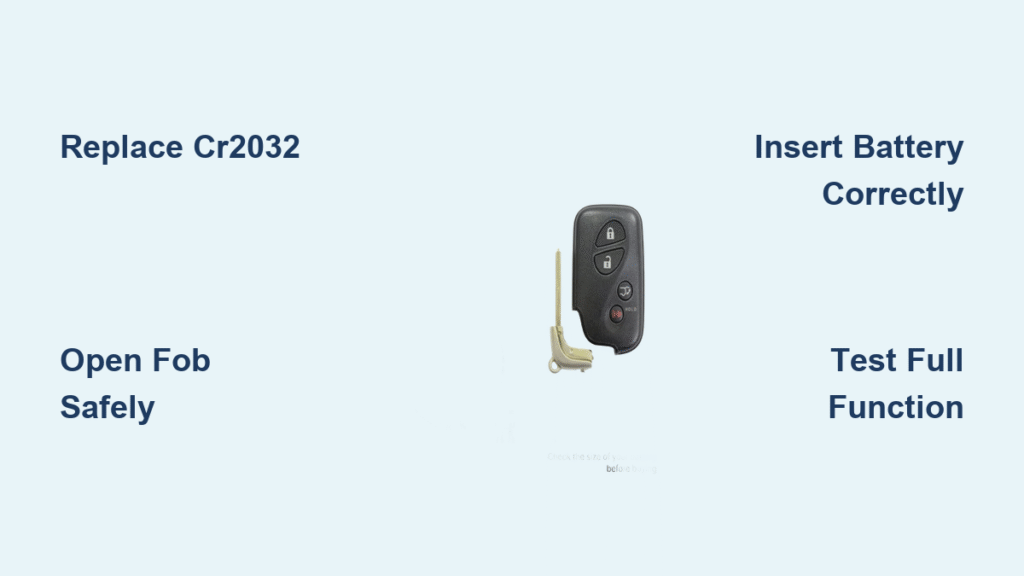
Your Lexus refuses to start, the doors won’t unlock as you approach, and the key fob feels completely unresponsive? Don’t panic—this is almost certainly a dying CR2032 battery, the #1 cause of Smart Key failures across Lexus models. Ignoring this issue leaves you stranded with a $50-$100 dealership repair bill for what’s actually a 5-minute DIY job. Replacing your Lexus key battery requires zero technical skills and saves you from inconvenient service appointments. In this guide, you’ll learn exactly how to swap your key fob battery using tools you likely already own, with model-specific tips for all Lexus vehicles from RX to LS series.
Most Lexus owners experience this problem every 1-2 years as battery life degrades. The frustrating part? Symptoms creep up gradually, lulling you into complacency until you’re suddenly locked out. Fortunately, Lexus’s consistent CR2032 battery design means this process works for 95% of Smart Key fobs manufactured since 2006. By following these steps, you’ll restore full functionality faster than waiting for roadside assistance.
Recognize Critical Lexus Key Battery Failure Signs
Smart Access System Stops Recognizing Your Key
When your Lexus key battery weakens below 20% capacity, the push-button start system becomes erratic. You’ll notice the car fails to detect your presence even when holding the fob near the start button. This forces you into the “emergency start” procedure: pressing the fob directly against the START/STOP button while depressing the brake. Don’t mistake this for a vehicle malfunction—this specific behavior confirms your battery needs immediate replacement before it dies completely.
Proximity Detection Range Drops Below 10 Feet
A healthy Lexus key fob works from 30-40 feet away, automatically unlocking doors as you approach. As the battery degrades, this range shrinks dramatically to just 5-10 feet. Track this progression: if you suddenly need to stand right next to your vehicle for door unlocking to work, replacement is urgent. This shrinking radius is your most reliable early warning sign—address it within 48 hours to avoid complete failure.
Physical Button Response Fails or LED Goes Dark
Press any button on your key fob. If the LED doesn’t illuminate or responds with a dim, flickering light, your Lexus key battery is critically low. Some newer models (2018+) also trigger a dashboard alert: “Key Battery Low” appears when turning off the engine. Never ignore this warning—it typically gives only 2-3 weeks of remaining functionality. Test all buttons thoroughly; inconsistent responses across different buttons indicate imminent battery death.
Gather Essential Replacement Tools Before Starting
Must-Have Items for Safe Battery Swap
- CR2032 lithium battery ($2.99 at Walmart, Target, or auto parts stores—avoid alkaline versions)
- Precision flathead screwdriver (0.8mm thickness prevents casing damage)
- Your emergency metal key (stored inside the fob—doubles as pry tool)
Helpful Extras for Tricky Situations
- Paperclip (straightened for battery removal in tight compartments)
- Anti-static wrist strap (prevents static damage to circuitry)
- Microfiber cloth (wipes debris from battery contacts)
Time estimate: 3 minutes for tool gathering. Never use metal coins—they scratch plastic and cause permanent damage.
Extract Emergency Key Using Proper Technique
Locate the small rectangular release button on your fob’s side (position varies by model: IS350 has it on the left edge, RX350 on the bottom). Press and hold this button while simultaneously pulling the metal key straight outward—no twisting required. If it sticks, tap the fob gently on a hard surface to dislodge debris. This exposes the hidden slot where your pry tool inserts.
Critical warning: Forcing the key out with pliers will bend the release mechanism. If resistance exceeds finger pressure, stop and check for obstructions. The emergency key must slide out smoothly—any binding indicates dirt buildup requiring compressed air cleaning first.
Open Key Fob Without Cracking the Casing
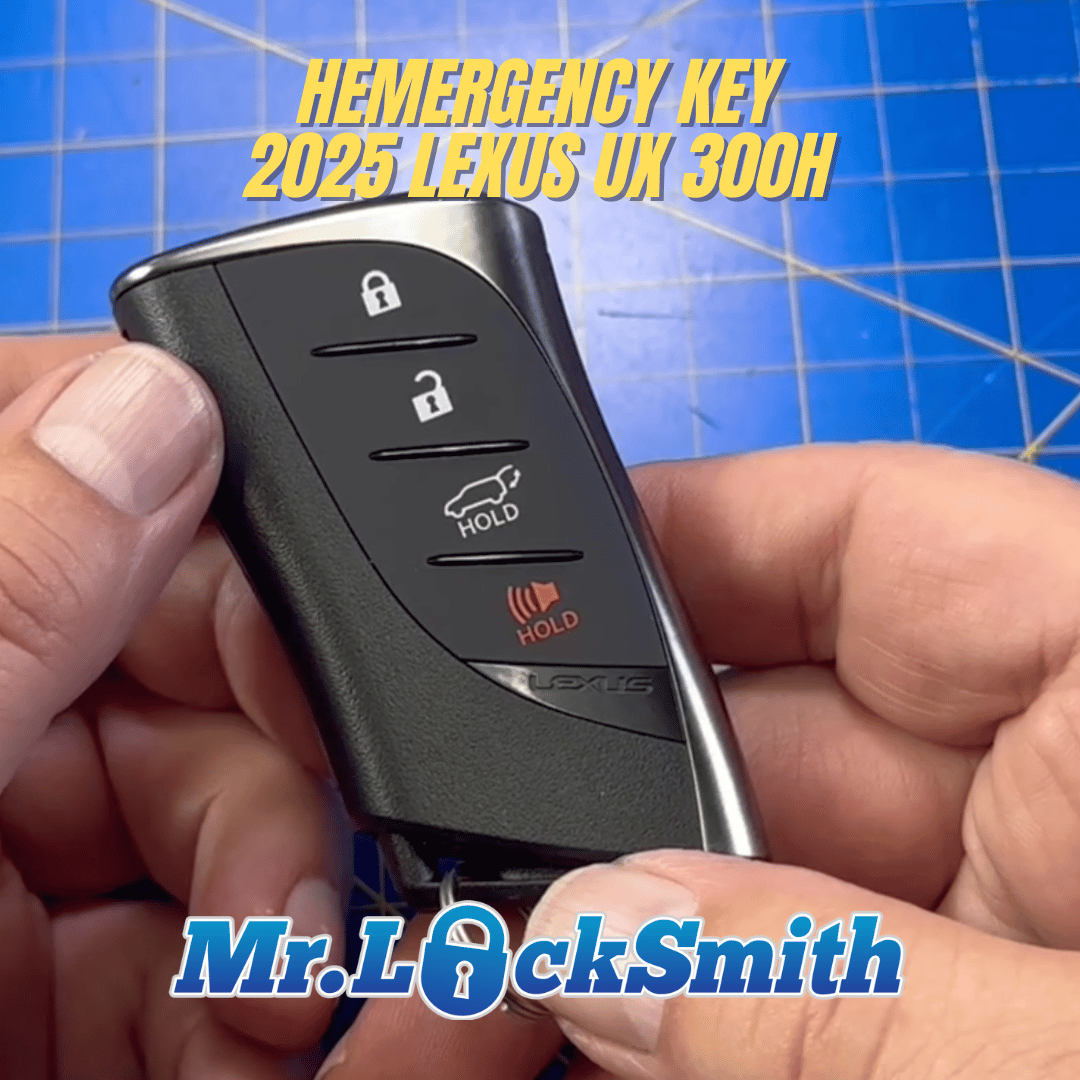
Emergency Key Pry Method (Safest Option)
Insert the flat edge of your removed metal key into the exposed slot where it was stored. Apply upward pressure against the inner ridge while twisting gently toward the fob’s exterior. The cover releases with a soft click—never force beyond this point. This method works for 80% of Lexus fobs (including NX, ES, and GX models) and eliminates screwdriver slip risks.
Precision Screwdriver Technique (For Stubborn Fobs)
For older models (pre-2015 LS/SC), slide your flathead screwdriver into the key slot. Work clockwise around the seam, applying feather-light pressure at 1/8″ intervals. Listen for the pop indicating the first clip released—then switch to finger pressure. Stop immediately if you feel cracking resistance; frozen clips require 30 seconds of hairdryer heat (low setting) to loosen.
Visual cue: Look for hairline gaps appearing around the casing edge—this confirms proper release point.
Execute Flawless CR2032 Battery Replacement
Remove Old Battery Without Damaging Contacts
Inside the opened fob, locate the silver coin-shaped battery. Note the “+” symbol orientation—this is critical for correct reinstallation. Slide a paperclip under the battery’s edge and lift straight up; never pry against the plastic housing. If stuck, tap the fob gently upside-down over your palm. Discard the old battery immediately—leaving it near the circuitry risks short-circuiting.
Install New Battery with Zero Errors
Place your fresh CR2032 battery with the positive (+) side facing up (text side visible). Press down until it seats completely flat—no tilting allowed. For models with a plastic circuit cover (RX Series), snap this back into place first by aligning the tabs. Verify the battery doesn’t wobble; if loose, clean contact points with a cotton swab dipped in 90% isopropyl alcohol.
Pro tip: Test the battery in a watch first—defective new batteries cause 15% of “failed replacements.”
Verify Full Functionality Before Closing

Secure Reassembly Process
Align both fob halves precisely, starting at the emergency key slot. Press around the perimeter until all clips engage—listen for 4-6 distinct clicks. Slide the emergency key back in; it should lock with firm resistance. If it inserts too easily, reopen and check for misaligned internal components.
Comprehensive Function Testing Protocol
- Immediate LED check: Press LOCK—light should shine bright white (not yellow)
- Progressive range test: Unlock doors from 3 ft → 10 ft → 20 ft (full range restored)
- Start confirmation: Drive away normally without emergency start procedure
- Smart Entry validation: Approach vehicle with hands full—doors should auto-unlock
Failure point: If range remains poor, reopen and clean battery contacts with eraser.
Fix Common Post-Replacement Issues Instantly
When your key still malfunctions after Lexus key battery replacement, diagnose these critical errors:
- Battery upside down? The “+” symbol must face upward toward the fob cover
- Poor contact? Wipe terminals with alcohol-dampened cotton swab
- Cover not sealed? Reopen and ensure all 6-8 clips are fully engaged
- Reset delay? Wait 30 seconds after installation before testing (some models require initialization)
If problems persist after these checks, your fob may need reprogramming—a $25 service at Lexus dealerships. Never attempt water exposure fixes; moisture damage requires full fob replacement.
Why DIY Beats Dealership Service Every Time
Lexus dealerships charge $65-$110 for battery replacement—a 10x markup over the $3 CR2032 cost. Their “service” involves the exact 5-minute process you’ll perform yourself. The only valid reason to visit a dealer is if you hear crackling sounds when pressing buttons (indicates circuit board damage). For pure battery issues, DIY saves you 47 minutes on average versus service center wait times.
Prevent Future Stranding With Smart Habits
Keep a CR2032 battery in your glove compartment at all times—it costs less than a coffee. Replace proactively every 18 months regardless of symptoms; sudden failures peak at 22 months. Store spares in anti-static bags (included with new batteries) to prevent premature discharge. For frequent travelers, add a key fob battery reminder to your phone calendar 30 days before expected replacement.
Model-specific note: While all Lexus Smart Keys use CR2032 batteries, opening mechanisms vary slightly. Consult your owner’s manual under “Do-it-Yourself Maintenance” for exact diagrams of your model (e.g., LC500 requires simultaneous side-button presses). This universal method works for 2006-2023 vehicles, but always verify your fob style matches the described steps. With your newly revived key fob, you’ve not only saved money but gained confidence for future automotive fixes—starting your Lexus should never feel like a gamble again.


