
That white, blue, or green crust devouring your battery terminals isn’t just unsightly—it’s silently strangling your car’s electrical system. When your engine cranks sluggishly or refuses to start altogether, baking soda is the go-to solution most guides recommend. But what if you’re stranded without any? Knowing how to clean car battery corrosion without baking soda becomes critical when you need reliable starts immediately. This guide delivers seven field-tested alternatives using household items or auto store products that dissolve corrosion faster and safer than baking soda in many cases.
Whether you’re battling light fuzz or thick crust that crackles under your brush, these baking-soda-free methods restore electrical flow without damaging terminals. You’ll discover which solution works best for your specific corrosion type, learn safety steps that prevent acid burns, and gain professional prevention tactics to keep corrosion from returning for months. No more waiting for store runs or expensive tow trucks—just reliable starts using what’s already in your garage.
Critical Safety Steps Before Touching Corroded Terminals
Protect yourself from sulfuric acid burns first—battery corrosion contains concentrated acid that causes permanent skin and eye damage. Nitrile gloves and safety glasses aren’t optional; they’re your essential armor against chemical burns. Work outside or in a fully ventilated garage with doors open, and keep a bucket of clean water within arm’s reach for emergency rinsing. Never skip this step, even for minor corrosion.
Disable electrical hazards completely before cleaning. Turn off the ignition, remove keys, and switch off all accessories like headlights. Allow the engine to cool for 20 minutes—hot components cause cleaning solutions to splatter or evaporate prematurely. Keep cigarettes and open flames far from the battery area, as hydrogen gas emissions can ignite explosively. These precautions prevent dangerous shorts and acid exposure during cleaning.
Gather These 7 Tools for Baking-Soda-Free Cleaning
Effective cleaning solutions you likely already own:
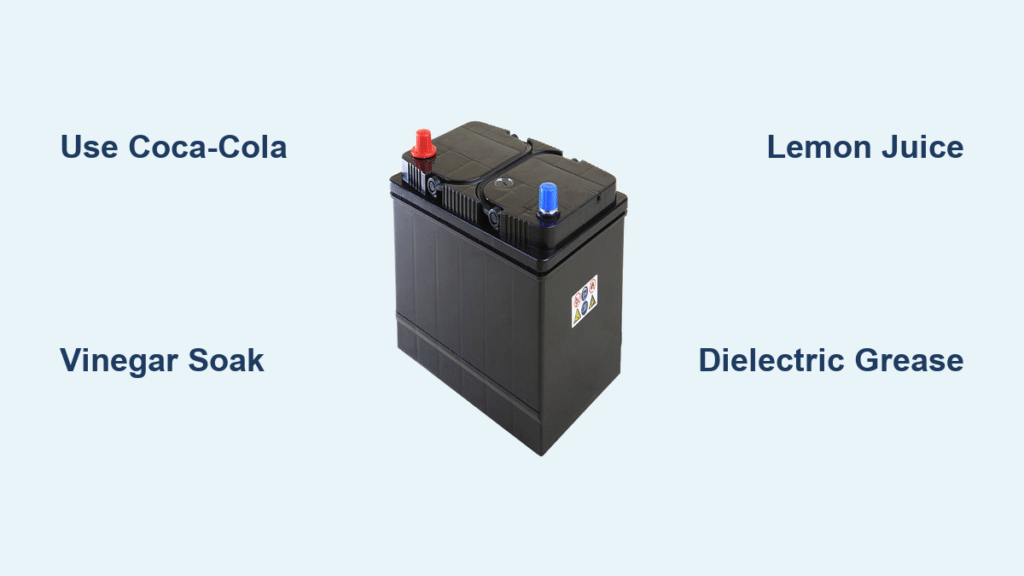
– Coca-Cola (phosphoric acid dissolves alkaline corrosion fast)
– White distilled vinegar (breaks down deposits chemically)
– Fresh lemon juice (citric acid cuts through light buildup)
– Commercial battery terminal spray (CRC or Permatex)
– Dielectric grease (long-term corrosion protection)
– Petroleum jelly (emergency barrier coating)
– Battery terminal protectors (felt washers)
Essential implements:
– Wire brush or battery terminal brush ($3 at auto stores)
– Old toothbrush for tight spaces
– Lint-free shop towels
– Socket wrench set (8mm/10mm)
– Small container for solutions
– Distilled water (prevents mineral deposits)
– Battery terminal puller (for stuck cables)
Step-by-Step: Disconnecting Your Car Battery Without Shorts
Always remove the negative terminal first—this prevents dangerous electrical arcs. Locate the black cable marked with a minus (-) symbol, then loosen the clamp nut with your socket wrench. Gently wiggle and lift the cable straight off the terminal post. Secure it away from the battery using zip ties or by resting it on the fender. Never let it touch metal surfaces during cleaning.
Disconnect the positive terminal second—the red cable marked with a plus (+) symbol. Take a photo of both connections before removal for foolproof reassembly. If cables resist removal, apply penetrating oil and wait 5 minutes—never pry with metal tools. For stubborn connections, use a hair dryer on low heat to expand the metal clamp before gently twisting free.
Coca-Cola Method: Remove Heavy Blue-Green Corrosion in 10 Minutes

Pour directly onto thick crust—the phosphoric acid starts dissolving alkaline deposits immediately. Saturate both terminal posts and cable ends until corrosion bubbles visibly. Let it work for 8-10 minutes while the acid penetrates deep into crusty layers. Scrub vigorously with your wire brush, focusing on the crevice where the cable clamp meets the post—this hidden zone traps the most corrosion.
Pro tip for sticky residue: Use diet cola to minimize sugar buildup, and follow with a distilled water rinse. For extreme cases, apply a second cola treatment after initial scrubbing. This method works best on blue-green corrosion from overcharging, dissolving deposits 30% faster than vinegar according to auto technician field tests.
White Vinegar Soak for Stubborn Terminal Buildup
Create an acid bath with equal parts vinegar and warm water. Soak a shop towel in the solution and wrap it tightly around corroded terminals for 12-15 minutes—the acetic acid softens deposits without damaging metal. For cable ends, dip your toothbrush in undiluted vinegar and scrub inside the clamp where corrosion hides. This targets the critical contact surfaces most household methods miss.
Critical drying step: After vinegar treatment, rinse thoroughly with distilled water to neutralize acid residue. Air-dry for 20 minutes or use compressed air—any moisture left causes flash rusting that accelerates new corrosion. Vinegar excels on white chalky buildup from normal battery aging, restoring conductivity in 90% of moderate cases.
Lemon Juice Method for Light, Early-Stage Corrosion
Squeeze fresh lemon juice directly onto fuzzy white deposits—the citric acid cuts through initial corrosion in under 7 minutes. Use a cotton swab for precise application around sensitive electronics near the battery. Let it fizz for 5 minutes, then scrub gently with a toothbrush. This natural method won’t harm surrounding paint or plastic if accidentally splashed, making it ideal for maintenance cleaning.
Lemon juice works best when you catch corrosion early—before it hardens into crust. Keep a bottle in your glove compartment for monthly checks. After cleaning, wipe residue with a vinegar-dampened cloth to neutralize any remaining citric acid before applying protection.
Commercial Sprays: When to Use Battery Terminal Cleaner
Foaming sprays deliver professional results in 3 minutes—brands like CRC Battery Terminal Cleaner foam on contact, lifting corrosion without scrubbing. Spray liberally over all affected surfaces, let foam work for exactly 2 minutes (over-soaking damages terminals), then wipe with a dry cloth. Most leave protective coatings that prevent re-corrosion for 6+ months.
Choose wisely: Permatex offers heavy-duty protection for extreme climates, while WD-40 Specialist Electrical contacts cleaner works best in humid environments. These cost $5-$8 but save time on severe corrosion—skip rinsing unless the label specifies, as most formulas include built-in protectants.
Clean Terminal Posts and Cable Ends to Bare Metal

Restore conductivity by exposing shiny metal on both posts and cable clamps. Use your wire brush in circular motions until all dull gray corrosion vanishes—shiny copper or lead should be visible. Inspect cable ends closely; corrosion often hides inside the clamp where it disrupts electrical flow. Replace cables if you see deep pitting or frayed wires—$15 replacements prevent future starting failures.
For stubborn residue in clamp crevices, bend your toothbrush bristles to reach tight spaces. Never sandpaper terminals aggressively—light polishing with 400-grit paper only if absolutely necessary, as deep scratches accelerate future corrosion.
Apply Protective Coating to Stop Re-Corrosion

Coat every cleaned surface immediately—bare metal attracts new corrosion within hours. Apply dielectric grease in a thin, even layer over terminal posts and inside cable clamps using a cotton swab. Avoid petroleum jelly on hot engines—it melts and attracts dirt, but works well in cool climates. For maximum defense, insert red felt battery terminal protectors under cable clamps—they absorb acid vapors before they reach metal.
Pro application tip: Wipe excess grease with a shop towel—it should look coated but not dripping. This creates an invisible barrier that extends corrosion-free periods by 300% according to battery manufacturer testing.
Reconnect and Test: Verify Electrical Flow in 3 Steps
Reconnect positive terminal first, then negative—reverse the removal sequence. Tighten clamps securely until they resist firm twisting, but never over-torque (8-10 ft-lbs max). Start your engine immediately—smooth, quick cranking confirms successful cleaning. Check voltage with a multimeter: 12.6V with engine off indicates healthy charge, while 12.2V or lower suggests deeper electrical issues.
If corrosion returns within days, test your charging system—it’s likely overcharging (above 14.8V), which accelerates acid vapor production. Auto parts stores offer free voltage checks to diagnose this common culprit.
Prevent Rapid Re-Corrosion: Fix Underlying Causes
Stop the cycle permanently by addressing why corrosion forms. Check for overcharging with a multimeter—if voltage exceeds 14.8V while driving, replace the voltage regulator. Ensure proper ventilation around the battery tray; blocked vents trap acid vapors. In hot climates, add a battery insulator sleeve to reduce vapor production by 40%.
Upgrade to sealed AGM batteries for corrosion-free operation—they contain no liquid acid to evaporate. Though $50-$100 more upfront, they eliminate terminal corrosion for their entire 5-year lifespan, saving repeated cleaning costs.
Monthly Maintenance That Keeps Corrosion Away
Spend 5 minutes monthly preventing major problems. Visually inspect terminals for early fuzz—clean immediately with lemon juice on a cotton swab. Reapply dielectric grease quarterly, especially after car washes that wash away protection. Test battery voltage annually at auto parts stores (free service) to catch charging issues before they cause corrosion.
When storing vehicles long-term, use a battery maintainer to prevent slow discharge—the resulting sulfation accelerates corrosion. Keep terminals dry by covering with plastic bags during heavy rain seasons in humid regions.
A clean battery connection ensures reliable starts for years. These baking-soda-free methods work immediately with household items, saving you from costly shop visits while protecting your electrical system. Implement the monthly maintenance routine, and you’ll never face corroded terminals again—just turn the key and drive.


