
Nearly half of all vehicle breakdowns stem from battery failure, yet most drivers discover problems only when their car won’t start. Modern vehicles place enormous demands on batteries—supporting up to 150 electrical systems and start-stop technology that cycles dozens of times per daily commute. The troubling reality? 26% of cars on the road today need a new battery within the year, often without any warning signs.
This guide walks you through every method to check your car battery health, from free professional services to simple DIY tests you can perform in minutes. You’ll learn to spot subtle warning signs, understand test results, and decide when replacement becomes necessary.
AutoZone’s Free Battery Testing and Charging Services
AutoZone locations nationwide provide comprehensive battery services at no charge, delivering professional assessment in under five minutes. Their technicians use advanced conductance analyzers that evaluate both current performance and remaining lifespan without draining your battery.
Instant Battery Testing Process
When you visit AutoZone for battery testing, here’s exactly what happens:
- An AutoZoner connects a digital tester to your battery terminals
- The device measures cold cranking amps, state of charge, and remaining life expectancy
- You receive a printed report showing actual performance versus manufacturer requirements
If your battery tests borderline weak but still functional, they’ll charge it for free using their 30-minute fast charging system and retest afterward. This service is particularly valuable if you’ve recently experienced a jump start or left lights on accidentally.
Environmental Recycling for Dead Batteries
When your battery reaches end-of-life, AutoZone handles proper disposal through their free recycling program. This service is required by law in most states and prevents hazardous materials from entering landfills. Simply bring your old battery to any location for environmentally responsible disposal—no purchase necessary.
Multimeter Voltage Testing (Most Accurate DIY Method)

This $20 tool provides the clearest picture of your battery’s current state with results you can trust. Professional mechanics use this same method during routine service checks, making it the gold standard for home testing.
Step-by-Step Voltage Measurement
Follow these precise steps for reliable results:
- Let your car sit for at least one hour (overnight preferred)
- Remove plastic terminal covers if present
- Set multimeter to DC voltage (20V range)
- Connect red probe to positive terminal (+)
- Connect black probe to negative terminal (-)
- Read and interpret:
– 12.6V or higher: Battery fully charged and healthy
– 12.2V-12.5V: Needs charging soon
– 12.0V-12.1V: Significantly discharged
– Below 12.0V: Failing or deeply discharged
Pro Tip: Test voltage before and after a 15-minute drive. A healthy battery should show a 0.2V increase after driving, indicating proper charging system function.
Alternator Performance Check
Your charging system is equally important to battery health. With the engine running at idle:
- 13.8V-14.4V: Healthy charging system
- Below 13.5V: Undercharging (alternator issue)
- Above 14.7V: Overcharging (voltage regulator failure)
Readings outside the normal range often cause premature battery failure even with a new battery installed.
No-Equipment Visual and Sound Tests
When you lack tools, these quick checks reveal obvious battery problems in under two minutes. These methods work for all vehicle types and require no special equipment.
Headlight Load Test Procedure
- Turn on headlights (engine off)
- Leave for 10-15 minutes
- Start car while watching headlights
- Results: Significant dimming during startup = failing battery
Critical Note: This test works because a healthy battery maintains voltage under load. If headlights dim dramatically when cranking, your battery can’t deliver sufficient power.
Corrosion Inspection and Cleaning
Check for white, crusty buildup on terminals. Light corrosion can be cleaned safely:
- Mix 1 tablespoon baking soda with 1 cup water
- Disconnect negative terminal first (safety requirement)
- Dip old toothbrush in solution and scrub terminals
- Rinse thoroughly with water
- Reconnect terminals (positive first)
Warning: Heavy, long-term corrosion often indicates internal damage requiring replacement rather than cleaning.
Decoding Cold Cranking Amps (CCA) Results
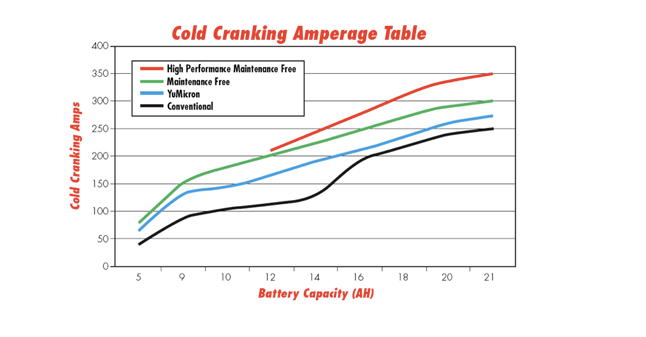
CCA measures your battery’s ability to start the engine in cold weather. This rating appears on every battery label, but actual performance often differs significantly from specifications.
CCA Assessment Guidelines
Key interpretation points:
– Rated CCA: Manufacturer’s claimed performance at 0°F
– Actual CCA: Measured performance during testing
– Replacement threshold: Actual CCA below 80% of rated value
– Climate adjustment: In warm climates, 60% of rated CCA may suffice
Real-world example: A battery rated 600 CCA testing at 400 CCA (67%) might start your car in Florida but fail in Minnesota. Professional testers compare your actual CCA to your vehicle’s specific requirements rather than just the battery’s rating.
State of Health vs. State of Charge Explained
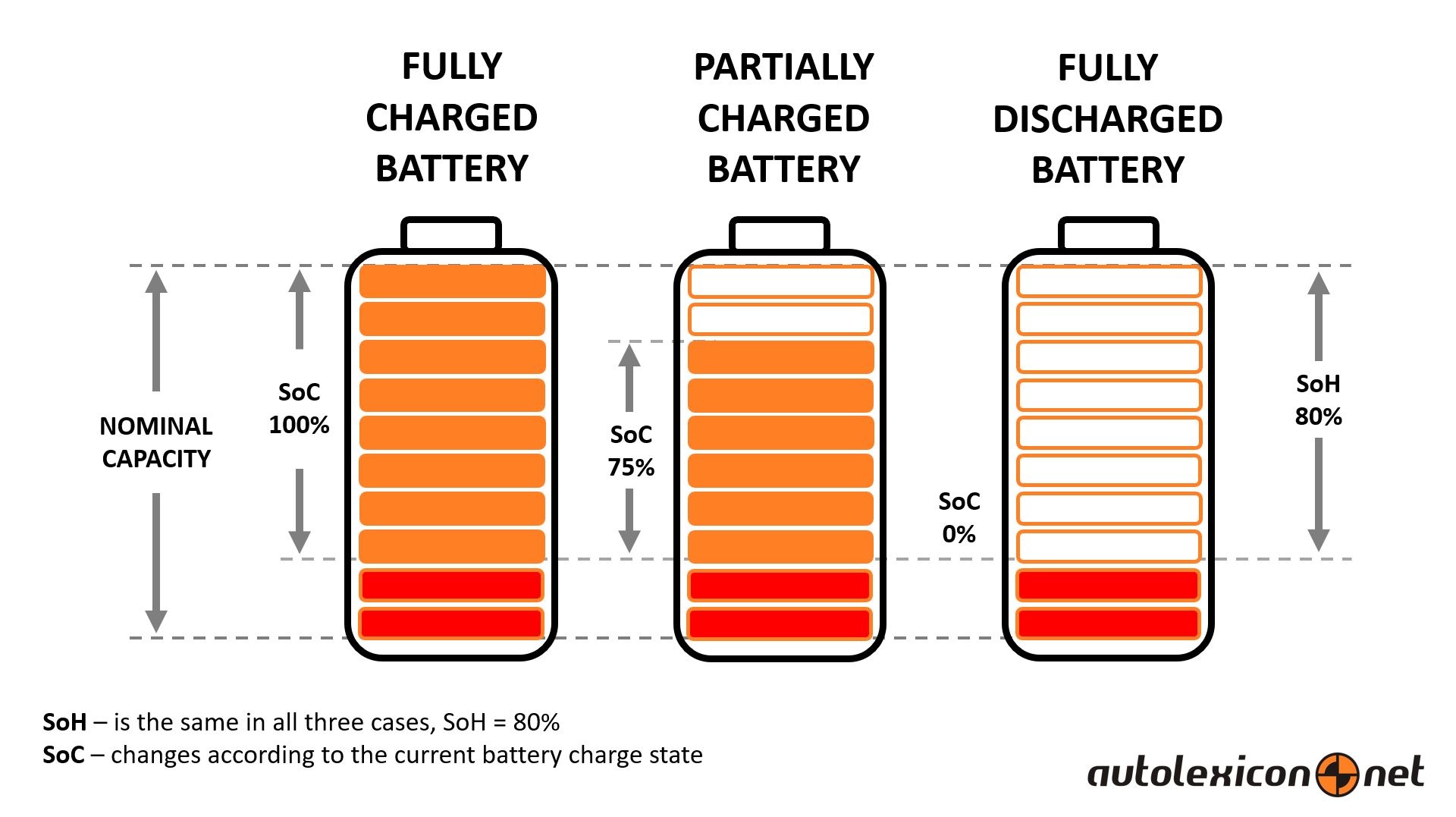
These measurements represent fundamentally different battery conditions that many drivers confuse, leading to unnecessary replacements or unexpected failures.
How to Interpret Both Metrics
State of Charge (SOC):
– Current electrical capacity (measured as percentage)
– Critical insight: A battery can be 100% charged but still fail
– Testing method: Simple voltage measurement
State of Health (SOH):
– Overall battery condition and remaining useful life
– Key indicator: SOH below 70% means replacement needed soon
– Professional measurement: Requires conductance testing
Practical example: Your phone shows 100% charge (SOC) but dies quickly because the battery (SOH) is degraded. Car batteries behave identically—always check both metrics.
Warning Signs Before Complete Failure
Batteries rarely fail without symptoms. Learning to recognize these subtle indicators prevents unexpected breakdowns and costly roadside assistance.
Early Electrical System Indicators
Watch for these often-overlooked symptoms:
– Bluetooth settings randomly resetting after shutdown
– Power windows hesitating or moving slowly
– Interior lights flickering at idle
– Radio presets disappearing
– Dashboard warning lights appearing briefly then disappearing
Expert Note: These glitches occur because a failing battery can’t maintain stable voltage for modern vehicle electronics, even when the engine is running.
Critical Starting Behavior Changes
Monitor these specific startup characteristics:
– Slight pause (quarter-second) before engine cranks
– Engine turns over one extra rotation before starting
– Rough idle for first few seconds after startup
– Problems only occur on first start of the day
Time-sensitive alert: If you notice these symptoms, schedule professional testing within two weeks—your battery could fail completely at any moment.
Advanced Testing for Start-Stop Vehicles
Newer cars with automatic start-stop systems require specialized testing equipment and procedures that conventional methods can’t accurately assess.
AGM and EFB Battery Requirements
AGM (Absorbent Glass Mat) Batteries:
– Handle 300,000+ start cycles
– Require conductance testers with AGM compatibility
– Critical warning: Traditional load testing can damage AGM batteries
EFB (Enhanced Flooded Battery):
– Enhanced version of conventional battery
– Less expensive than AGM but similar testing requirements
– Still needs specialized equipment for accurate assessment
Pro Tip: When visiting a shop, specifically ask if their tester supports AGM/EFB batteries. Many standard testers provide false readings on these modern battery types.
Recommended Testing Frequency Schedule
Regular monitoring prevents unexpected failures and extends battery life through early intervention. Follow this precise testing calendar:
Seasonal Testing Protocol
- Before winter: Test in October/November (cold weather exposes weak batteries)
- Before summer: Test in April/May (heat accelerates battery degradation)
- Monthly during extreme weather: Check voltage when temperatures exceed 90°F or drop below 32°F
- After incidents: Test following long storage periods (over 2 weeks) or deep discharges
Time-saving strategy: Always request battery testing during routine oil changes—it adds only 2-3 minutes when your car is already in the shop.
When Replacement Becomes Necessary
Understanding the decision point prevents both premature replacement and unexpected failures that leave you stranded.
Immediate Replacement Indicators
Replace your battery now if:
– Professional testing shows SOH below 70%
– CCA measures below 80% of vehicle requirement
– Battery age exceeds 5 years with any performance issues
– You’ve needed jump starts more than once per month
Cost analysis: A new battery ($100-$250) is significantly cheaper than repeated roadside assistance calls ($75-$150 each) or potential damage from repeated jump starts.
Monitoring vs. Replacing Decision Tree
Use this simple flowchart when test results show borderline performance:
– Test shows 70-80% SOH → Continue monitoring
– Performance stable for 3+ months → Extend testing interval to quarterly
– Mild climate year-round → Can safely monitor longer
– Critical transportation needs → Replace immediately regardless of test results
Final tip: When in doubt, get a second professional opinion—most major retailers offer free testing with no obligation to purchase.
Your car battery sends clear signals before failure—learning to interpret them saves money and prevents inconvenient breakdowns. Start with monthly visual checks, schedule professional testing twice yearly, and never ignore subtle electrical issues. Modern batteries last 3-5 years on average, but proper monitoring often extends this significantly while ensuring reliable performance.
Remember: free testing at major retailers provides the same accuracy as dealer services, making regular monitoring both accessible and affordable. Don’t wait for a dead battery to strand you—check your car battery health today using these proven methods.


