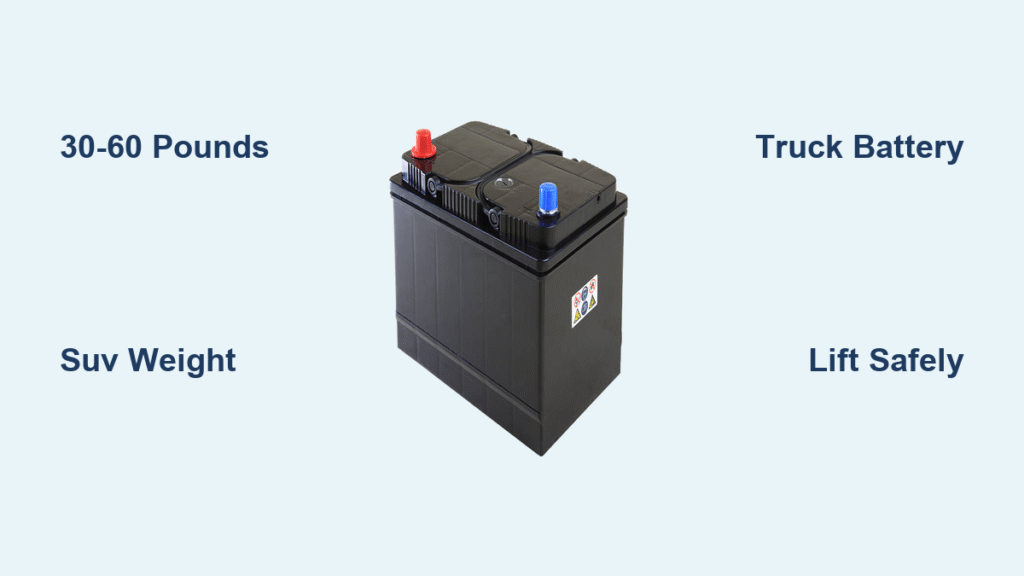
Ever tried swapping your car battery only to nearly drop it from the unexpected heft? That jarring moment when you realize your “simple” battery replacement requires serious lifting strength happens to countless drivers each year. Understanding exactly how heavy is a car battery isn’t just trivia—it’s essential for safe handling, proper installation, and avoiding back injuries during replacement.
Whether you’re preparing to change your dead battery in a parking lot, calculating shipping costs for a replacement, or considering vehicle weight distribution for performance tuning, knowing precise battery weights matters. This guide delivers exact figures for every common battery type, helping you prepare properly for your next battery project.
Passenger Car Battery Weight Breakdown
Your everyday commuter’s battery weight depends heavily on vehicle size and electrical demands. Compact cars carry the lightest units, while luxury SUVs need substantially heavier power sources to turn their larger engines.
Compact and Mid-Size Car Batteries
Honda Civic and Toyota Corolla owners typically handle 35-40 pound (15.9-18.1 kg) batteries when replacing their dead units. These lightweight options deliver sufficient cranking power without unnecessary bulk for smaller engines. Toyota Camry and Honda Accord models require slightly heavier 35-45 pound (15.9-20.4 kg) batteries to support increased electrical accessories and larger displacement engines.
Pro tip: Always check your owner’s manual for exact group size requirements before purchasing—using an undersized battery risks insufficient cranking power in cold weather.
Full-Size and Luxury Vehicle Battery Weights
BMW and Mercedes drivers face heavier lifting with 40-50 pound (18.1-22.7 kg) batteries powering their sophisticated electrical systems. These premium vehicles demand extra capacity for features like adaptive headlights, heated seats, and advanced infotainment.
SUV and pickup truck batteries reach 45-60 pounds (20.4-27.2 kg), with models like the Ford F-150 and Chevrolet Tahoe requiring maximum cranking power for their powerful engines. Attempting to lift these solo often leads to dropped batteries and potential acid spills.
Specific Battery Group Size Weights

Common Automotive Battery Group Comparisons
Group 24 batteries (18.1-20.9 kg) weigh 40-46 pounds and power many mid-size vehicles. Performance cars frequently use Group 34 units ranging from 37-51 pounds (16.8-23.1 kg), with higher-performance variants trending toward the heavier end.
Japanese imports like Honda and Nissan commonly specify Group 35 batteries weighing 35-46 pounds (15.9-20.9 kg). European vehicles often require Group 48 (H6) units at 42-54 pounds (19.0-24.5 kg), while luxury sedans need substantial Group 49 (H8) batteries of 50-60 pounds (22.7-27.2 kg).
Heavy-Duty Battery Weight Realities
Commercial truck drivers face dramatically heavier lifting requirements. Medium-duty trucks use 60-80 pound (27.2-36.3 kg) batteries, while heavy equipment like dump trucks need 80-120 pound (36.3-54.4 kg) units to reliably start massive diesel engines.
Semi-trucks carry 3-4 batteries simultaneously, each weighing 120-180 pounds (54.4-81.6 kg), creating a total battery weight of 360-720 pounds—equivalent to three adult passengers just in battery mass. This explains why professional truck mechanics always use battery lifts for replacements.
Electric and Hybrid Vehicle Battery Weights
Hybrid System Weight Differences
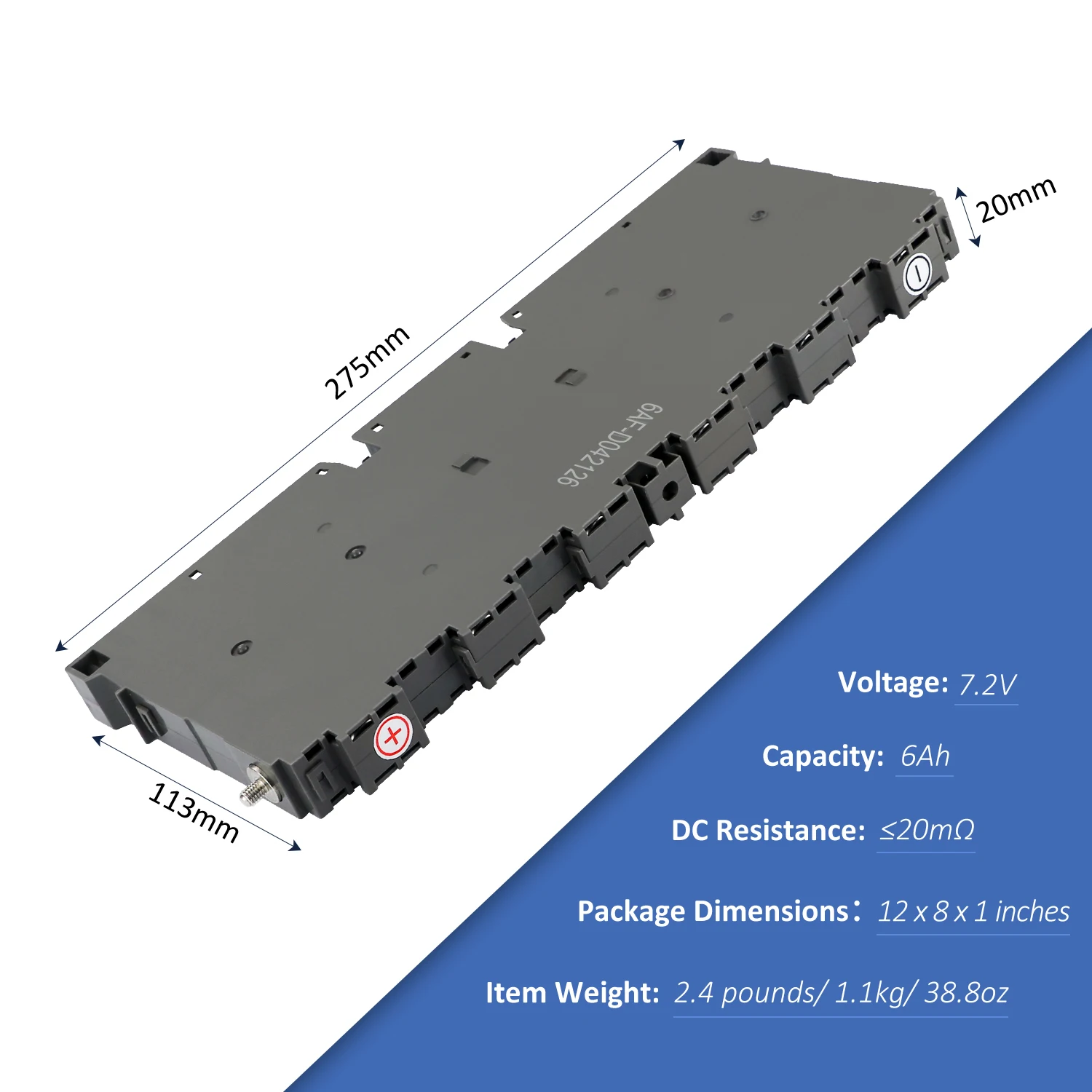
Toyota Prius owners manage a substantial 118 pound (53.5 kg) nickel-metal hydride battery pack—more than double a standard car battery. Honda Civic Hybrid units are lighter at 66 pounds (30 kg), while Ford Escape Hybrids require 106 pound (48.1 kg) systems for their more powerful hybrid setup.
Plug-in hybrids dramatically increase weight requirements with larger battery packs. The Chevrolet Volt’s 435 pound (197.3 kg) system enables extended electric-only driving, while the Toyota Prius Prime manages with a comparatively lighter 265 pound (120.2 kg) pack.
Full Electric Vehicle Battery Mass
Nissan Leaf owners contend with a massive 668 pound (303.1 kg) battery pack that constitutes approximately 20% of the vehicle’s total weight. Tesla Model 3 Standard Range units weigh 1,060 pounds (480.8 kg), while the Model S 100 kWh pack reaches an astonishing 1,200 pounds (544.3 kg)—heavier than most motorcycles.
Critical safety note: EV battery packs are not user-serviceable. Never attempt to remove or handle these massive units without factory-certified training and equipment.
Lithium Battery Weight Advantages
Modern Lightweight Battery Options
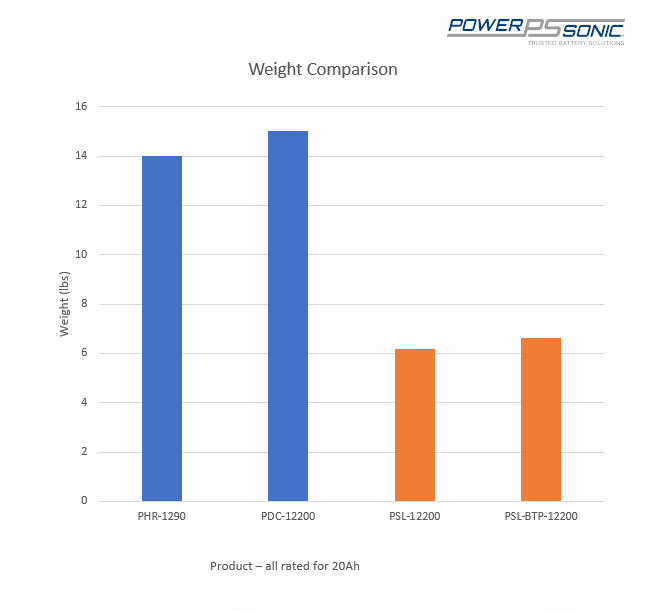
Race car enthusiasts increasingly choose 12V 50Ah LiFePO4 batteries weighing just 13-15 pounds (5.9-6.8 kg)—less than half the weight of equivalent lead-acid units. This dramatic reduction improves vehicle handling and acceleration.
RV and powersports applications benefit from 12V 100Ah LiFePO4 units at 24-28 pounds (10.9-12.7 kg), providing double the usable capacity of lead-acid batteries at half the weight. Full-size RV house batteries in the 12V 200Ah range weigh 48-52 pounds (21.8-23.6 kg), still substantially lighter than their 80+ pound lead-acid counterparts.
Weight-to-Performance Comparison
Lead-acid batteries deliver only 30-35 pounds per kWh of capacity, making them inefficient for weight-conscious applications. Lithium-ion technology improves this to 10-12 pounds per kWh, while LiFePO4 offers 12-15 pounds per kWh with superior safety characteristics.
Cost consideration: While lithium batteries cost 2-3 times more upfront, their 3-5 times longer lifespan often makes them more economical over time, especially in hard-to-access battery locations.
Safe Battery Handling Guidelines
Proper Lifting Techniques
Any battery over 40 pounds (18.1 kg) requires two-person lifting to prevent serious back injuries. Single-person attempts frequently result in dropped batteries, cracked cases, and dangerous acid spills. Professional mechanics always use battery carriers for units exceeding 60 pounds (27.2 kg)—a practice you should adopt immediately.
Step-by-step safe handling procedure:
1. Disconnect terminals (negative first)
2. Position yourself with feet shoulder-width apart
3. Bend at knees, not waist
4. Grip battery firmly on sides (never terminals)
5. Lift smoothly using leg muscles
6. Carry close to your body
Regional Battery Weight Variations
European vehicles follow different sizing standards with Type 100 batteries weighing 40-45 pounds (18.1-20.4 kg) and Type 130 units reaching 55-60 pounds (24.9-27.2 kg). Asian market batteries like the NS40 run lighter at 28-32 pounds (12.7-14.5 kg), while the NS70 reaches 36-40 pounds (16.3-18.1 kg) for larger applications.
Manufacturer-specific weights vary slightly even within group sizes. The Optima RedTop 34/78 weighs 38.8 pounds (17.6 kg), while the Exide Edge 24F reaches 46.2 pounds (21.0 kg)—a 7.4 pound difference in the same group size category.
Weight Verification and Temperature Effects
Accurate Weight Measurement
Always verify battery weight using wet weight specifications (with electrolyte) rather than dry weight, which excludes the liquid component. Professional shops use calibrated scales measuring to 0.1 pound (0.05 kg) precision at room temperature (68-72°F/20-22°C) for accurate readings.
Temperature significantly affects readings—fully charged batteries gain 1-2% weight in cold weather due to increased electrolyte density. Discharged batteries may lose 0.5-1% weight as water forms during discharge. Frozen electrolyte can increase weight by 3-5%, signaling potential battery damage.
Quick Reference Weight Chart
| Vehicle Type | Typical Weight | Key Considerations |
|---|---|---|
| Compact Car | 30-40 lbs | Group 35 common |
| Mid-size Car | 35-45 lbs | Group 34/65 standard |
| SUV | 45-55 lbs | Check for Group 49 |
| Pickup Truck | 50-65 lbs | Higher CCA requirements |
| Semi-truck (each) | 120-180 lbs | Requires mechanical lift |
| Tesla Model 3 | 1,060 lbs | Non-user serviceable |
Modern Weight Reduction Trends
Automotive manufacturers continue pursuing lighter battery solutions through AGM thin-plate technology (10-15% weight reduction) and carbon foam batteries (20-25% reduction). Lithium-ion 12V auxiliary batteries now offer 15-25% weight savings over traditional lead-acid units while providing superior performance in stop-start systems.
Future outlook: Solid-state battery technology promises another 30-40% weight reduction while increasing energy density, though widespread automotive adoption remains several years away.
Final Weight Considerations
Your standard car battery likely weighs 30-60 pounds depending on your vehicle type—compact cars at the lower end and trucks at the higher end. Understanding exactly how heavy is a car battery prevents injuries, ensures proper installation, and helps you select the right replacement.
Critical reminder: Never underestimate battery weight. That 50-pound unit feels significantly heavier when maneuvering in tight engine compartments. Always use proper lifting techniques or get assistance—your back will thank you the next morning. When in doubt about your specific battery’s weight, consult your vehicle’s service manual or contact the battery manufacturer directly for precise specifications.